About Juniperus osteosperma (Torr.) Little
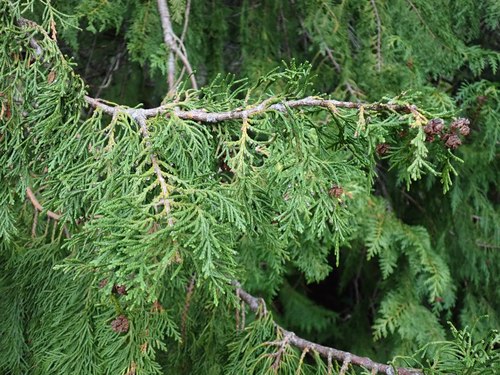
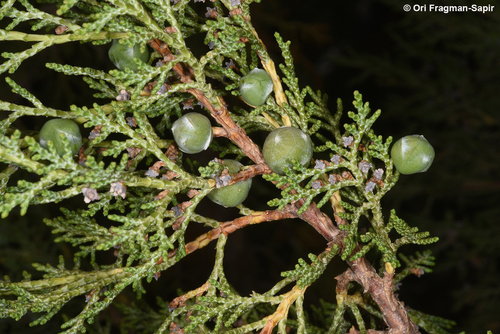
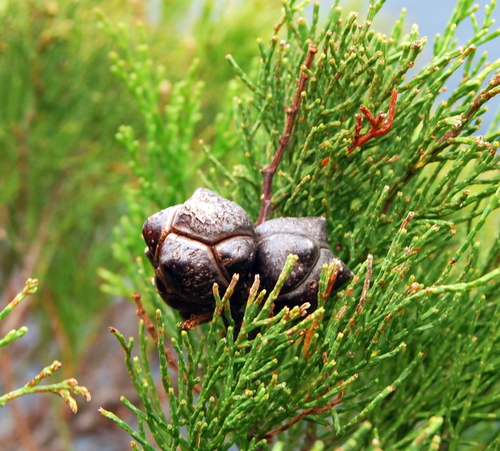
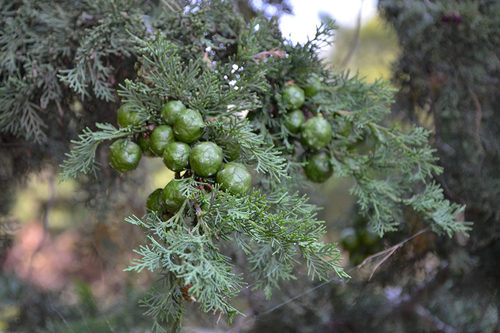
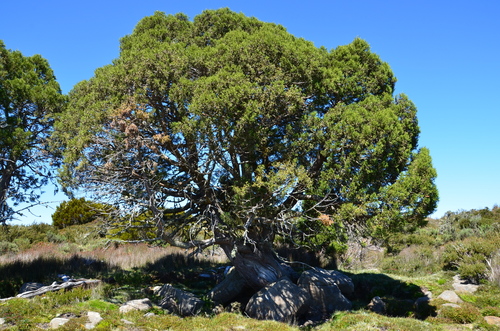
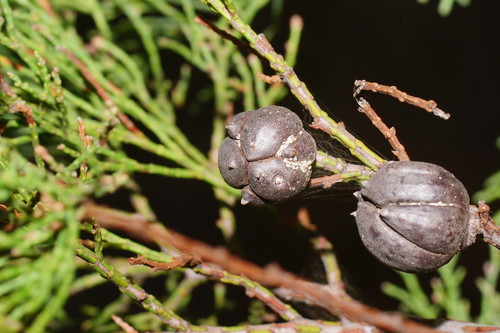
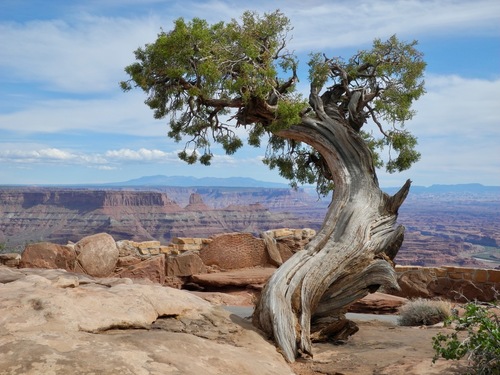
Juniperus osteosperma (Torr.) Little, commonly called Utah juniper, typically grows to 3–6 meters (9 ft 10 in – 19 ft 8 in) tall, and rarely reaches 9 meters in height. Compared to most other junipers, its shoots are fairly thick, with a diameter of 1.5–2 millimeters (1⁄16–3⁄32 in). Leaves are arranged in opposite decussate pairs or whorls of three. Adult leaves are scale-like, 1–2 mm long (growing up to 5 mm on lead shoots) and 1–1.5 mm broad. Juvenile leaves, which only occur on young seedlings, are needle-like, and measure 5–10 mm (3⁄16–13⁄32 in) long. Its seed cones are berry-like, with a diameter of 8–13 mm (5⁄16–1⁄2 in). They are blue-brown and covered with a whitish waxy bloom, and usually hold a single seed, rarely two. The cones mature in approximately 18 months, and are eaten by birds and small mammals. Male cones are 2–4 mm long, and shed their pollen in early spring. Most plants are monoecious, bearing both sexes on the same individual, but around 10% of plants are dioecious, producing cones of only one sex. Plants often develop numerous galls caused by the juniper tip midge Oligotrophus betheli (Bibionomorpha: Cecidomyiidae). These galls are conspicuous pale violet-purple, grow in clusters of 5 to 20 galls each, with each individual gall measuring 1–2 centimeters (3⁄8–3⁄4 in) in diameter. They are made of dense, modified spreading scale-leaves that are 6–10 mm (1⁄4–3⁄8 in) long and 2–3 mm broad at the base. This species is native to the southwestern United States, where it occurs in Utah, Nevada, Arizona, western New Mexico, western Colorado, Wyoming, southern Montana, southern Idaho and eastern California. It grows at moderate altitudes between 1,300–2,600 m (4,300–8,500 ft), on dry soils, and often grows alongside Pinus monophylla. Its seeds are dispersed by a variety of mammals and birds. Mammals that disperse seeds include jackrabbits, mostly the black-tailed jackrabbit (Lepus californicus), rodents, and to a lesser extent coyotes (Canis latrans). The Townsend's solitaire (Myadestes townsendi) is the most notable bird species that disperses its juniper berries. Multiple Native American groups have recorded uses for this plant. The Havasupai used the bark for a range of purposes including making beds, ate the cones both fresh and ground into cakes, and used the gum to create a protective covering over wounds. The Yavapai gave women a tea made from the leaves to calm contractions after childbirth, and fumigated postpartum women with smoke from leaves placed over hot coals. The Navajo use boughs from the tree to sweep their tracks, as they believe this prevents death from following them. Small quantities of ripe berries can be eaten as emergency food, or used as a sage-like seasoning for meat. Dried berries can be roasted and ground into a coffee substitute. Utah juniper is an aromatic plant. Essential oil extracted from the trunk and limb is high in α-pinene, δ-3-carene, and cis-thujopsene. Essential oil extracted from the leaf is high in camphor and bornyl acetate. The trunk of a dead Utah juniper retains essential oil for at least 20 years after the tree dies, and the retained oil is high in cedrol and cis-thujopsene.