About Juniperus excelsa subsp. polycarpos (K.Koch) Takht.
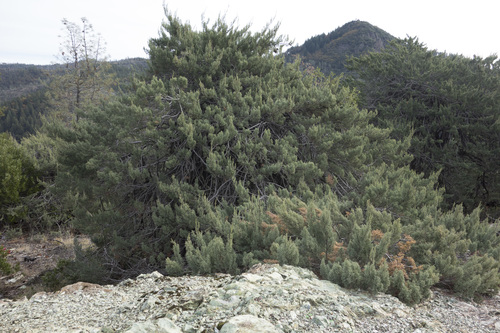
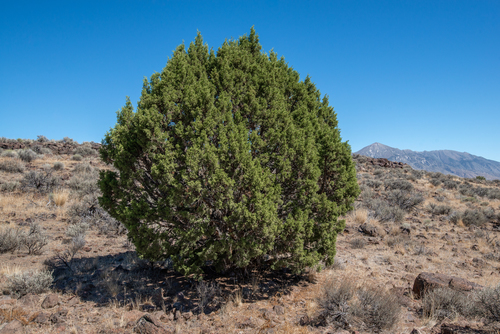
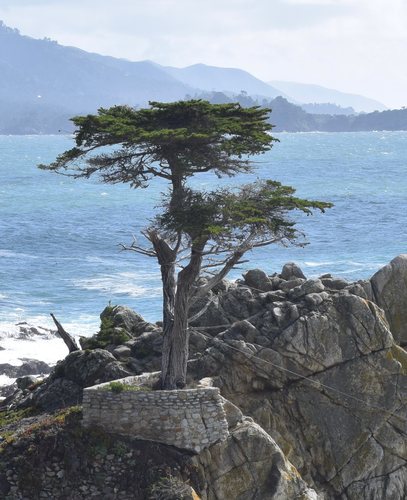
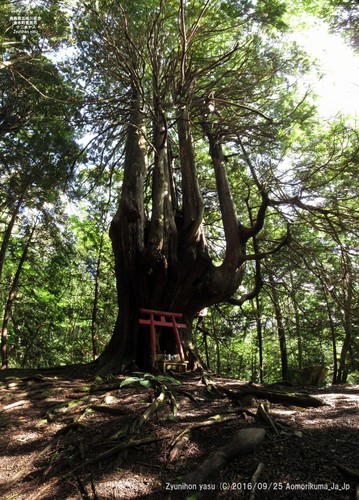
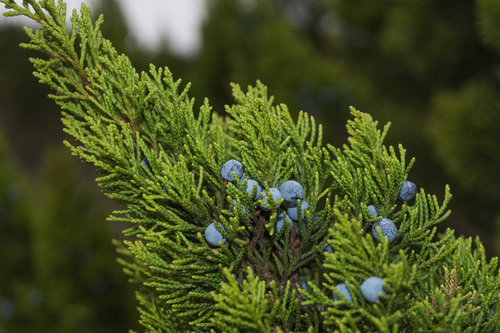
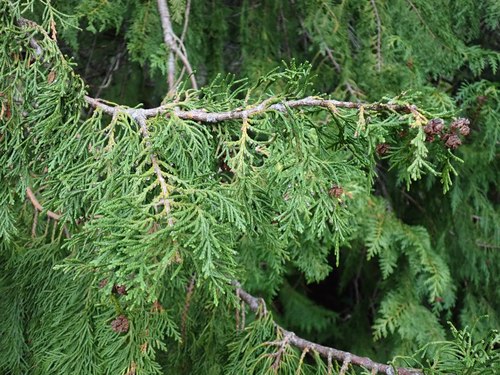
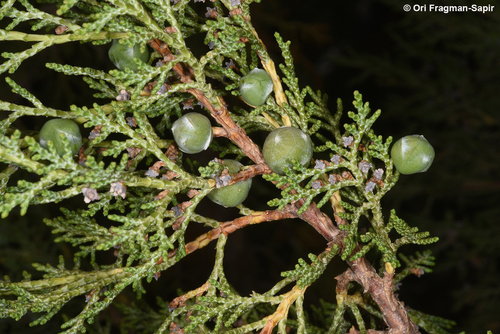
Juniperus excelsa, the parent species of this subspecies, grows as a large shrub or tree. It typically reaches 6 to 20 meters (20 to 66 feet) in height, and only rarely grows as tall as 25 meters (82 feet). Its trunk can grow up to 2 meters (6 1/2 feet) in diameter, and it has a crown that is broadly conical, rounded, or irregular in shape. This plant produces two forms of leaves: juvenile needle-like leaves 8 to 10 millimeters (5/16 to 3/8 inch) long that grow on seedlings, and adult scale-leaves 0.6 to 3 millimeters long that grow on older plants. It is largely dioecious, meaning individual plants produce either male or female reproductive structures, though some individual plants produce both sexes. Its seed cones are berry-like, 6 to 11 millimeters in diameter, blue-black in color with a whitish waxy bloom, and each contains 3 to 6 seeds. These berry-like cones reach maturity after about 18 months. The male cones are 3 to 4 millimeters long, and they shed their pollen in early spring. This taxon often grows alongside Juniperus foetidissima. It can be distinguished from J. foetidissima by its slenderer shoots, which are 0.7 to 1.3 millimeters in diameter (compared to the 1.2 to 2 millimeter diameter shoots of J. foetidissima), and its grey-green leaves instead of the mid-green leaves of J. foetidissima. The Algum wood mentioned in the Bible may come from this species, but this identification is not definite.