About Juniperus ashei J.T.Buchholz
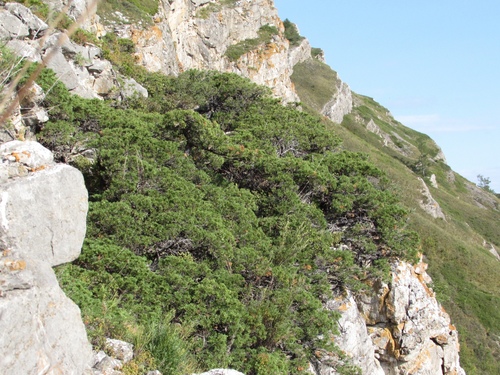
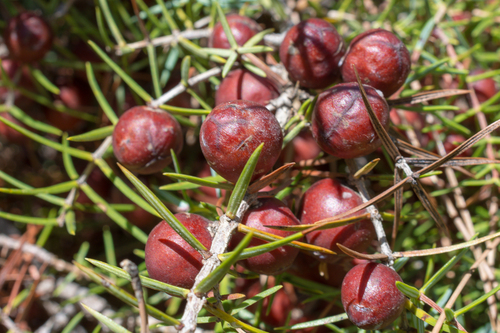
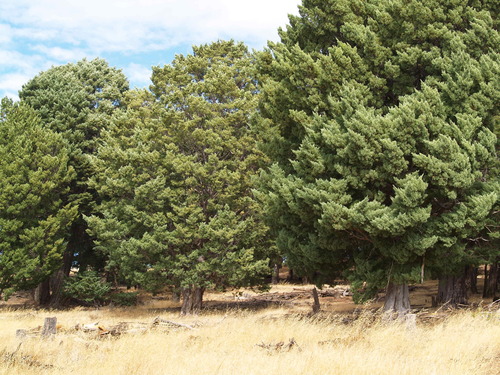
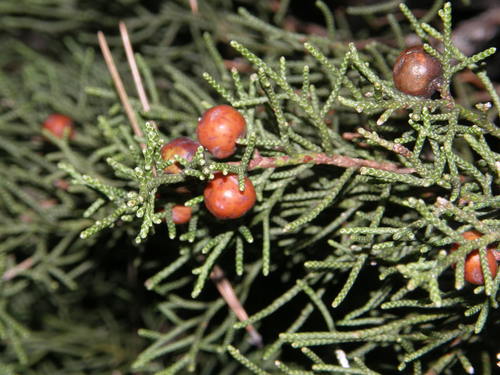
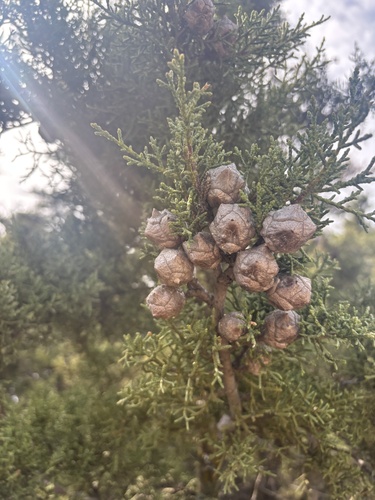
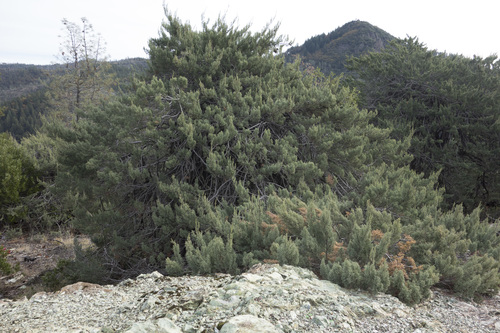
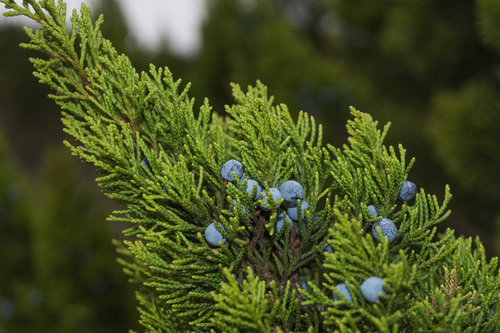
Juniperus ashei J.T.Buchholz has bright green, feathery foliage that grows in dense sprays. Its leaves are scale-like, 2 to 5 millimetres (1⁄16 to 3⁄16 inch) long, and grow on rounded rather than flattened shoots. It is a dioecious species, meaning male and female reproductive structures grow on separate individual plants. The seed cones are round, 3 to 5 mm (1⁄8 to 3⁄16 in) long, with a soft, pulpy, berry-like texture. They start out green, and mature to a purple color around 8 months after pollination. Each seed cone holds one or two seeds, which are dispersed when birds eat the cones and excrete the seeds in their droppings. The male cones are 3–5 mm long, yellow in color, and turn brown after releasing pollen between December and February. In the mid-18th century, Spanish explorers who reached what is now Texas built Hill Country missions using Juniperus ashei (ashe juniper) for roof beams. Decades of poor land management, including clearcutting and overgrazing, caused soil erosion and created widespread caliche deposits. Ashe juniper was one of the few plant species able to thrive in this resulting rocky soil. The wood of ashe juniper is naturally resistant to rot, and is used as raw material for fence posts. Fence posts cut from old-growth ashe junipers have been recorded to last in the ground for more than 50 years. Over 100 years ago, most old-growth ashe junipers were harvested and used not just for fence posts, but also for foundation piers, telegraph and telephone poles, roof framing, and railroad ties. The berry-like cones of the species are eaten by many types of wildlife. The endangered golden-cheeked warbler uses the peeling bark of older ashe junipers (also called Mountain Cedars) to build its nests, and relies on old-growth cedar brakes and juniper-oak woodlands as habitat.