About Juncus phaeocephalus Engelm.
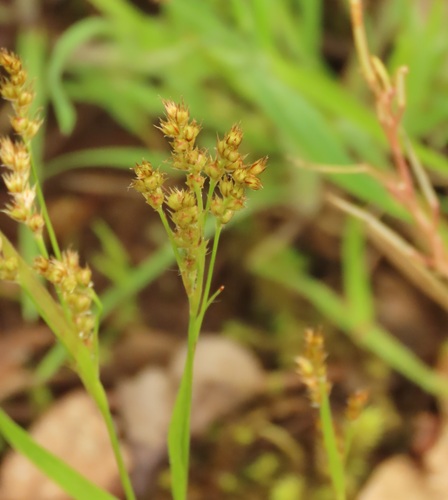
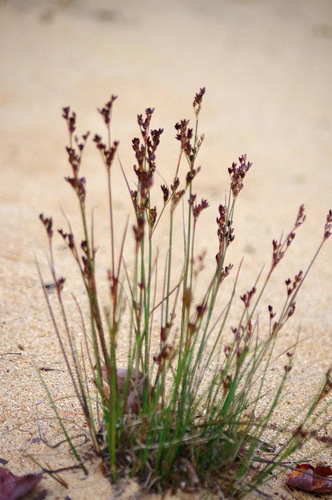
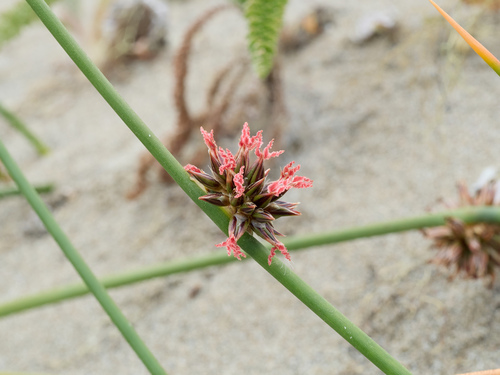
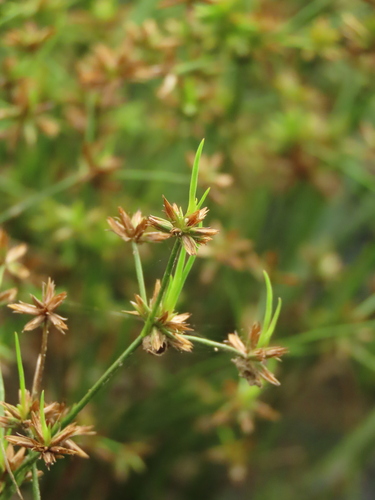
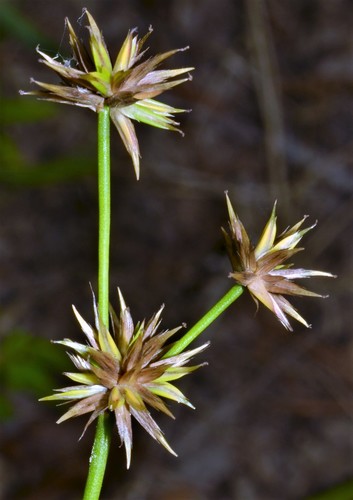
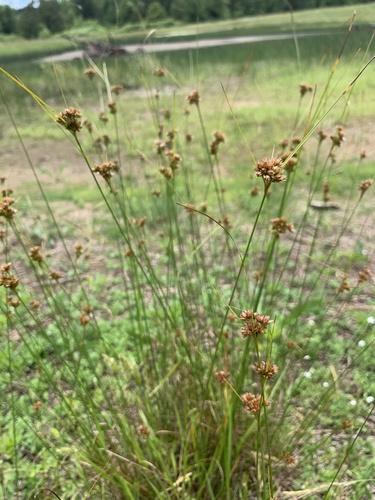
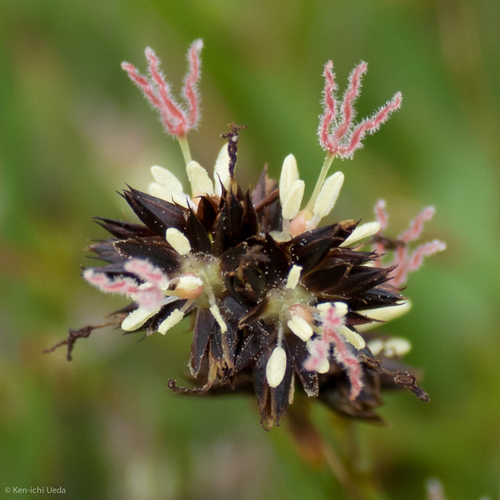
Juncus phaeocephalus Engelm., commonly called brown-head rush, is a grass-like perennial plant that grows from thick, creeping rhizomes. It produces flattened, two-edged stems that reach up to 0.46 meters (1.5 feet) tall, and its leaves are shorter than its flowering stems. Its brownish flowers form spherical clusters at the top of flowering stems, and the plant can easily be mistaken for sedges or irises due to the shape of its stems and leaves. This species produces many ovoid seeds that measure approximately 0.6 millimeters across.
Juncus phaeocephalus is native to the Pacific coast of North America. Its distribution ranges from Los Angeles and Mendocino counties in California north through Oregon to Washington, and it occurs in meadows, along swamp borders, and across coastal regions. Its primary habitat is coastal sand dunes, marshes, and sloughs; it can also grow inland in wet grassy meadows, bogs, and along the shores of lakes and streams, including in the Peninsular Ranges and Transverse Ranges of Southern California. Its creeping rhizomes allow it to spread across moist soil, and it grows at elevations below 2,200 meters (7,200 feet). It is often found growing in plant communities alongside Verbena species, Mimulus guttatus, Eleocharis macrostachya, and Agrostis densiflora.
Testing conducted by the Chemistry Laboratory of the California Department of Food and Agriculture found up to 30 parts per million of hydrocyanic acid in Juncus phaeocephalus. Due to hydrocyanic acid's volatile nature, the concentration in fresh plant material may have been higher before testing took place. There is one recorded case of lethal hydrocyanic acid poisoning linked to this plant: in December 1958, two dairy heifers died after consuming Juncus phaeocephalus on farmland near Petaluma, Sonoma County, California.