About Juncus kraussii Hochst.
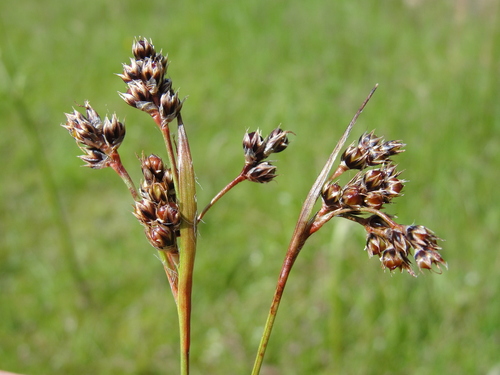
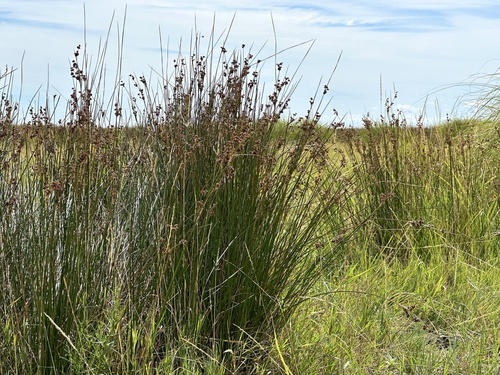
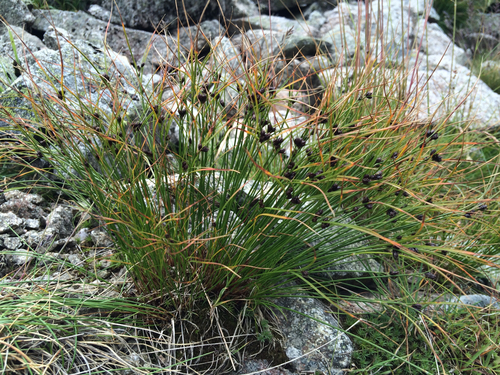
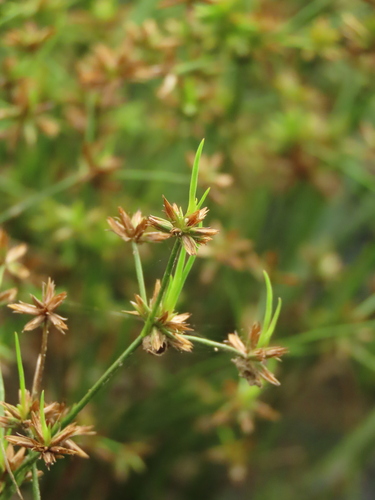
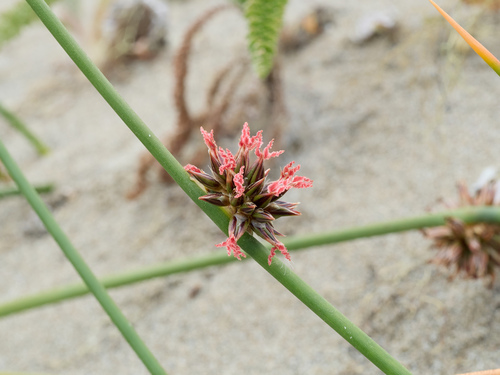
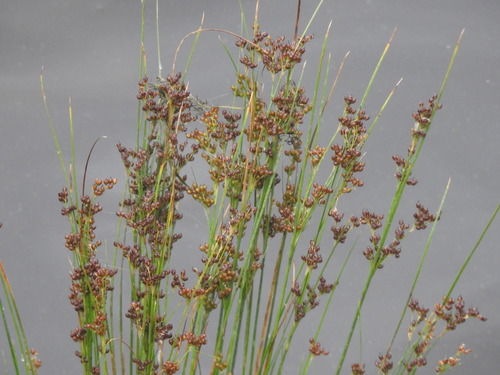
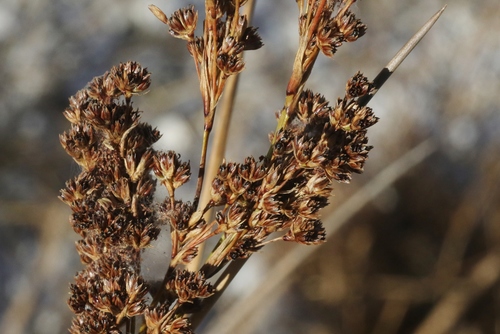
Juncus kraussii Hochst. is a tussock-forming perennial rush that grows from many rhizomes. Its leaves are tough, straw-shaped, and spine-tipped, reaching 40 cm (16 in) to 150 cm (59 in) in length, with golden brown or shiny black sheaths. The inflorescences (flower clusters) of J. kraussii are reddish brown to purplish brown, between 4 cm (1.6 in) and 20 cm (7.9 in) in length. These inflorescences are clustered toward the end of the stem, arranged in groups of three to six flowers per cluster. Flowering occurs in summer, from October through January. This species is distributed across all Australian states, New Zealand, Southern Africa, and South America. It is salt-tolerant, prefers damp environments, and is most commonly found in habitats like swamps and brackish estuaries. It can grow in a wide range of soil types, from sand to alluvium. In many Zulu regions of South Africa, Juncus kraussii is harvested and woven to create traditional sleeping mats, baskets, beer strainers, and other craft items. Due to its high economic value and great demand, it was heavily harvested from wild populations, and it is now cultivated in many areas, with yearly harvesting for a total of seven years of production. Indigenous Australians historically used the stems and leaves of this plant for fibre to make string, fishing lines, woven rugs, and woven baskets. Today, it is commonly used to stabilize the banks of estuaries, the edges of salt marshes, and riparian zones adjacent to human-developed sites. It is also used in biofiltration systems and rain gardens.