About Juncus gerardi Loisel.
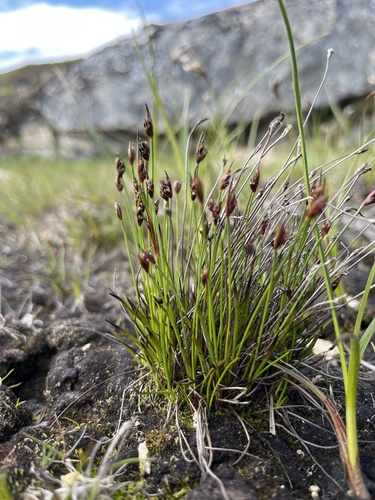
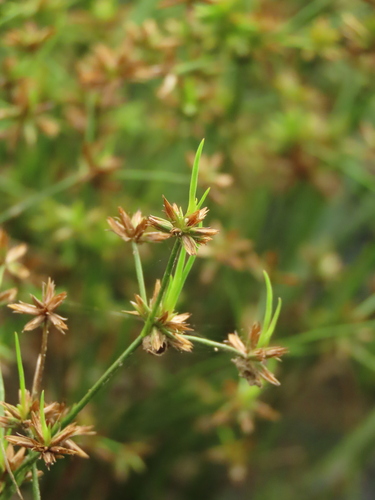
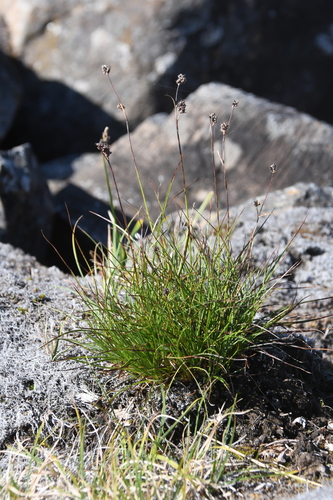
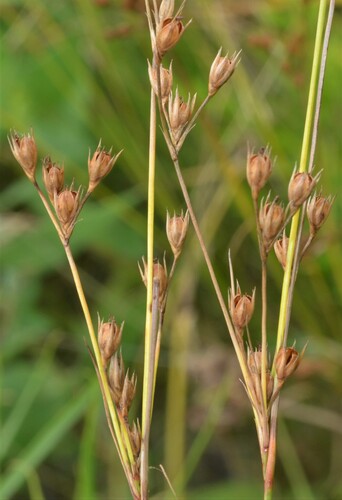
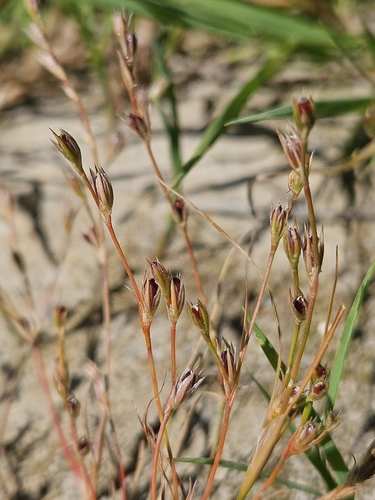
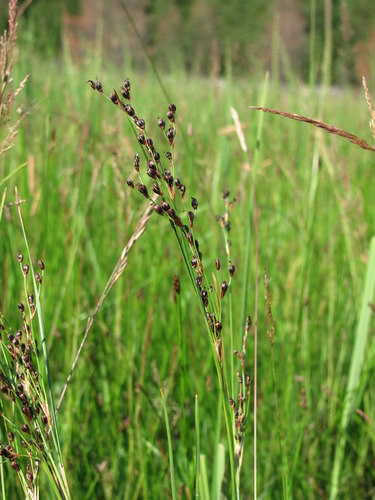
Juncus gerardi Loisel. forms loose swards of erect tufts that grow from a dense, far-reaching network of black rhizomes. Its stems are slender and wiry, reaching 25 to 75 centimeters in height. The leaves are narrow, channelled, and have short auricles. Flowers grow toward the tips of the branches, accompanied by a short primary bract. Dark brown tepals surround black capsules, and this arrangement can give the capsules a striped appearance. This species grows on coastal sites and intertidal zones, including salt marshes, wetland margins, disturbed habitats, and wastelands. It typically establishes just above the high-tide line, as it prefers saline, waterlogged soils but cannot tolerate regular flooding. Juncus gerardi is native to Europe, ranging from the Mediterranean to Mongolia, and to North America. In North America, it has spread into unwanted areas such as the Great Lakes region, where it causes multiple adverse environmental impacts: it threatens the survival of native vegetation, and hosts insects that can carry diseases. It has been introduced to several additional regions: Greenland, New Zealand, Australia (Tasmania and Victoria), and Asia (Primorye and Magadan). It was accidentally introduced to New Zealand, where it became naturalized in 1891. It is classified as invasive in New Zealand, and has been recorded in coastal wetlands and pastures, where it can form large swards that outcompete native vegetation and reduce grazing potential. In New Zealand, it has also been found on saline soils as far inland as Alexandra, and on non-saline soils in Invercargill. This species flowers and fruits from late spring to summer. Seedling recruitment takes place in exposed habitats with low light competition. However, the species spreads primarily through asexual reproduction, forming clonal populations from its spreading rhizomes.