About Juncus effusus L.
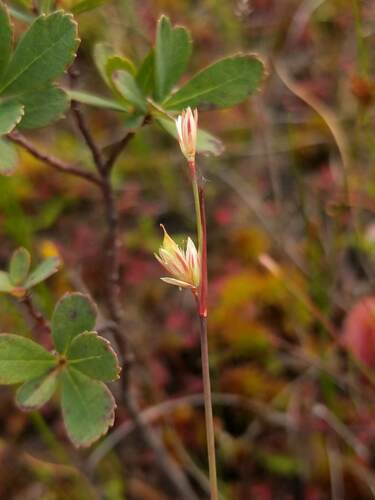
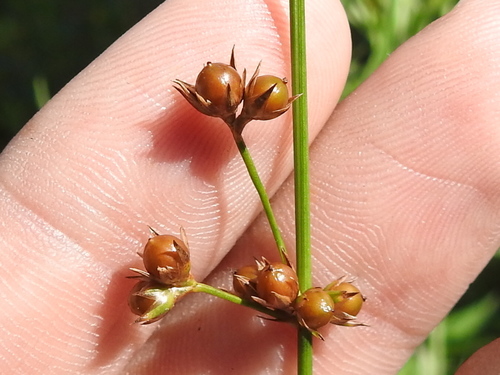
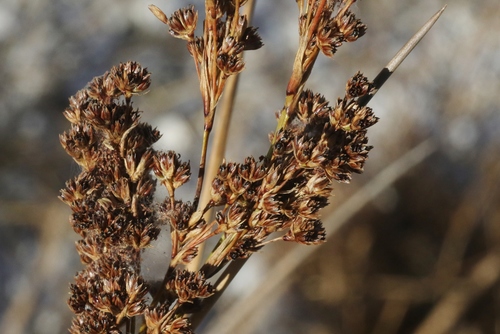
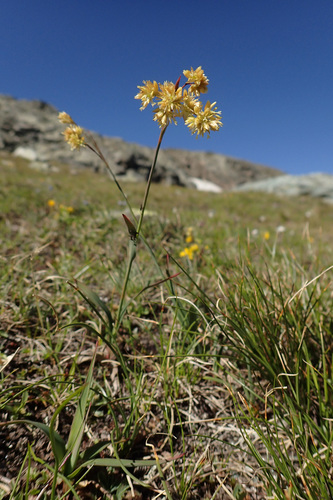
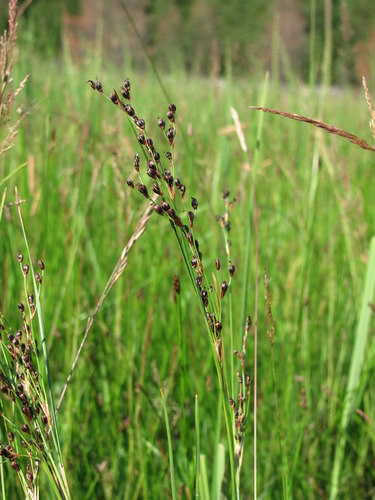
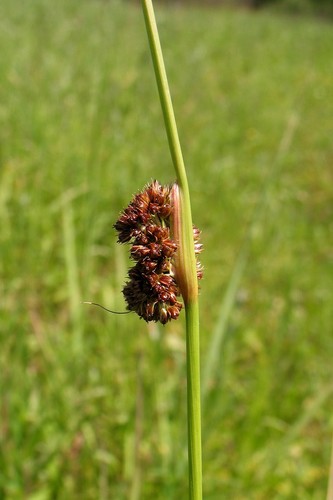
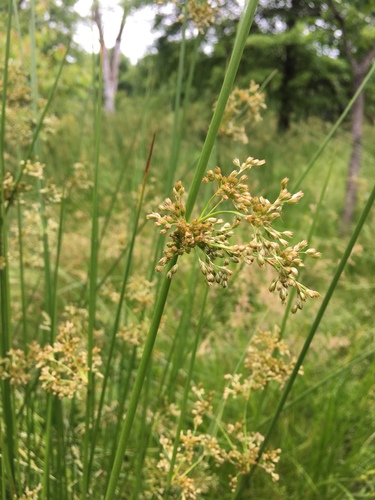
Juncus effusus L. (common soft rush) grows in large clumps reaching about 1.2 metres (3 ft 11 in) in height. Its stems are smooth, cylindrical, and filled with light pith. Its yellowish inflorescence appears to emerge from one side of the stem roughly 20 centimetres (8 in) below the visible top of the stem. In reality, the stem ends at this point of emergence; the upper upright section above the inflorescence is actually a bract that continues the stem-like appearance, with only a faint color band marking the transition from stem to bract. The lower leaves of this species are reduced to a brown sheath found at the base of the stem. This rush has a very wide distribution, and is considered native to Europe, Asia, Africa, Madagascar, North America, and South America. It has become naturalized in Australia, New Zealand, South Africa, and a variety of oceanic islands. It grows in wet habitats, including wetlands, riparian zones, and marshes that have sandy or peaty substrates. It is common across the British Isles, growing along rivers, streams, and lakes, as well as in wet heathland and pastures. This includes plant associations like purple moor-grass and rush pastures, and fen-meadows. The species is cultivated as an ornamental plant. It is used for planting in water gardens, native plant gardens, wildlife gardens, larger designed natural landscaping projects, and habitat restoration initiatives. The cultivar Juncus effusus 'Spiralis', which is also classified by the synonym Juncus spiralis, has the common names corkscrew rush or spiral rush. It is grown as a distinctive plant for potted displays and water gardens, valued for its tightly curled, spiral-shaped foliage.