About Juglans cinerea L.
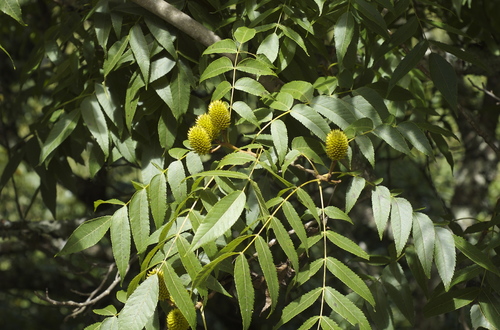
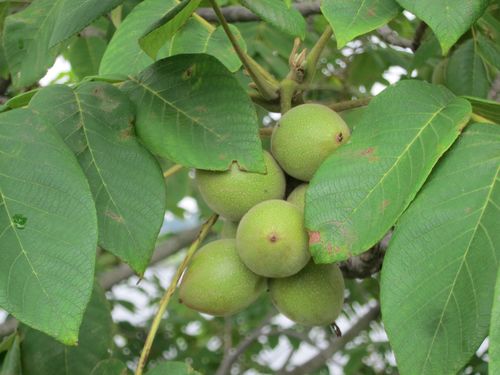
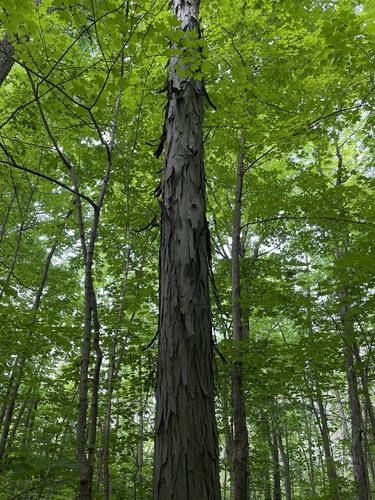
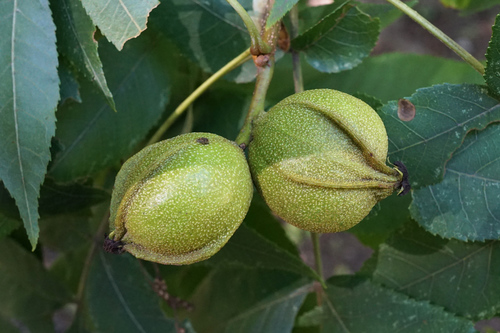
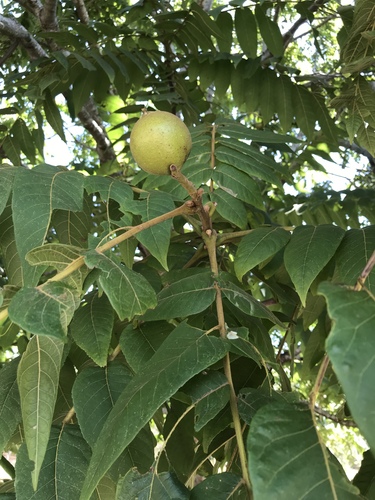
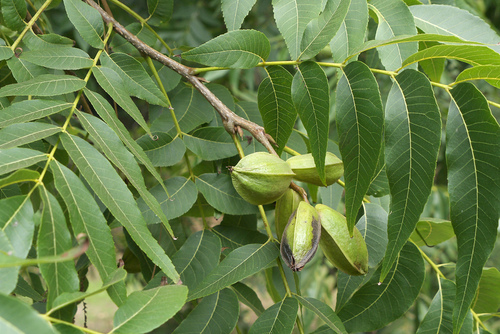
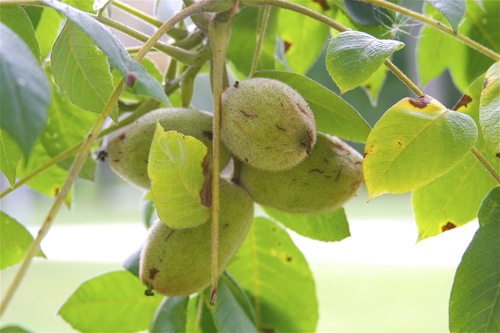
Juglans cinerea L., commonly known as butternut, is a deciduous tree that typically reaches up to 30 metres (98 ft) in height, and rarely grows taller than this. It is a slow-growing species that rarely lives longer than 75 years. Its stem diameter measures 40–80 cm (16–31 in), and it has light gray bark. The leaves are alternate and pinnate, reaching 40–70 cm (16–28 in) in total length. Each leaf holds 11–17 leaflets, with individual leaflets measuring 5–10 cm (2–4 in) long and 3–5 cm (1+1⁄4–2 in) broad. Leaves have a terminal leaflet at the end of the leaf stalk, giving them an odd number of leaflets overall. The entire leaf is covered in downy pubescence, and is a somewhat brighter, yellower green than the leaves of many other tree species. The distribution range of J. cinerea extends east to New Brunswick, from southern Quebec west to Minnesota, south to northern Alabama, and southwest to northern Arkansas. It is absent from most of the Southern United States, and its range does not extend into the Deep South, as it favors a cooler climate than black walnut. Its northern range extends into Wisconsin and Minnesota, where the growing season is too short for black walnut to grow. The species also grows prolifically as an off-site species at middle elevations around 610 m (2,000 ft) above sea level in the Columbia River basin of the Pacific Northwest. As recently as January 26, 2015, mature butternut trees over 2.1 m (7 ft) in diameter at breast height were recorded in the Imnaha River drainage. Butternut produces edible nuts that Native Americans processed into a butter-like oil for various uses. Young green butternuts, which are still soft, can be pickled. Survivalist Bradford Angier recommends pickling these nuts by changing the salt water every other day for a week, then allowing them to season for at least two weeks. The tree's sap can also be used to make syrup.