About Juglans ailantifolia Carrière
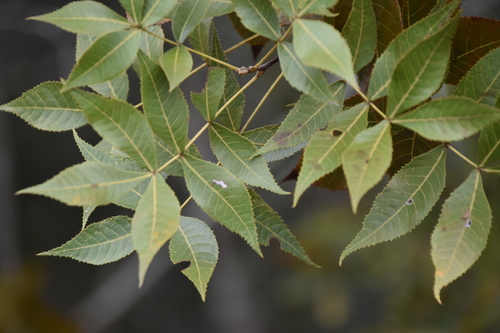
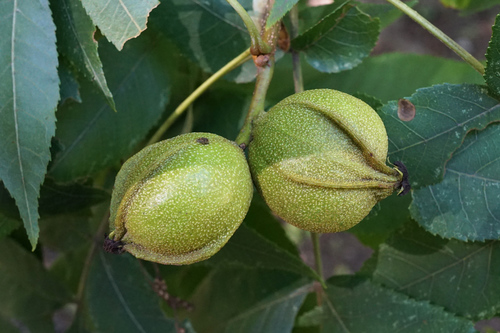
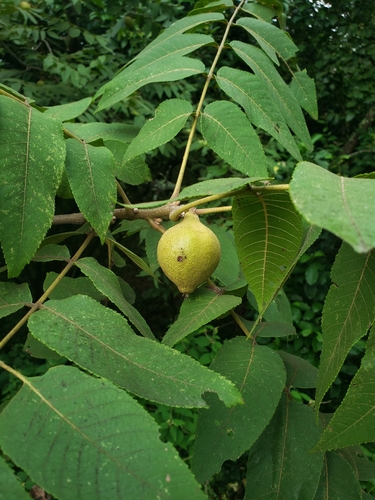
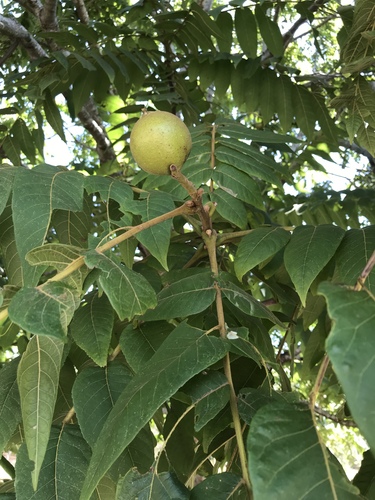
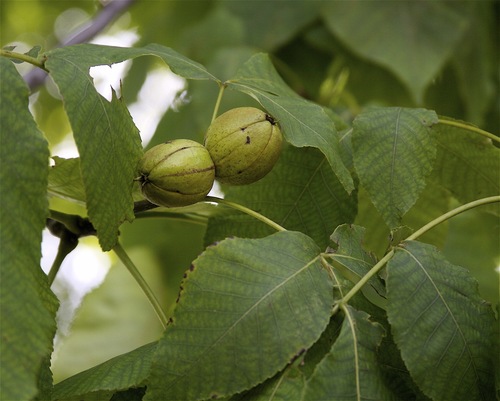
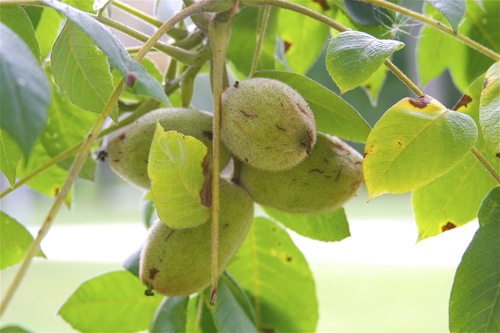
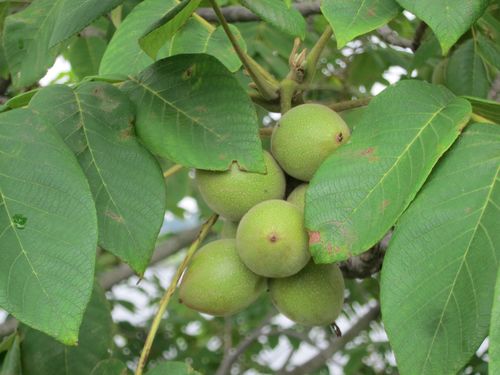
Juglans ailantifolia Carrière is a deciduous tree that typically grows 20 m (66 ft) tall, rarely reaching 30 m (98 ft), with a stem diameter of 40–80 centimetres (16–31 in) and light grey bark. Its leaves are pinnate, 50–90 cm (20–35 in) long, and bear 11–17 leaflets; each individual leaflet measures 7–16 cm (3–6+1⁄2 in) long and 3–5 cm (1–2 in) broad. The entire leaf is covered in downy pubescence, and has a brighter, yellower green shade than the leaves of most other tree species. Male flowers are inconspicuous yellow-green catkins that emerge in spring, at the same time new leaves appear. Female flowers have pink to red pistils. The fruit is a nut, produced in clusters of 4–10; the nut is spherical, 3–5 cm long and broad, and is surrounded by a green husk until it reaches maturity in mid-autumn. The nuts of Juglans ailantifolia Carrière are edible, with an oily texture. The tree's husks are used to produce a yellowish dye. Thanks to its large decorative leaves and spring catkins, it is commonly planted as an ornamental tree in parks and large gardens. Unlike the closely related, very similar North American butternut, Japanese walnut (Juglans ailantifolia Carrière) is resistant to the canker disease caused by the fungus Sirococcus clavigignenti-juglandacearum. Because of this resistance, it has been planted as a replacement for butternuts in North America. Japanese walnut and butternut hybridize easily, producing the hybrid Juglans x bixbyi (also called J. cinerea x ailantifolia or 'buartnut'), which is also canker-resistant and is also planted as a butternut replacement. Japanese walnut can be told apart from butternut by its larger leaves and round, rather than oval, nuts. Prospect Rock Permaculture in Vermont has backcrossed buartnuts with native butternuts to create 'butterbuarts', which are expected to resemble the butternut parent more closely, though they may also be more susceptible to canker. The wood of this tree is light and polishes well, but is lower quality than Persian walnut wood, and it is often used to make furniture. Toyo Tire found that the shells of this species (also called heartnut) are very hard with sharp fragments, leading to their use as a material in studless snow tires.