About Jorunna parva (Baba, 1938)
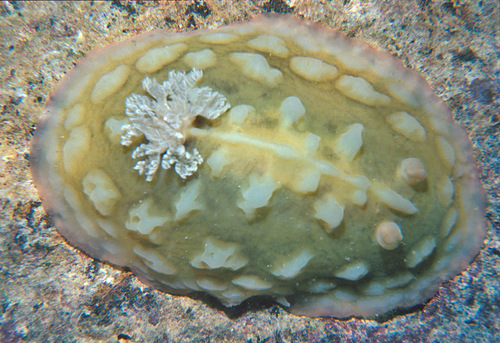
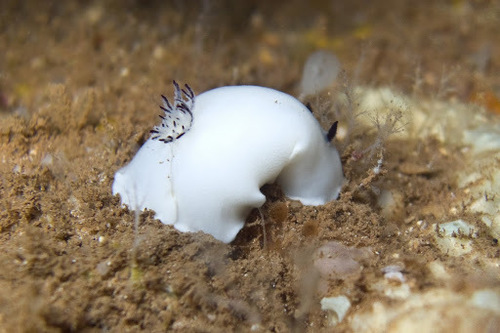
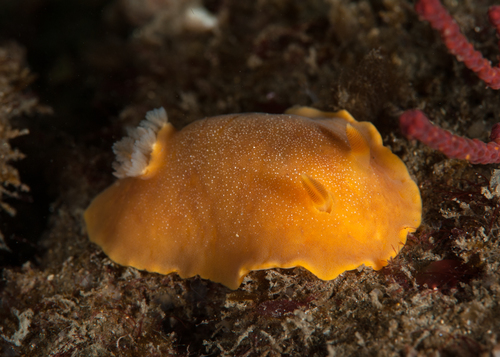
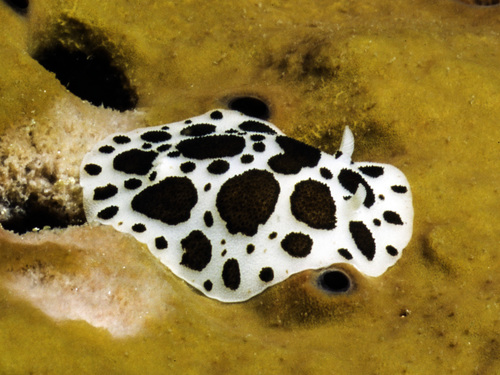
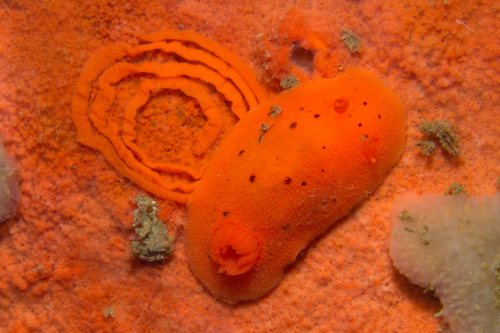
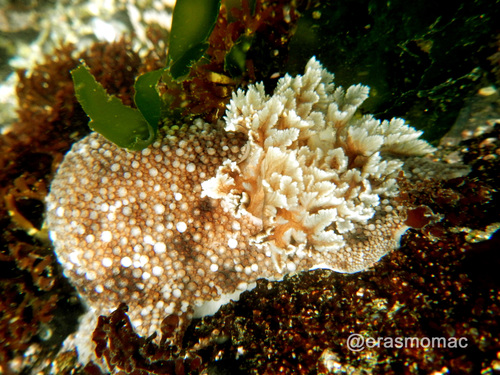
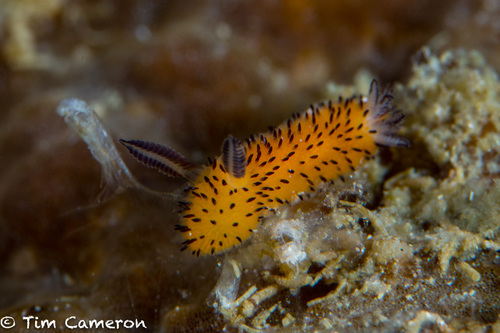
On average, this species grows to around 2.53 cm in length. Its black-and-white rhinophores look somewhat similar to rabbit ears. The species' external gills are positioned near its rear end. Its body is covered in papillae, which are fleshy sensory protuberances that give the animal a furry appearance. Jorunna parva occurs in multiple color forms, including yellow, white, and green; green individuals are rarely photographed. All color variants have black papillae mixed in with papillae that match their main body color. There is ongoing scientific controversy about whether these different color forms actually represent separate, distinct species. Like most other species in the genus Jorunna, Jorunna parva primarily feeds on toxic sponges belonging to the family Chalinidae. It is also known to consume algae, seagrass, and other small creatures including sea slugs and sea snails. When Jorunna parva feeds on toxic sea sponges, it processes the toxins from the sponges and stores them to use as a defense against predators. Jorunna parva are hermaphrodites, which means each individual produces both sperm and egg cells. Individuals cannot fertilize their own eggs. This species was first described from Kii Province, Japan. It has since been recorded from the Philippines, Tanzania, Papua New Guinea, the Seychelles, and Réunion, though there are lingering doubts that these records may instead represent a species complex rather than a single species. Jorunna parva populations are concentrated in areas with abundant food and easily accessible resources. They often cling to submerged vegetation, and spend most of their time on the bottom of tropical waters.