About Johngarthia oceanica Perger, 2019
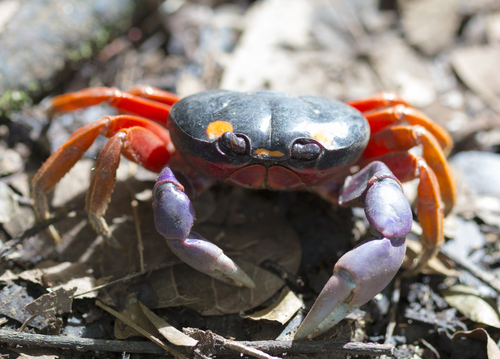
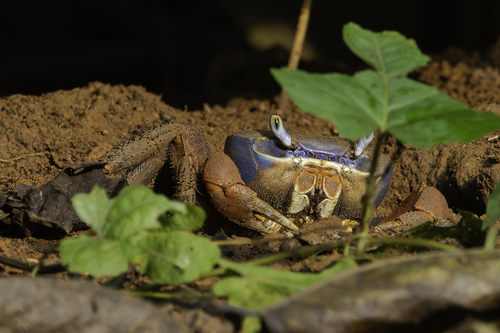
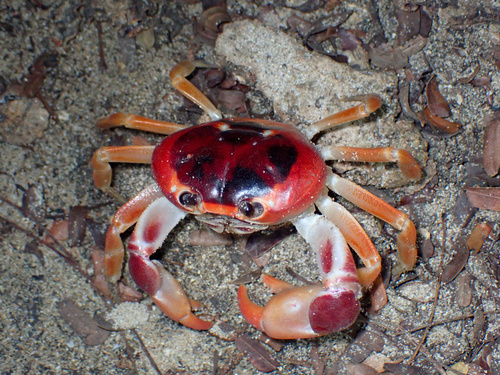
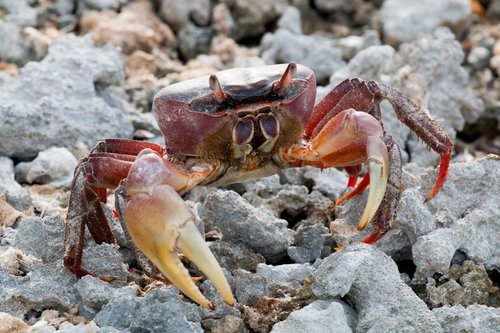
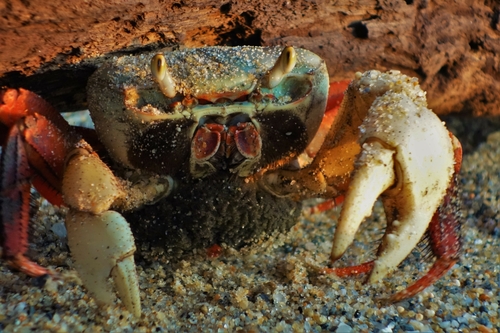
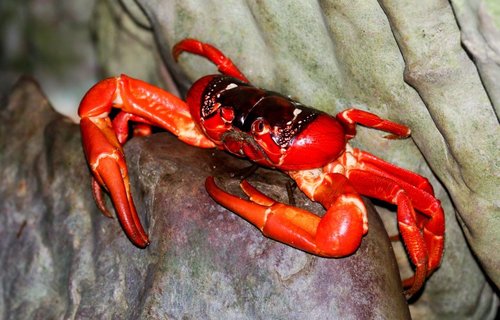
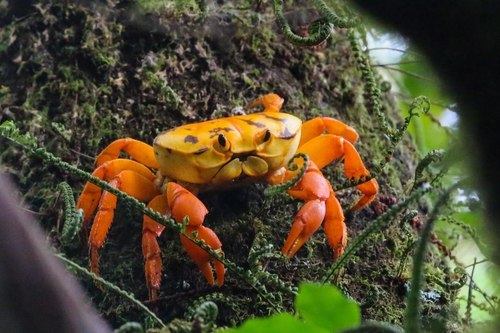
Johngarthia oceanica (Perger, 2019), also commonly called the Clipperton crab, is a bright orange species of land crab. It inhabits Clipperton Island and Socorro Island, which is part of the Revillagigedo Islands located off Mexico in the tropical eastern Pacific. Before 2019, J. oceanica was classified as a subspecies of J. planata, but a reexamination of specimens determined that the land crabs living on these oceanic islands constitute a distinct separate species. J. oceanica can be distinguished from J. planata by two key traits: the shape of the mesial lobe of the infraorbital margin, and the color of its carapace. This species is omnivorous. Its diet includes seaweed (algae), other vegetation, and occasionally carrion. It has been observed climbing trees to feed on leaves. On Clipperton Island, the introduction of species that prey on these land crabs has caused major changes to the island's vegetation. In the 1890s, guano miners introduced pigs to Clipperton Island, which reduced the local J. oceanica population. The drop in crab numbers allowed grassland to gradually spread across roughly 80 percent of the atoll's land area. When these pigs were eliminated in 1958, most of this grassland vegetation disappeared, and millions of crabs returned to the island. Ship rats were introduced to Clipperton Island from shipwrecks in the late 20th or early 21st century. This new introduction has led to another decline in the crab population, which has caused a corresponding increase in vegetation and coconut palms on the island. Studies of predation on J. oceanica on Socorro Island have found that crabs make up a significant portion of the diet of yellow-crowned night herons. Predation on these crabs by red-tailed hawks, and to a limited degree by feral cats, has also been recorded.