About Jodis lactearia (Linnaeus, 1758)
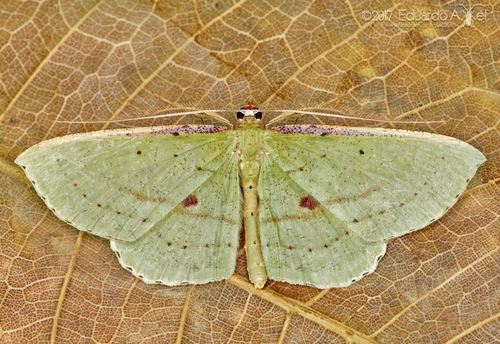
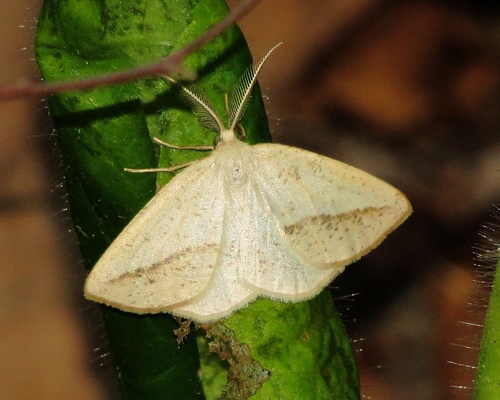
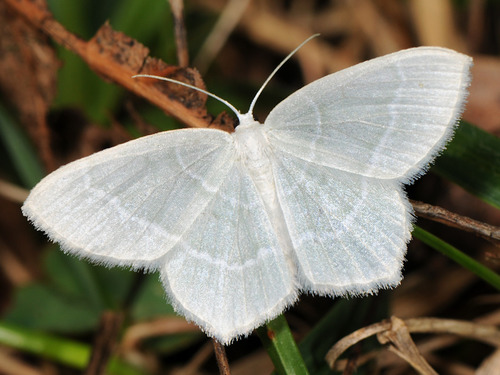
Jodis lactearia, commonly known as the little emerald, is a moth species belonging to the family Geometridae. It was first formally described by Carl Linnaeus in the 10th edition of his work Systema Naturae, published in 1758. This species is distributed across the entire Palearctic realm, ranging from Ireland in the west to Japan in the east. The wingspan of adult Jodis lactearia measures 23 to 26 millimeters. When moths first emerge from their pupal stage, their base wing color is a soft delicate light green, but this green color fades to white over time. Both the forewings and hindwings feature two white medial lines. On both pairs of wings, the white postmedian line runs almost completely parallel to the distal wing margin, and it is not dentate (toothed). The hindwing has a slight angular shape. The larvae of this species are long and thin, and green in body color, with a head split by a deep cleft into two pointed lobes. Jodis lactearia larvae feed primarily on a variety of deciduous trees and shrubs, including species from the genera Betula (birch), Crataegus (hawthorn), and Quercus (oak). The moth inhabits wooded areas, and typically begins flying relatively early in the evening. Its flight is weak, unsteady, and never sustained for very long periods.