About Jepsonia parryi (Torr.) Small
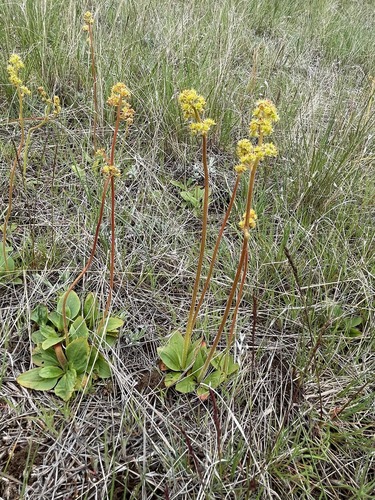
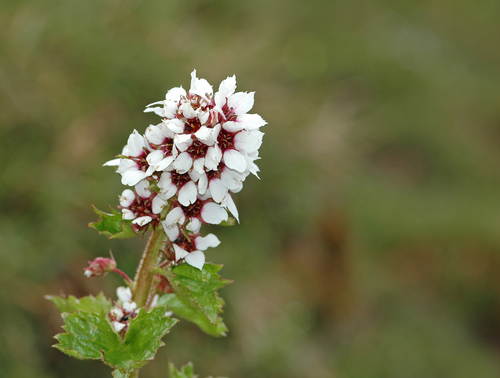
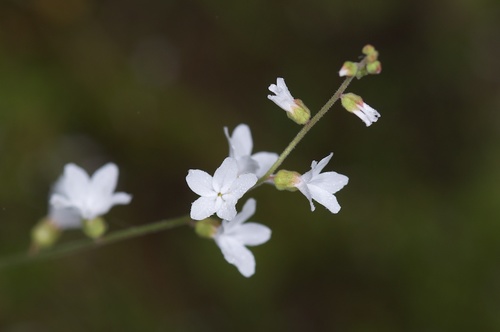
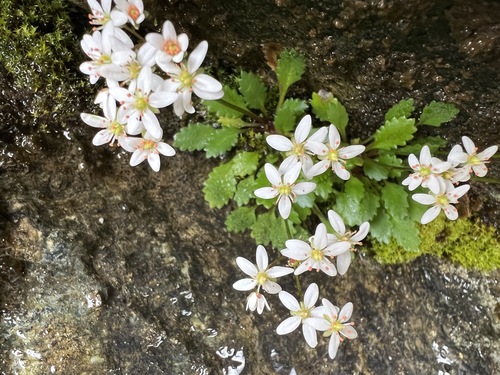
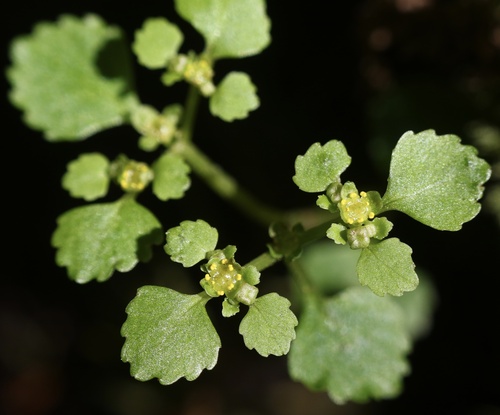
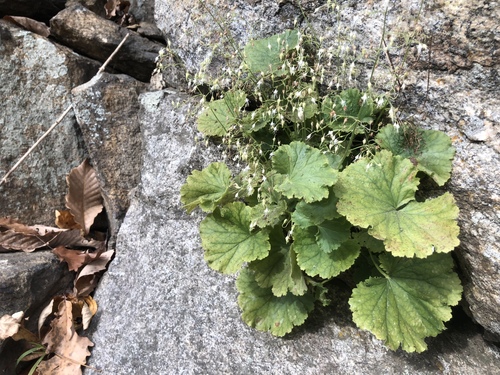
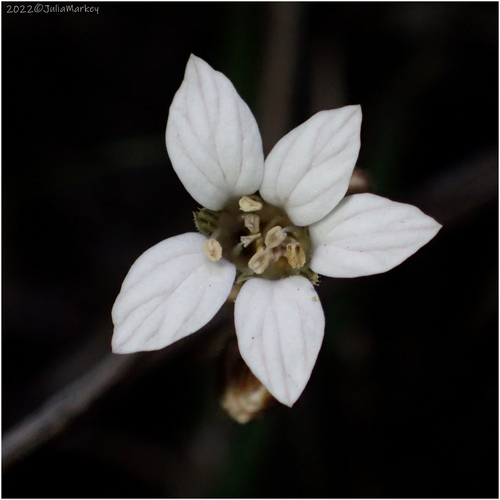
Jepsonia parryi (Torr.) Small is a small perennial herb that grows from an enlarged, unbranched underground stem called a caudex. This caudex is typically ovoid in shape, and only rarely spherical. On average, each plant produces just one leaf. If the original leaf is injured, a new leaf may grow to replace it. The leaf is round or kidney-shaped with a ruffled, lobed edge. Flowering occurs between October and February. During flowering, the plant produces a naked brown peduncle, generally 3 to 28 cm tall, that holds a small inflorescence with fewer than four flowers. The tiny flowers have petals that are tan with purplish veins, though the petals can also range from tan to fully purplish-veined. Most leaves emerge after flowering is complete, but a small number may emerge before flowering. In very dry years, the plant may not produce any leaves at all. Within its genus Jepsonia, this species has the fewest inflorescences per plant, the fewest flowers per inflorescence, and the shortest flowering period. This species is heterostylous, meaning its flowers have styles of differing lengths. This heterostylous structure makes pollination difficult for the plant. Its known pollinators are hover flies and halictid bees. This species is distributed in the United States and Mexico, occurring in the state of California in the US and the state of Baja California in Mexico. In California, it is found on the far southern coast and in the Peninsular Ranges, within Orange, Riverside, and San Diego counties. In Baja California, it occurs uncommonly from the area around Tijuana south to El Rosario, and also grows on the adjacent Coronado Islands. It most often grows on shrubby, rocky to brushy clay slopes, usually north-facing ones, and is typically found below 1100 to 1200 meters in elevation. It can also occasionally be found in rich flatlands or shaded rock crevices. Its habitat's climate is usually strongly influenced by the Pacific Ocean.