About Jasus edwardsii (Hutton, 1875)
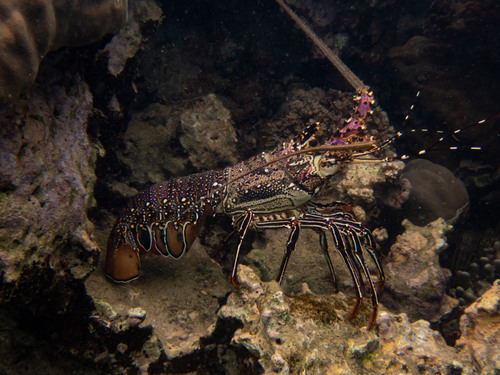
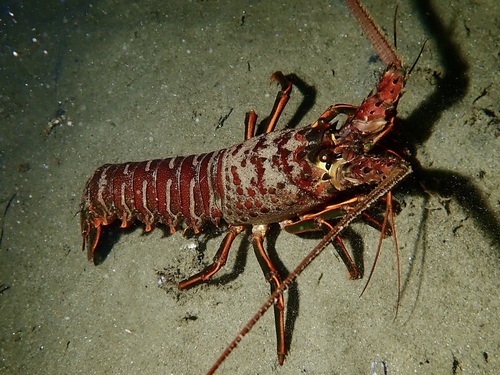
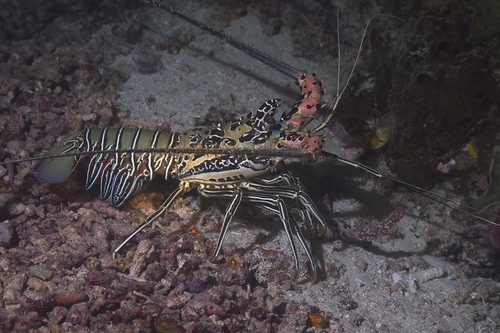
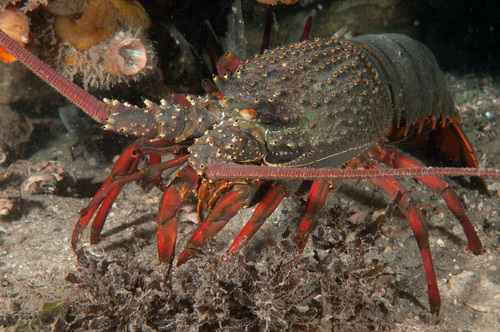
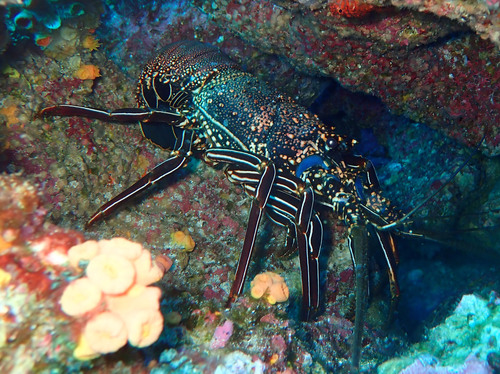
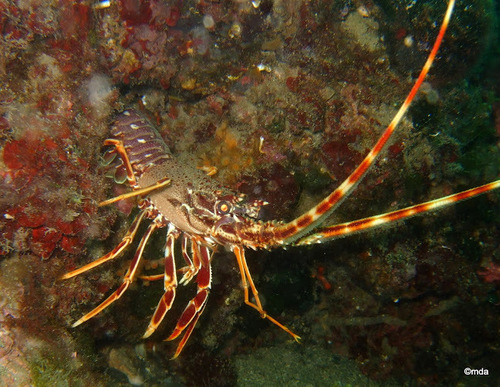
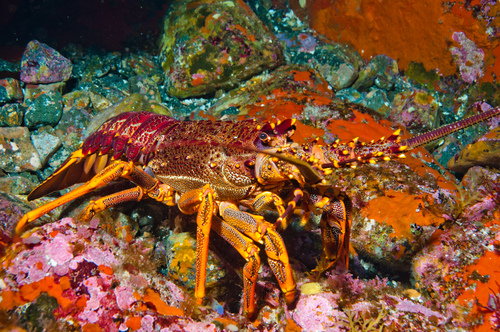
Jasus edwardsii (Hutton, 1875), commonly known as the southern rock lobster, red rock lobster, or spiny rock lobster, is a species of spiny lobster. It is widely known as crayfish in Australia and New Zealand, and called kōura in the Māori language. This species occurs throughout coastal waters of southern Australia and New Zealand, including the Chatham Islands. It resembles true lobsters, but lacks the large characteristic pincers on the first pair of walking legs. Spiny rock lobsters are carnivorous, and leave their rock shelters to forage for food at night. They inhabit reefs and surrounding areas at depths of 5 to 200 metres (16 to 660 ft) on the continental shelf. Their colouration can be dark red and orange on the upper body with paler yellowish abdomens, or grey-green-brown with a paler underside. Individuals in more tropical populations tend to have brighter colouring. Adult carapaces can reach up to 230 millimetres (9.1 in) in length, and in underfished areas, adults often weigh more than 8 kilograms (18 lb). The full distribution of Jasus edwardsii covers most of the coast of New Zealand, including the three main islands, the Three Kings Islands, the Chatham Islands, the Snares Islands, the Bounty Islands, the Antipodes Islands, and the Auckland Islands. The Auckland Islands are the southernmost location where spiny lobsters occur in the world. In Australia, J. edwardsii is found along the southern coast, ranging from central New South Wales to southern Western Australia, including Tasmania. Adult Jasus edwardsii reach sexual maturity between 7 and 11 years of age. Mating takes place in late summer and autumn. After fertilisation, developing eggs are carried by females, attached to hairs on the underside of the female's abdomen below the tail. Females carry between 100,000 and 500,000 eggs for 3 to 5 months while they develop. When development is complete, eggs hatch into naupliosoma larvae, which leave the female to become free-swimming plankton. These larvae migrate toward the surface and moult into phyllosoma larvae. This species has one of the longest larval development periods recorded for any marine animal. Phyllosoma larvae, named for their Greek meaning 'leaf-like', spend between 9 months and 2 years in oceanic waters before metamorphosing into a post-larval stage called the puerulus. The puerulus then swims toward the coast to settle. Jasus edwardsii is a valued food species, prized by consumers in Oceania, China, and South-East Asia for its sweet, succulent flesh. Like true lobster, it can be prepared boiled, steamed, grilled, or eaten raw. In Australia alone, the annual harvest of this species is worth A$250 million. For hatchery rearing of juvenile lobsters, the National Institute of Water and Atmospheric Research (NIWA) has primarily used brine shrimp as feed, though little is known about this species' preferred natural food source. Chopped mussel flesh was previously used for rearing in Japan. Both of these feed sources have potential disadvantages: brine shrimp can introduce disease, while mussels deteriorate once added to water, creating an environment that allows bacteria to grow. One study found that mussels combined with a carbohydrate source in the form of agar produces the best growth, allowing juvenile lobsters to grow faster.