About Jacquemontia reclinata House
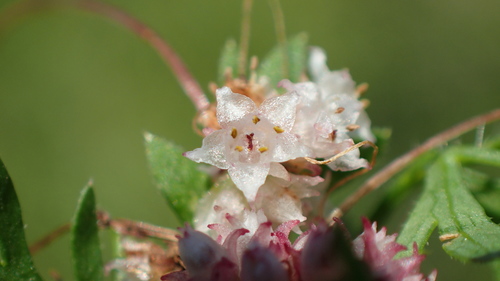
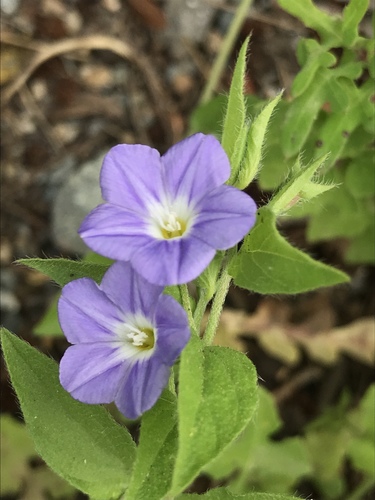
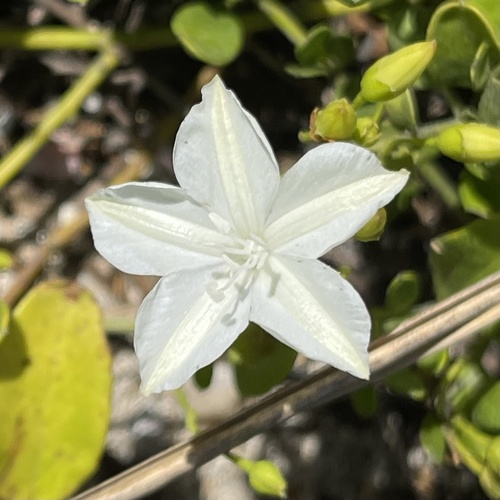
Jacquemontia reclinata House is a rare flowering plant in the morning glory family, with common names including beach clustervine, reclined clustervine, and beach jacquemontia. It is endemic to the southeastern coast of Florida in the United States, where most of its range falls within the South Florida metropolitan area, and very little of its native habitat still exists. It is a federally listed endangered species. This is a creeping vine with a woody base, and its stems can grow up to one meter long; stems may also climb on other plants. The vine produces fleshy leaves that reach up to 3 centimeters in length, and star-shaped white flowers. The plant grows on barrier islands, where it occurs in multiple habitat types including sand dunes and tropical hardwood hammocks. It grows in sunny, open, and disturbed areas; these bare patches were historically formed by hurricanes, and today they are sometimes created by human activity. Other plant species that grow in this habitat type include seagrape (Coccoloba uvifera) and Madagascar periwinkle (Catharanthus roseus). In 2001, there were ten known populations of this plant, totaling approximately 733 individuals. By 2007, estimates indicated the total population had decreased by 13% since 2000. The species occurs in Broward, Palm Beach, and Dade Counties; it was previously recorded in Martin County, but is now thought to be extirpated there. The coastal strips of these counties are heavily populated and undergoing constant development, which has cleared and consumed natural habitat for residential, commercial, and other uses. The remaining populations of the plant grow on land that is fragmented and degraded. The habitat is invaded by introduced plant species such as Brazilian pepper (Schinus terebinthifolius). Additional threats to the species include recreational activity and beach erosion.