About Jacaratia spinosa (Aubl.) A.DC.
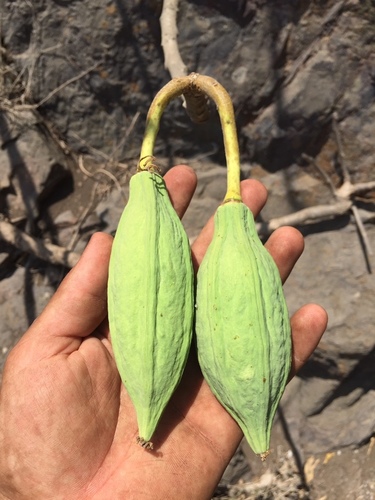
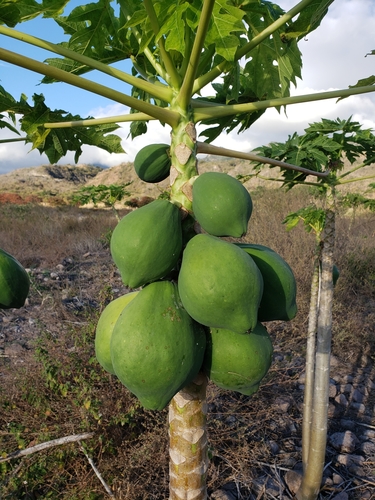
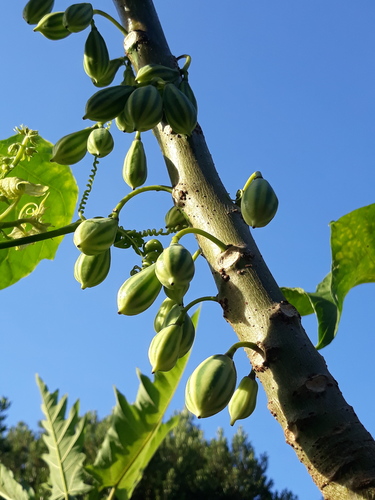
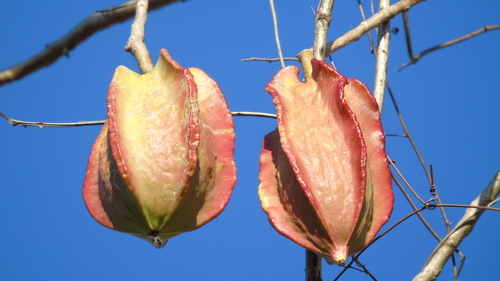
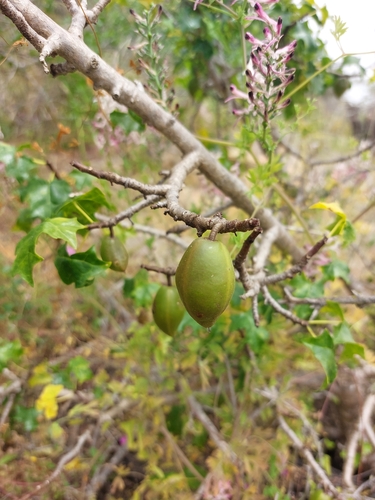
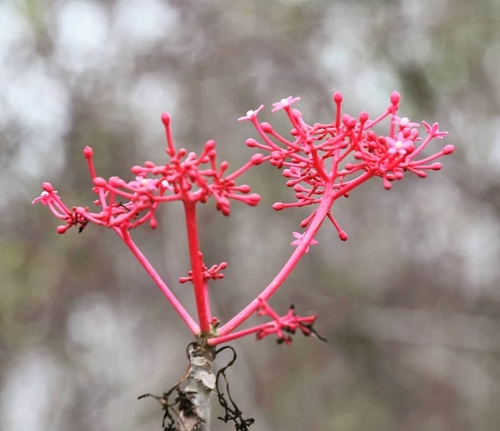
Jacaratia spinosa, commonly called yacaratiá, is a deciduous tree. It grows with an open, narrow crown, reaching a maximum height of 15 meters (50 feet). Its trunk and branches are covered in short, stout conical spines. The tree’s fruit is eaten by a wide range of animals and humans, including lowland tapirs, brown howler monkeys, white-lipped peccaries, collared peccaries, white-eared opossums, Argentine black and white tegus, southern muriquis, and birds. The fruit of Jacaratia spinosa is edible both raw and cooked. If eaten raw, the fruit skin must be scored and left to stand for some time to release its large amount of latex. Uniquely, the soft, fibrous wood of the yacaratiá tree is eaten as a delicacy in Argentinian restaurants. It is often prepared by soaking in honey or syrup, and is also used as an ingredient in chocolate bonbons and flavored jams that contain yacaratiá sawdust. Its flavor has been compared to chestnuts. Unlike most tree wood, which humans cannot digest due to its high lignin content, yacaratiá wood is only 10% cellulose. Most of its mass is water, and it has a very low lignin content. Similar to few other plants, the cell walls of yacaratiá tissue have large spaces that store water.