About Ixodes ricinus Linnaeus, 1758
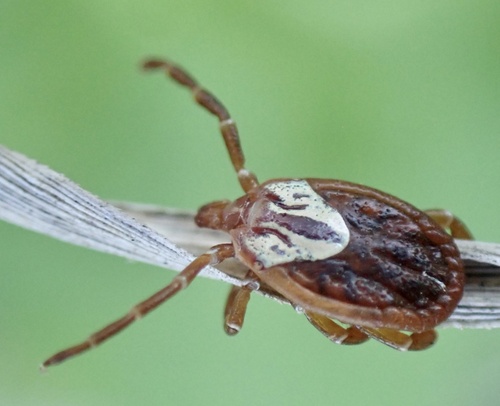
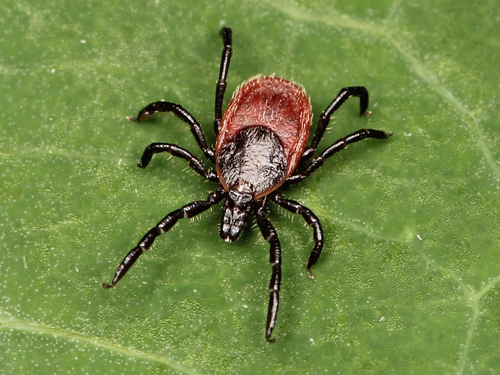
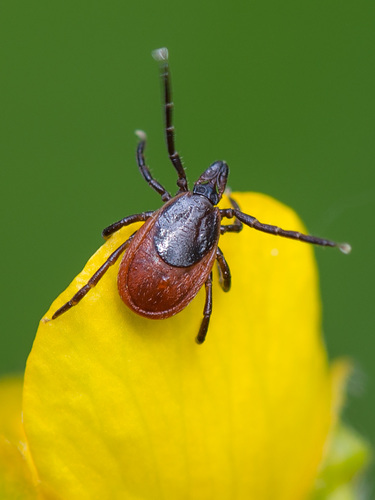
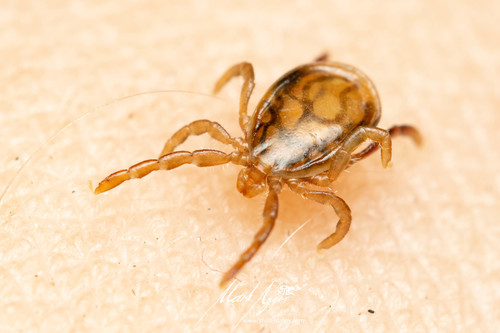
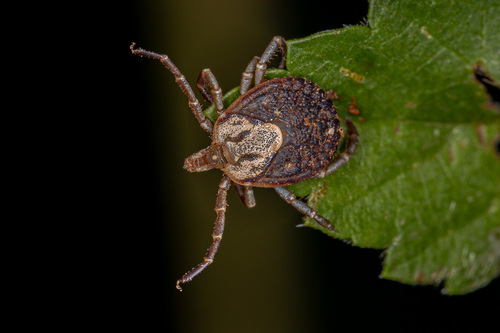
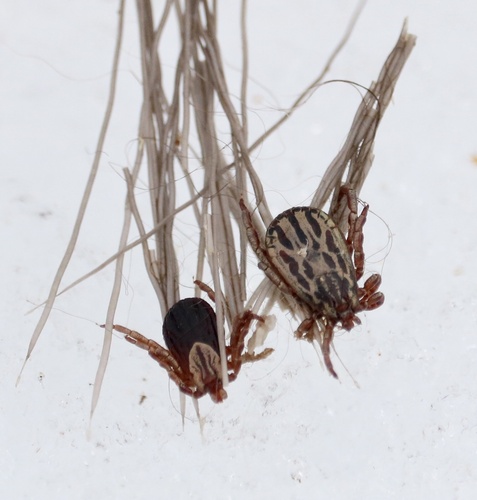
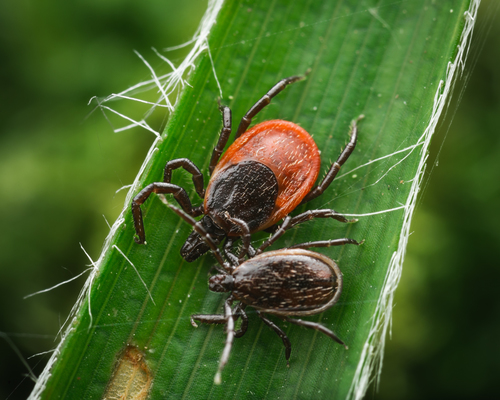
Like other species in the genus Ixodes, Ixodes ricinus Linnaeus, 1758 has no eyes, lacks ornate patterning, and does not have festoons (wrinkles along the posterior body margin). Its palpi are longer than they are wide, and an anal groove sits above the anus. This tick has a hard dorsal shield: it covers the entire opisthosoma (abdomen) in adult males, but only part of the opisthosoma in females and nymphs. I. ricinus is the largest of the three common Ixodes species found in the British Isles; the other two species are I. canisuga (the British dog tick) and I. trianguliceps (the vole tick). Adult males measure 2.4–2.8 mm (0.09–0.11 in) long, while unfed nymphs are 1.3–1.5 mm (0.05–0.06 in) long. Unfed females are 3.0–3.6 mm (0.12–0.14 in) long, and can reach 11 mm (0.43 in) long when engorged after feeding. Ixodes ricinus is distributed across Europe, extending into neighboring regions of North Africa and the Middle East, and reaches as far north as Iceland and as far east as parts of Russia. Its northern range boundary appears to be shaped by environmental factors including temperature, as a period of mild winters in Scandinavia coincided with a northward range expansion of this species. I. ricinus is most common in habitats with abundant host populations, such as woodlands, heaths and forests. It is most prevalent in relatively humid areas, and is absent from most of the dry summer Mediterranean Region.