About Iva annua L.
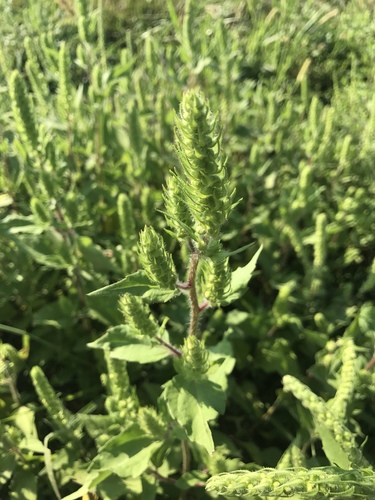
Iva annua L., also known as marshelder or sumpweed, is an annual herb that grows up to 150 cm (5 feet) tall. It produces many small flower heads arranged in a narrow, elongated, spike-like structure; each flower head contains 11–17 disc florets and no ray florets. When its leaves or pollen are touched, the plant gives off a unique odor, which is not found in its winnowed seeds. Cultivated varieties of Iva annua (variety macrocarpa), which were bred by Native Americans, have seeds that are 6–9 mm long. In comparison, wild-type Iva annua has an average seed length of 3 mm, and wild seeds do not exceed 4.5 mm in length. Iva annua is native to northeastern Mexico (specifically Tamaulipas) and the central and southern United States, primarily growing in the Great Plains and Mississippi Valley extending as far north as North Dakota. There are some populations of the species in the eastern United States, but these are thought to be introduced populations. Around 4,000 years ago, Iva annua was cultivated for its edible seeds by Native Americans in central and eastern United States, as part of the Eastern Agricultural Complex. It was particularly important to indigenous peoples of the Kansas City Hopewell culture that lived in what is now Missouri and Illinois. The edible parts of the plant contain 32 percent protein and 45 percent oil. Like its relative ragweed, sumpweed has multiple objectionable qualities: it is a severe potential allergen, and it has the distinct unique odor mentioned earlier. These traits are likely why the crop was abandoned after more favorable alternatives such as maize became available. By the time Europeans arrived in the Americas, Iva annua was no longer grown as a crop.