About Ithycerus noveboracensis (J.R.Forster, 1771)
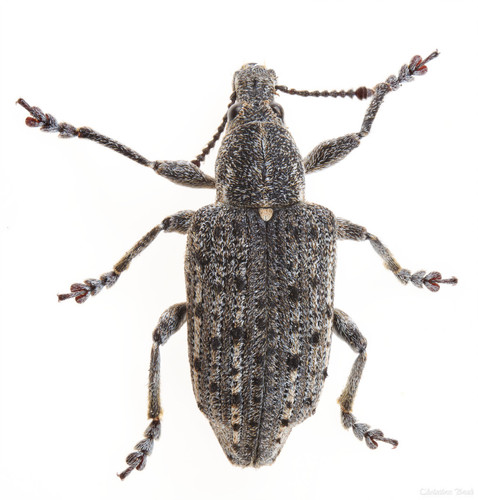
The New York weevil, with the scientific name Ithycerus noveboracensis, is a species of primitive weevil. It is large for a weevil, measuring between 12 and 18 mm long. Its body is covered in fine bristles, and displays a regular pattern of light and dark spots. Its rostrum, or snout, is broad and stout, while its antennae are straight and thin, with the final three antennomeres forming a small club. This species occurs in the eastern United States and southern Canada. It is found in association with various plants from the families Fagaceae, Betulaceae, and Juglandaceae, most notably white oak and American beech. Adult New York weevils feed on new growth and other soft plant parts, such as leaf petioles and buds. Females lay their eggs in the ground, and the hatching grubs feed on the roots of the same host plants. Though this species was originally classified within the family Curculionidae, coleopterists have long agreed that Ithycerus belongs to a different family. This reclassification is due to the fact that this species lacks the geniculate, or elbowed, antennae that are a characteristic feature of true weevils. It was traditionally considered the only species in its own separate family, Ithyceridae. However, more recent classification systems place it as the sole member of the subfamily Ithycerinae within the family Brentidae.

