About Iteomyia major (Kieffer, 1898)
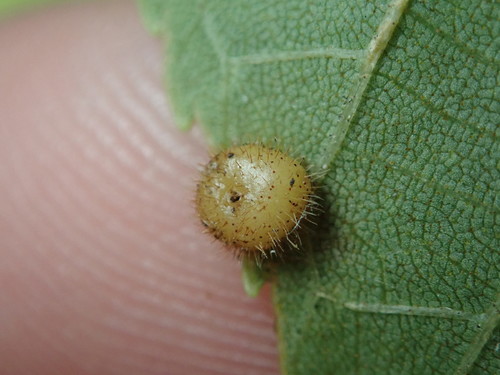
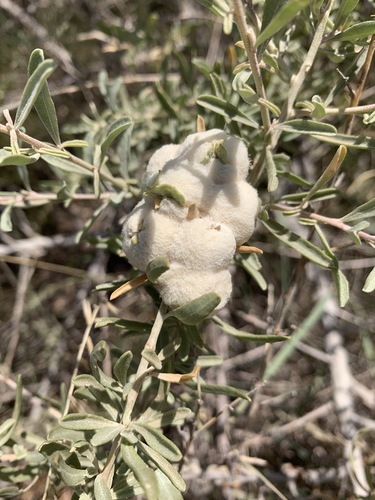
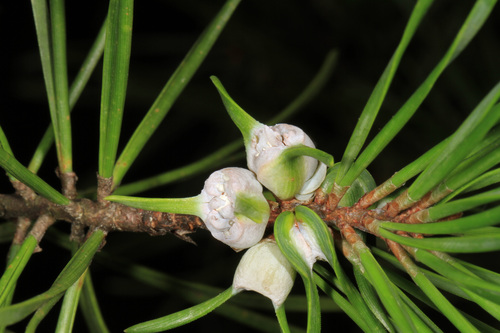
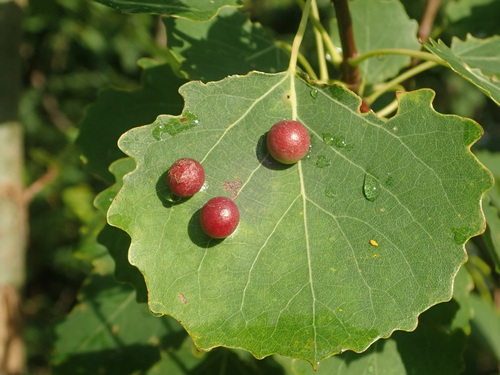
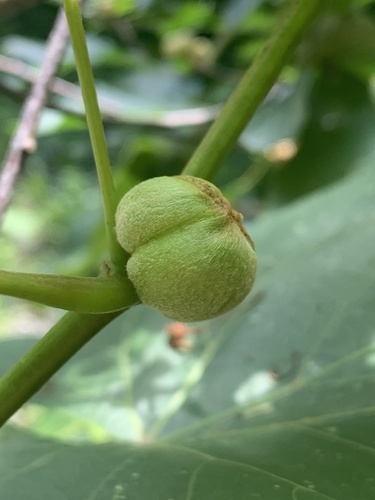
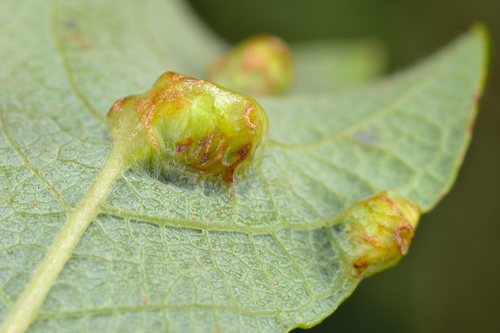
This species, Iteomyia major (Kieffer, 1898), forms distinctive galls on host plant leaves. The gall is a joined cluster of 2 to 10 hard, round galls, which develops along a leaf midrib or side vein and is equally visible on both sides of the leaf. Each individual gall holds a single larva that is white when young and turns orange or red as it matures. Iteomyia major has only one generation per year, and pupation occurs in the soil. Females of this species prefer to lay eggs on broad-leaf willows, and galls are found on sallows, their hybrids, and a number of specific willow species: bay willow (Salix pentandra), bitter willow (Salix elaeagnos), dark-leaved willow (Salix myrsinifolia), eared willow (Salix aurita), goat willow (Salix caprea), gray willow (Salix glauca), grey willow (Salix cinerea), purple willow (Salix purpurea), tea-leaved willow (Salix phylicifolia), and woolly willow (Salix lanata). This species has been recorded from Great Britain, including England, Scotland, and Wales, as well as from the Netherlands.