About Iteomyia capreae (Winnertz, 1853)
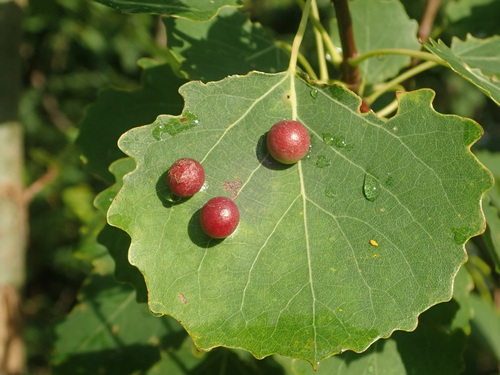
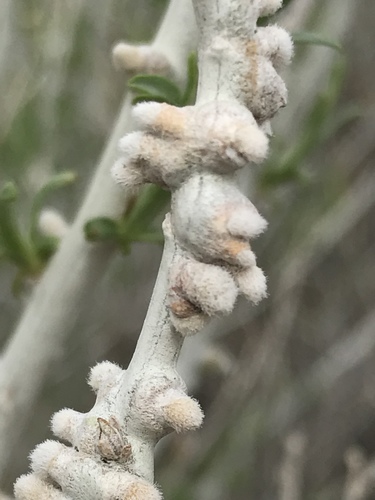
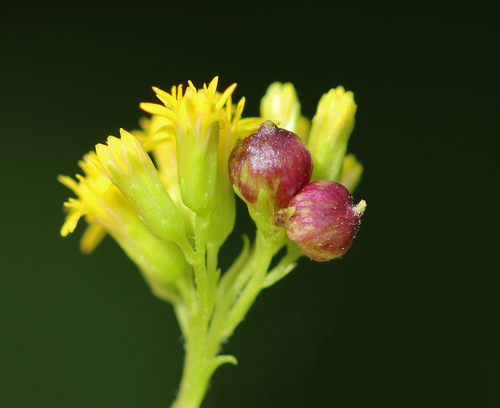
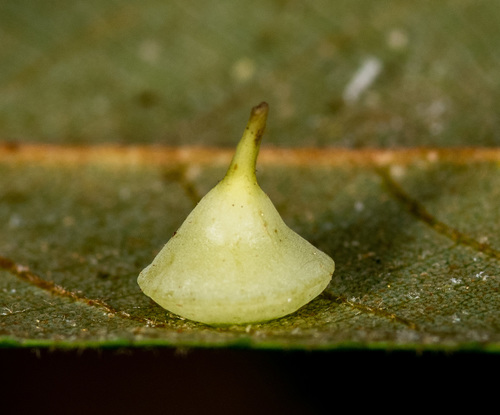
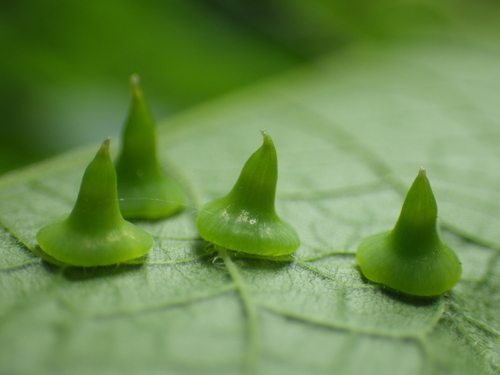
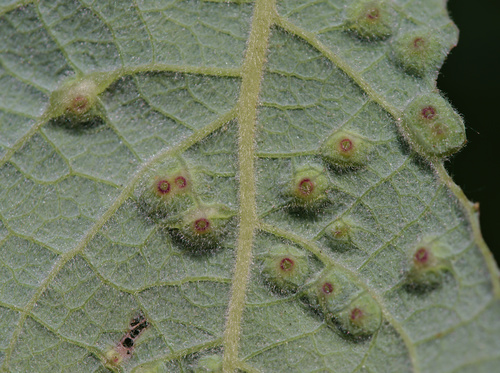
The gall-forming midge Iteomyia capreae (Winnertz, 1853) produces two distinct types of galls, which develop either on a leaf blade or on a leaf side-vein. Galls located on the leaf blade are hard, domed pouches on the upper leaf surface, and are conical on the lower surface with a red-rimmed opening. The opening is hairless, initially greenish, and later changes color to yellow, brown, purple, or red. Each leaf blade gall contains a single larva, which is white when young and becomes orange or red as it develops. Galls that form on leaf side-veins are hard, 2–3 mm long swellings that each contain a larva. When larvae reach maturity, they exit the gall, drop to the ground, overwinter in soil, and pupate the following spring. These galls occur on sallows, their hybrids, and a range of related willow species: almond willow (Salix triandra), common osier (Salix viminalis), crack willow (Salix fragilis), dark-leaved willow (Salix myrsinifolia), eared willow (Salix aurita), European violet willow (Salix daphnoides), goat willow (Salix caprea), grey willow (Salix cinerea), and Salix appendiculata. This insect has been recorded across Asia and Europe, ranging west from Ireland and Portugal east to Siberia, China, and Japan.