About Itapotihyla langsdorffii (Duméril & Bibron, 1841)
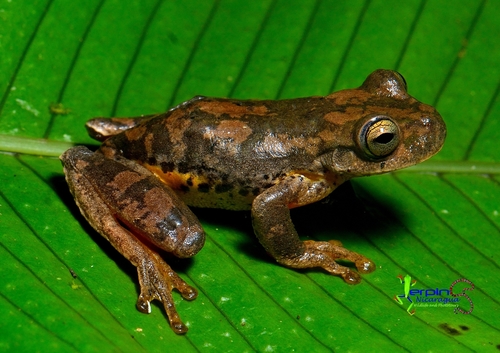
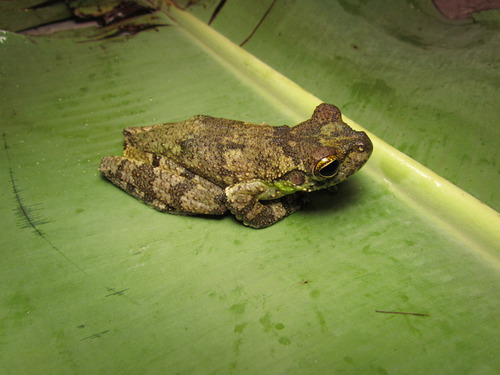
Itapotihyla langsdorffii (Duméril & Bibron, 1841) is a species of relatively large treefrog. This species exhibits sexual dimorphism: females have a mean snout–vent length of 103 mm (4.1 in), which makes them larger than males, which have a mean snout–vent length of 81 mm (3.2 in). Itapotihyla langsdorffii is an arboreal frog that lives on shrubs and trees within rainforest, and it is restricted to pristine habitats. The species is locally abundant in suitable habitats across Brazil. The known Paraguayan population of Itapotihyla langsdorffii is assumed to be declining due to habitat loss, and may be seriously threatened, but the species as a whole is not considered threatened overall. Reproduction for this species occurs in temporary and permanent pools located inside rainforest. Itapotihyla langsdorffii is an explosive breeder, with a mean brood size of over 6000 eggs. Breeding activity is linked to intense vocalization from males. Beyond vocalization, male–male interactions during breeding can include grabbing, pushing, and even direct physical combat. This type of behavior is more commonly observed in frog species where males are larger than females.