About Isurus oxyrinchus Rafinesque, 1810
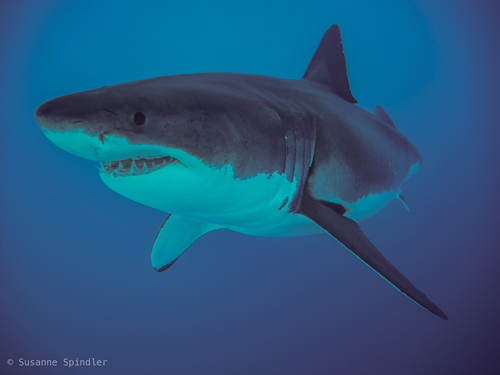
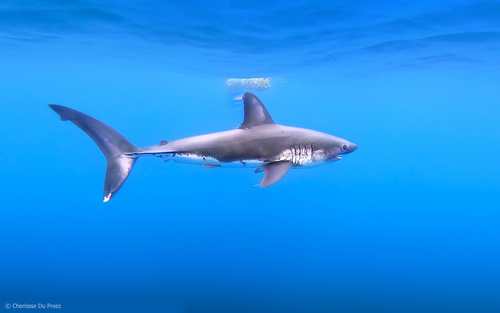
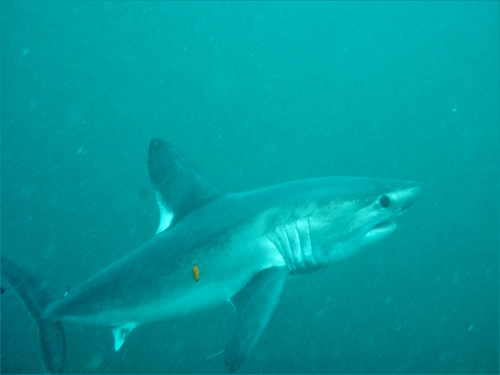
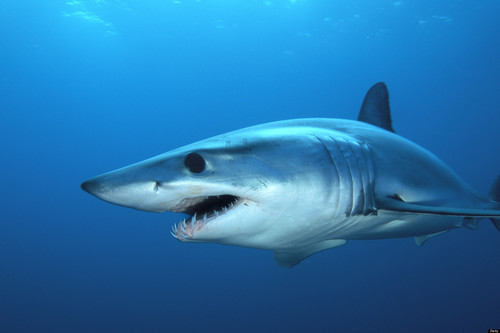
The shortfin mako (Isurus oxyrinchus Rafinesque, 1810) is a fairly large species of shark. Compared to other lamnid sharks, this species shows somewhat faster growth rates. A typical adult shortfin mako measures around 2.5 to 3.2 m (8.2 to 10.5 ft) long and weighs 60–140 kg (130–310 lb). The species has sexual dimorphism, with females typically larger than males. Large mature specimens are recorded: a few large mature females exceed 3.8 m (12 ft) in length and 550 kg (1,210 lb) in weight. The largest individual caught on hook-and-line weighed 600 kg (1,300 lb), caught off the coast of California on June 3, 2013. The longest verified individual measured 4.45 m (14.6 ft), caught off the Mediterranean coast of France in September 1973. One specimen caught off the coast of Italy and examined at an Italian fish market in 1881 was reported to reach an extraordinary 1,000 kg (2,200 lb) at 4 m (13 ft) long. Another specimen caught off Marmaris, Turkey in the late 1950s was estimated to reach between 5.7 and 6.19 m (18.7 and 20.3 ft) long, which would make it the largest known specimen of the species. However, this size estimate was made from photos of the shark, not when the shark was captured, so it must be treated with reasonable caution, and no weight was estimated for this specimen. The shortfin mako shark has a fusiform body shape, with blunt triangular dorsal and pectoral fins, and a vertically elongated caudal fin made of two lobes of roughly equal size. A single, very pronounced caudal keel runs along the side of the tail base. This species shows countershading: it has brilliant metallic blue coloration on its dorsal (upper) side and white on its ventral (underside). The dividing line between the blue upper body and white lower body is distinct. The underside of the snout and the area around the mouth are typically white, though larger individuals tend to have darker coloration that extends onto areas that would be white in smaller individuals. Juvenile shortfin makos differ by having a clear, blackish stain on the tip of the snout. A unique color variant called the "marrajo criollo" has dusky mottling that extends down the snout and around the mouth, and is thought to be found only in the waters of the Azores. The shortfin mako shark strongly resembles its close relative the longfin mako shark, but the longfin mako has much larger pectoral fins, darker coloration around the mouth, and larger eyes. Shortfin makos can be distinguished from closely related porbeagle sharks of the genus Lamna by the presence of only one lateral keel on the tail, and the lack of lateral cusps on the teeth. The shortfin mako shark is recognized as the fastest shark in the ocean, reaching sustained speeds of 50 km/h (31 mph), with burst speeds up to 74 km/h (46 mph). The shortfin mako shark is a cosmopolitan species that lives in offshore temperate and tropical seas worldwide. It is a pelagic species found from the surface down to depths of 150 m (490 ft). It normally stays far from land, though it occasionally comes closer to shore around islands or inlets. It is one of the very few known endothermic (warm-bodied) sharks, and is rarely found in waters colder than 16 °C (61 °F). In the western Atlantic, it ranges from Argentina and the Gulf of Mexico to Browns Bank off Nova Scotia. In Canadian waters, these sharks are neither abundant nor rare. Swordfish are good indicators of shortfin mako populations, because swordfish are a prey source for shortfin makos and prefer the same environmental conditions. The shortfin mako is one of the most commonly encountered sharks in the waters of New Zealand. Shortfin mako sharks travel long distances to find prey or mates. In December 1998, a female tagged off California was captured in the central Pacific by a Japanese research vessel, meaning this individual traveled over 2,776 km (1,725 mi). Another specimen swam 2,128 km (1,322 mi) in 37 days, averaging 58 km (36 mi) per day. The shortfin mako shark is yolk-sac ovoviviparous, meaning it gives birth to live young. Developing embryos feed on unfertilized eggs inside the uterus during a 15 to 18 month gestation period. Unlike sand tiger sharks, shortfin mako embryos are not known to cannibalize other embryos. Between four and 18 surviving young are born in late winter and early spring, each measuring about 70 cm (28 in) long. Females may rest for 18 months after giving birth before mating again. On average, shortfin mako sharks produce a litter of young every three years. A documented common mating strategy for the species is polyandry, which uses multiple paternity to produce a single brood sired by multiple males. This strategy is common across many taxa, including both invertebrates and vertebrates.