About Istiblennius zebra (Vaillant & Sauvage, 1875)
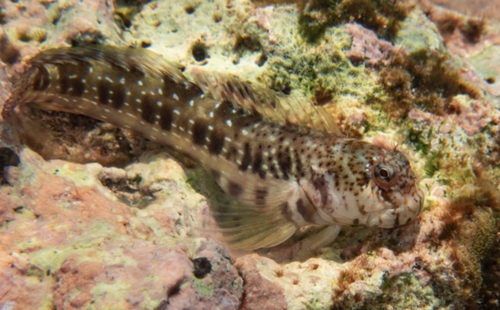
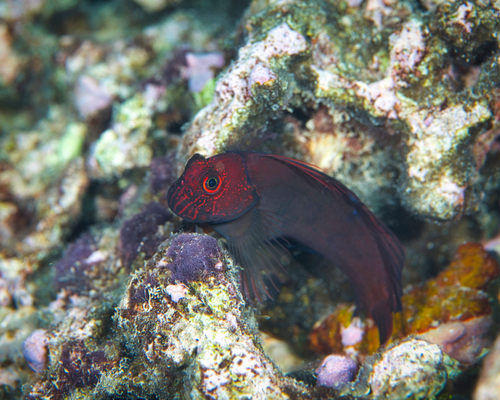
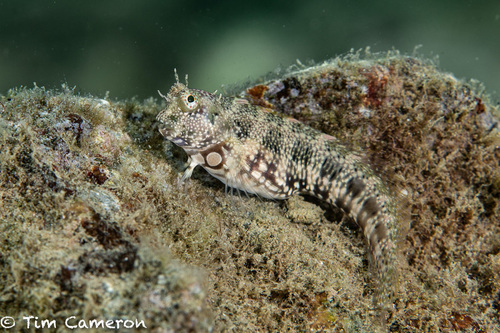
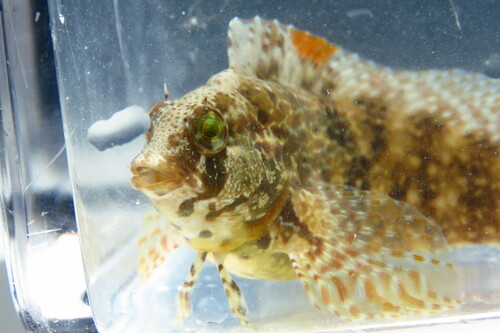
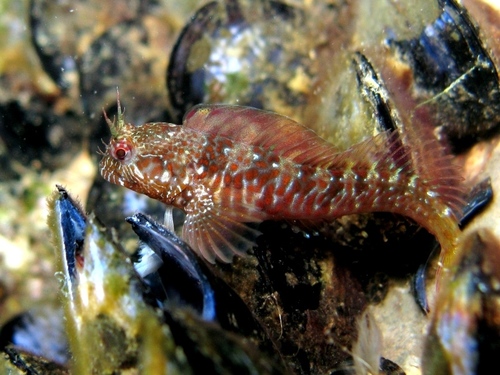
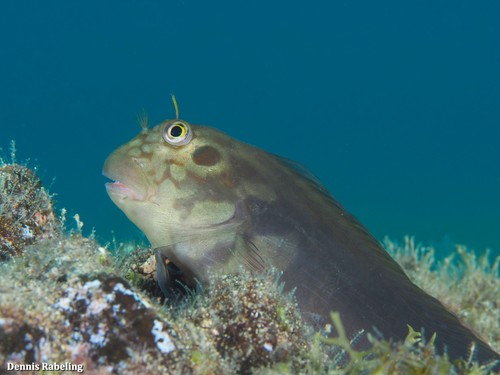
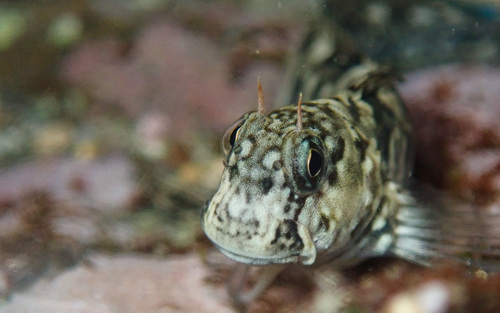
Istiblennius zebra (Vaillant & Sauvage, 1875), commonly called the zebra blenny, has variable appearance: its body ranges in shade from glossy blue-black to charcoal or brownish gray, with distinct clear stripes. When in shallow water or when startled, the body develops a speckled pattern. Adult zebra blennies have a row of small, bright blue dots below their eyes. They have a crest on the head plus two tentacles, which are longer in males; these structures collapse when the fish is out of water. Males of this species grow to a maximum standard length of 19.3 cm (7.6 in), while females reach a maximum standard length of 14.1 cm (5.6 in).
Zebra blennies spawn year-round, with spawning activity peaking in spring and early summer. When breeding, males develop light yellow-tan patches on their cheeks. These patches become more vivid when the male defends his territory, and fade away when he leaves. The male builds a nest inside a crevice, and performs vertical loop movements to attract females. The female attaches up to 10,000 eggs to the crevice walls; the male fertilizes the eggs and guards them until they hatch, a process that typically takes around two weeks. After hatching, larvae swim out into the open ocean for an undetermined amount of time, before returning to tide pools once they reach roughly half an inch in length. Zebra blennies feed mainly on organic debris that collects on the rocky surfaces and bottoms of the pools they live in.
This species is endemic to Hawaii. Zebra blennies are intertidal fish that inhabit high tidepools, and are most often found in calm pools located above the high tide line. As a survival adaptation, they can leap, slide, and skip up to 2 feet above the water's surface. They swim by moving their bodies from side to side, keeping their pectoral fins tucked along their sides. They sometimes come partially out of water to sunbathe. The zebra blenny is available in the aquarium trade.