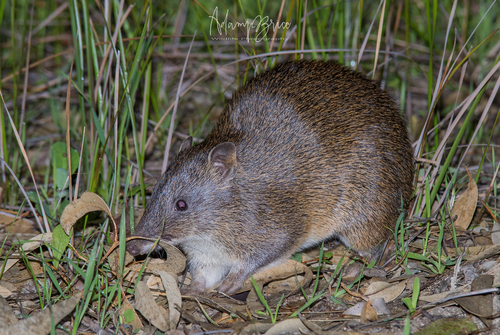
About Isoodon fusciventer Gray, 1841
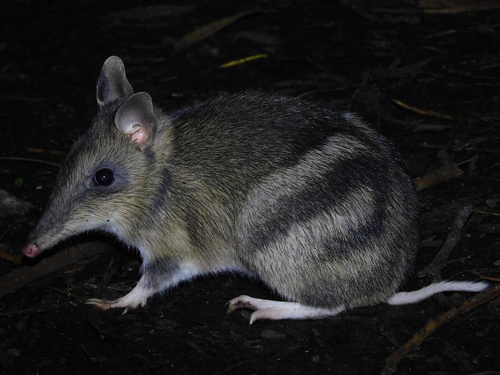
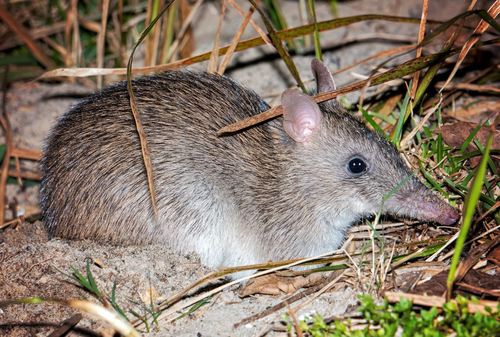
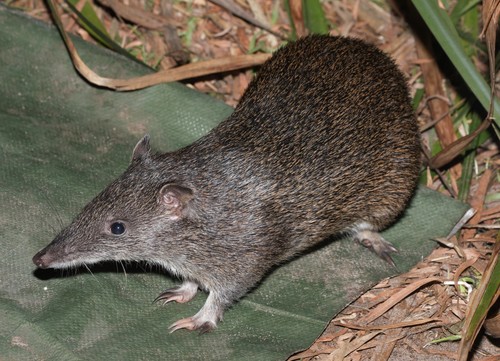
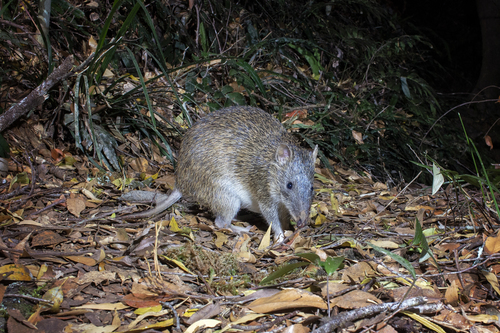
Quenda (scientific name Isoodon fusciventer Gray, 1841) are small marsupials with a long, pointed muzzle. They are typically stockily built, with short limbs and a short neck. Their head and body length ranges from 40 to 50 cm (16 to 20 in), their tail is around 13 cm (5.1 in) long, and their weight is between 1.2 and 1.85 kg (2.65 to 4.08 lb). Their teeth are small, relatively uniform in size, and pointed, matching the typical tooth structure of insectivores. As a bandicoot, this species has a body built primarily for digging in soil to get invertebrate food. Its elongated muzzle and strong front claws are used to probe crevices, root through soil, and dig. Their habitat consists of scrubby, often swampy vegetation with dense cover up to 1 m (3 ft 3 in) high. They often forage in adjacent regularly burned forest and woodland, as well as in pasture and cropland areas located close to dense cover. Populations living in Jarrah and Wandoo forests are usually associated with watercourses. Quenda can successfully survive in more open habitats when control measures for introduced predators are in place. On the Swan Coastal Plain, quenda are often found associated with wetlands.