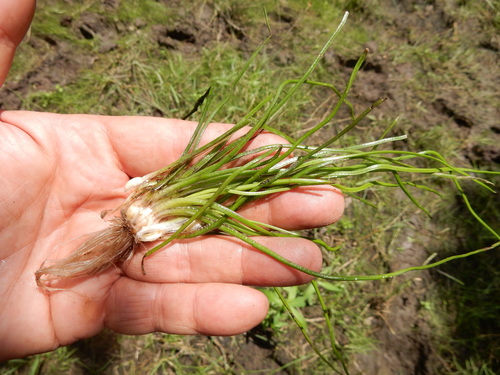
About Isoetes melanopoda Gay & Durieu
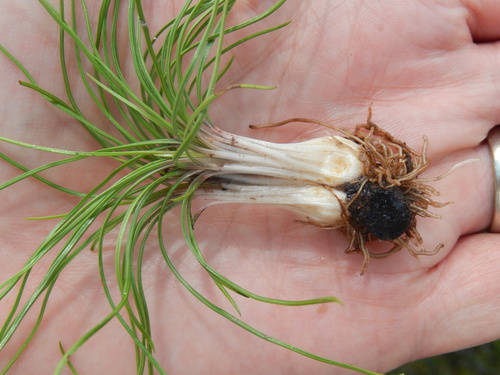
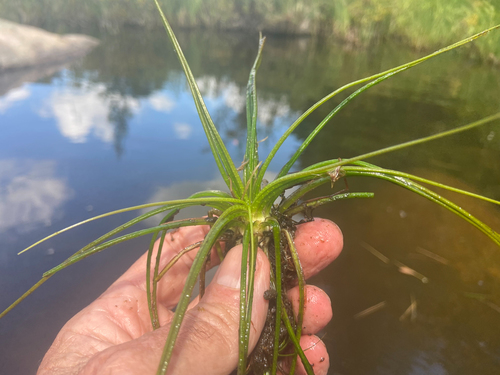
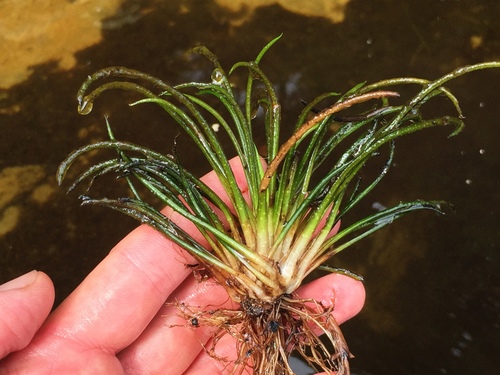
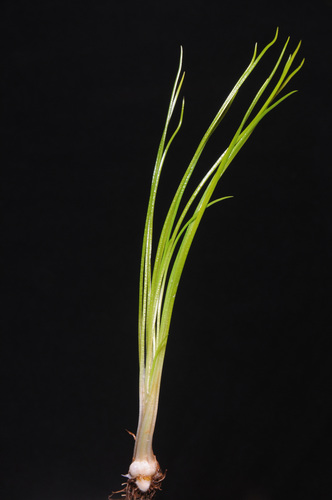
Isoetes melanopoda is a grass-like perennial that is often short-lived. It reaches up to 40 centimeters in height, and has an ephemeral annual growth period. Its bright green leaves are deciduous, linear, and quill-shaped, with black bases. Each mature leaf holds a single sporangium that produces both male microspores and female megaspores. This species has a discontinuous range across the Midwest, Eastern, and Southern United States. Its populations are often disjunct, and the species typically occurs in uncommon microhabitats. It is classified as an endangered species in Minnesota, where it occurs at the southwestern edge of the state. In Minnesota, it grows in shallow seepage pools fed by drainage from Sioux quartzite layers, or in pools formed by rain. These plants grow on rocky outcrops, in soil pockets within water pools, or along pool edges where accumulated soil is present. Isoetes melanopoda is also listed as endangered in Indiana, Iowa, Kentucky, New Jersey, and Tennessee.