About Isodontia mexicana (de Saussure, 1867)
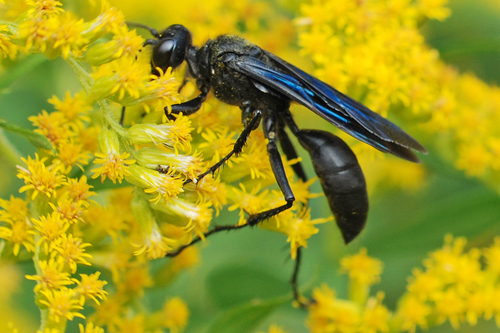
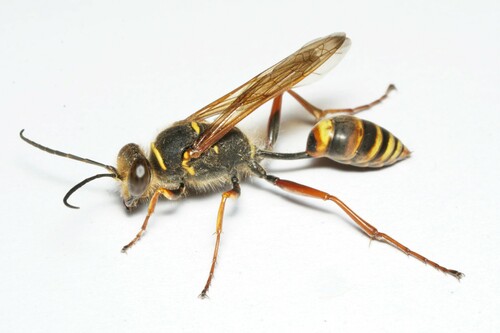
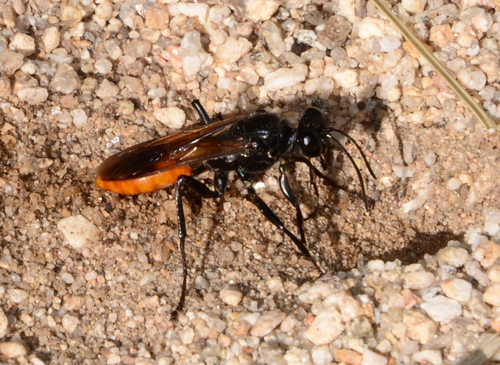
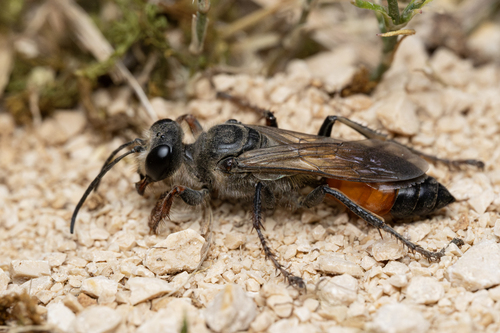
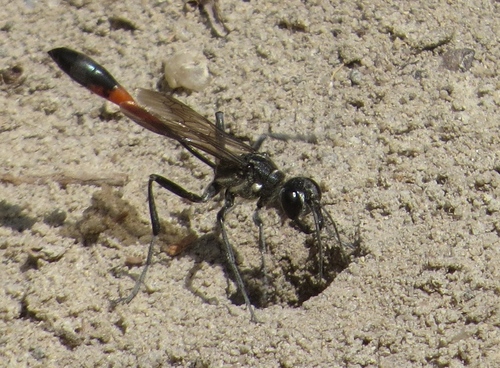
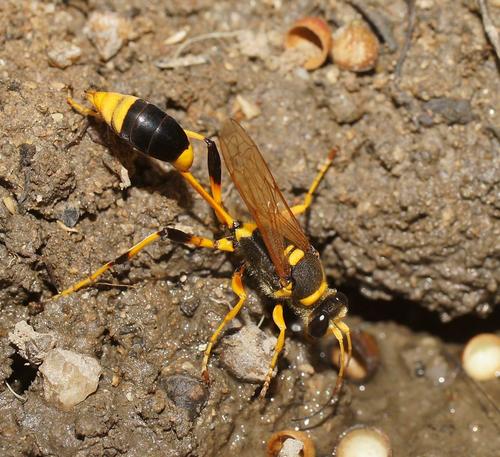
Isodontia mexicana, commonly known as the Mexican grass-carrying wasp, is an insect species in the family Sphecidae. It is primarily distributed across North America, but has also become established in Europe, where it occurs mainly in France, Switzerland, Hungary, Italy, Serbia, and Spain. Adult wasps reach 18–20 millimetres (0.71–0.79 in) in length. Their entire body is black, the thorax is quite hairy, and their wings have a smoky-brown color. This species can be seen from early summer through September. Females are larger than males and emerge as adults later in the season than males. I. mexicana was accidentally introduced to Europe from North America, and is slowly spreading across the continent, likely due to a lack of native predators or parasites there. These wasps construct nests in hollowed branches or other natural cavities, and often reuse nests built by other species. They line the interior of their nests with grass fragments or other plant fibers, which gives the group its common name of grass-carrying wasps. I. mexicana mainly preys on small grasshoppers, typically katydids of the family Tettigoniidae, and small tree crickets of the family Gryllidae. The wasps carry captured prey back to their nests, where the living but paralyzed orthopterans are used to feed hatching wasp larvae.