About Ischnodemus sabuleti (Fallen, 1826)
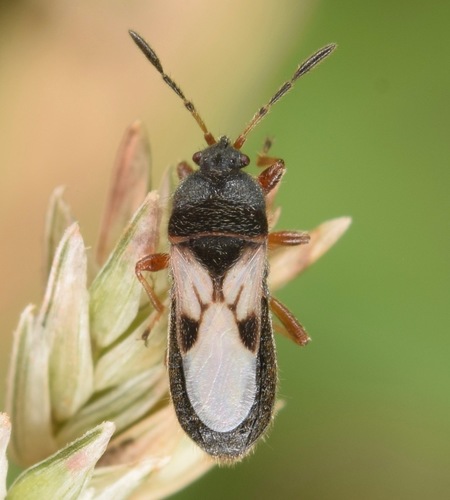
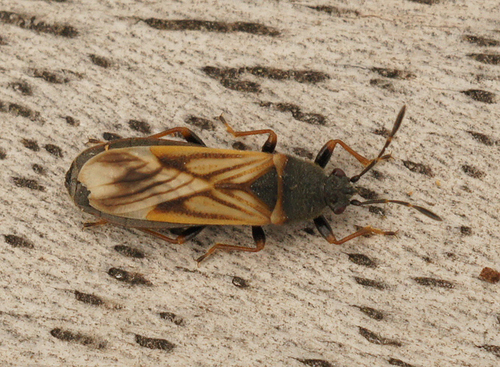
Adults of this species measure 4 to 6 millimeters long, with a very slender elliptical overall body shape and a black base color. The rear edge of the pronotum, sections of the hemelytra, the tibiae and tarsi, and the tips of the femora are colored yellow-brown. This species is dimorphic: some individuals are macropterous (fully winged) while others are micropterous (with very short wings), and the two types are estimated to be roughly equally common. A form with intermediate-length wings occurs occasionally. Nymphs share a similar body shape, and the hind portion of their abdomen is bright red. Regarding distribution and habitat, the species is common across most of mainland Europe, and is only absent from the far north. It is also found in Western North Africa, and extends further east through Eastern Europe to Siberia and the Caucasus. It is widespread in Germany, and reaches very high population numbers in some locations. In the southern parts of its European range, it is less common than in the north. In Austria, it only occurs in the eastern region. In the British Isles, the species has undergone gradual range expansion over many decades. Before 1893, it was only known from a single site in Surrey; by 1959 it had spread to Hampshire, Oxfordshire and Essex; the range expansion has continued since then, and by 2014 it had been recorded as far north as Yorkshire and as far west as parts of Somerset. Ischnodemus sabuleti is frequently found in coastal areas on beachgrass (Ammophila), couch grass (Elymus) and other dune grasses. It also occurs in inland wetlands, where swarms of thousands of individuals are often found, particularly on sweet-grass (Glyceria). It is less commonly found on canarygrass (Phalaris), common reed (Phragmites) or cattails (Typha). Occasionally, they can be found in dry locations during the summer, where they live on small-reed (Calamagrostis), for example. During rainy periods, nymphs and adults take shelter on the underside of leaf sheaths; when the weather is fine, adults climb higher up plant stalks from this shelter.