About Ischadium recurvum (Rafinesque, 1820)
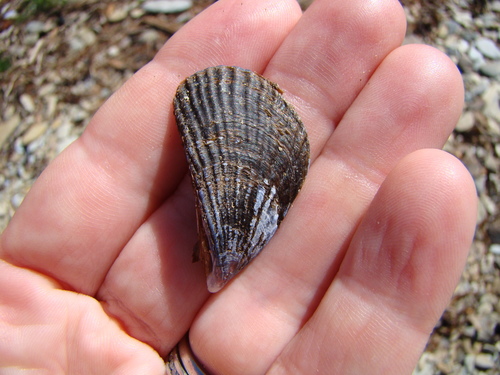
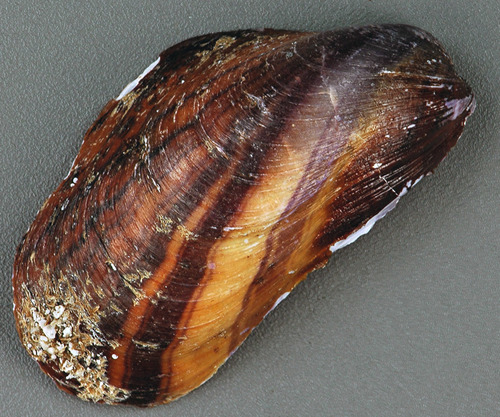
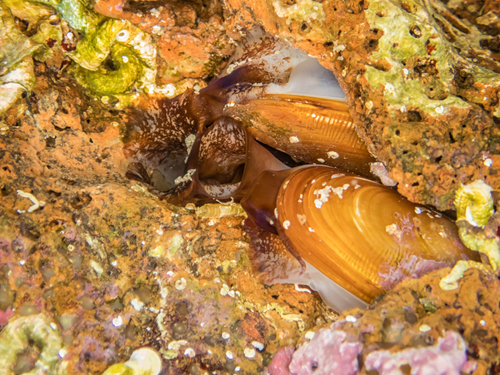
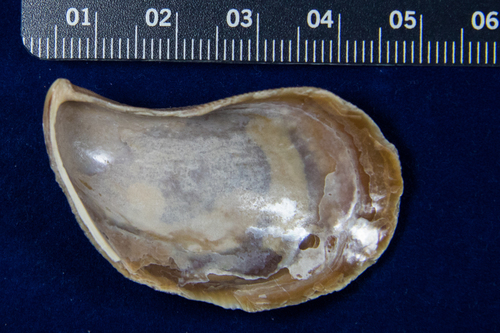
Ischadium is a monotypic genus of mussels belonging to the family Mytilidae. Its only living species is Ischadium recurvum, commonly called the Hooked mussel or the Bent mussel. This species occurs along the Atlantic coast of North America, with a range extending from Cape Cod to the West Indies. It most often grows attached to Eastern oysters, and can occupy intertidal zones south of Chesapeake Bay where exposed oysters can survive winter, as well as subtidal zones. It can also attach to other hard substrates, including artificial reefs and the dead shells of the brackish water clam Rangia cuneata.
Ischadium recurvum prefers to feed in lower salinity environments. As salinity rises, this species’ clearance, filtration, organic ingestion, and absorption rates all decrease. High salinity levels cause stress for this bivalve species and make its feeding inefficient. Because Ischadium recurvum depends on oyster beds, its survival is directly linked to the survival of oysters. In areas like Chesapeake Bay, where disease and over-harvesting have reduced oyster populations, hooked mussel populations have declined in turn. Even though Ischadium can attach to other hard substrates, oyster population loss leads to increased sedimentation rates, which reduces the amount of available substrate for Ischadium. As a result, Ischadium populations are extremely vulnerable to changes in oyster populations.