About Iris oratoria Linne, 1758
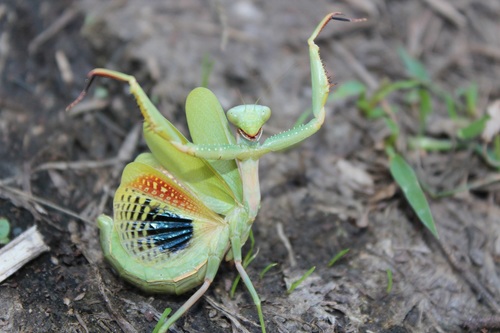
Iris oratoria was first described by Linnaeus in 1758. It is commonly called the Mediterranean mantis, or less frequently the iris mantis, a name that reflects that humans first studied this species in regions surrounding the Mediterranean Sea. It is a species of praying mantis. Its geographic range is currently expanding in the Middle East, Western Asia, and the United States. Documented native locations for this species include: Albania, Bulgaria, Brač Island, Korčula Island, France (including Corsica), Greece (including the Ionian Islands, Crete, and the Cyclades Islands), Italy (including Sardinia and Sicily), North Macedonia, Portugal, Spain (including the Balearic Islands), former Yugoslavia (including Serbia, Kosovo, Voivodina, and Montenegro), North Africa (Morocco, Algeria, Tunisia, Libya, Egypt, and northern Chad), Cyprus, and West, Central, and South Asia (Asian Turkey, India, Israel, Iran, Jordan, Lebanon, Pakistan, Palestine, Syria, and Turkestan). It is non-native to the Southwestern United States, where it occurs in Arizona, California, Nevada, and Texas. Two new survival strategies of I. oratoria may have helped this species expand beyond its original range, and contributed to its success in areas that were formerly occupied by other mantid species such as Stagmomantis carolina. First, this species can reproduce via parthenogenesis when males are scarce. Second, additional I. oratoria nymphs may emerge from their oothecae in the second season after the egg case is produced, meaning they emerge when their siblings from the same egg case are already fully grown and producing their own offspring.