About Iris missouriensis Nutt.
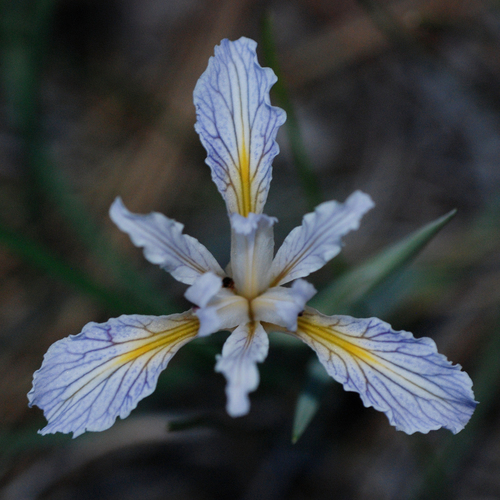
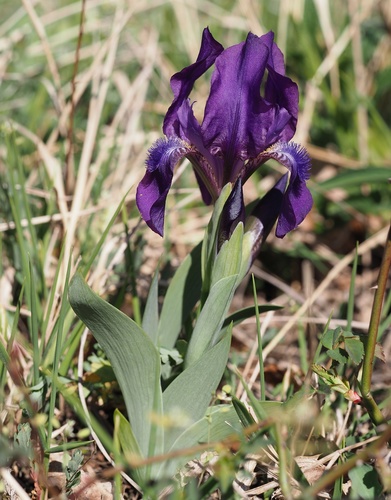
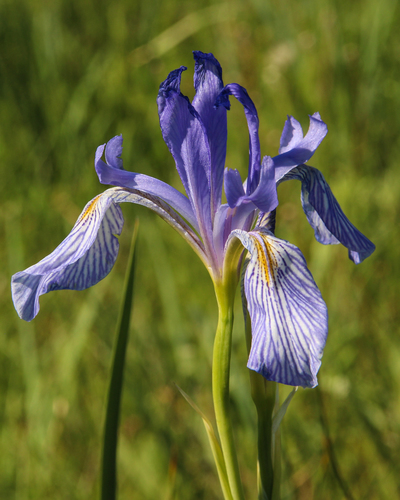
Iris missouriensis Nutt. is an erect, herbaceous, rhizomatous perennial plant that grows 20 to 40 centimetres (7 7/8 to 15 3/4 inches) tall. It produces leafless, unbranched scapes (flowering stems) and linear basal leaves that are 5 to 10 mm wide, and the leaves are roughly the same height as the scapes. Its inflorescence usually holds one or two flowers, though it may exceptionally grow three or four flowers. Each flower has three light to dark blue, spreading or reflexed sepals marked with purple lines, plus three smaller upright blue petals. After flowering, the plant produces a large fruit capsule. Populations of this plant often grow outward from older individual plants, leaving an open, dead area in the center of the expanding growth ring. This plant is toxic, especially its rootstalks, which contain the potentially lethal compound irisin. Some Native American tribes made cordage from the plant's stems and leaves. Some Plateau Indian tribes used the roots to treat toothache. The Navajo used a decoction of the plant as an emetic. Plains Indians are reported to have extracted the toxin irisin (also called iridin and irisine) from the plant to use as arrow poison. The Zuni people apply a poultice of chewed root to increase the strength of newborns and infants. This iris is classified as a weed in some areas, particularly in agricultural regions of California. It is bitter and unpalatable to livestock, and dense stands of the plant are a nuisance in pasture land. Heavy grazing in an area encourages the growth of this hardy iris. The plant is widely cultivated in temperate regions.