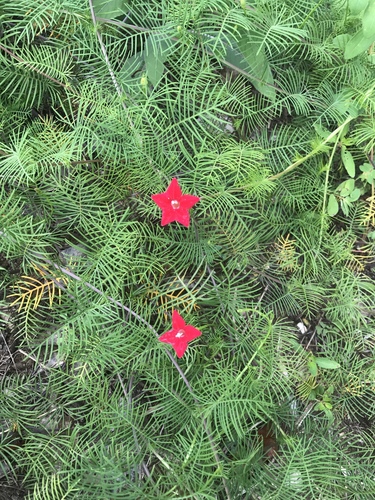
About Ipomoea quamoclit L.
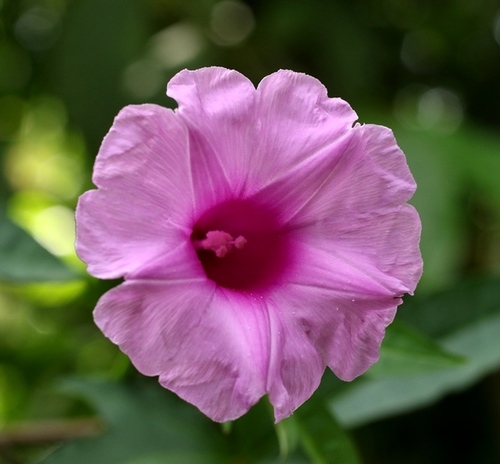
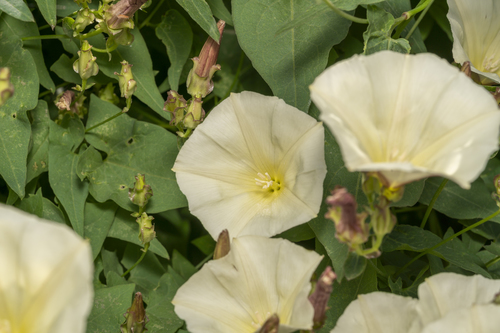
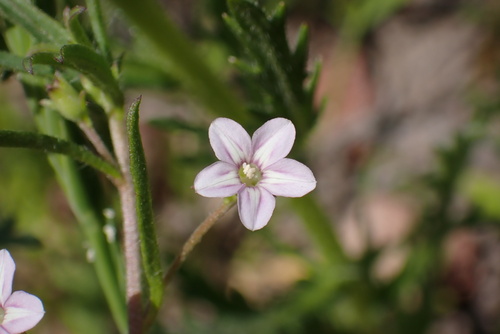
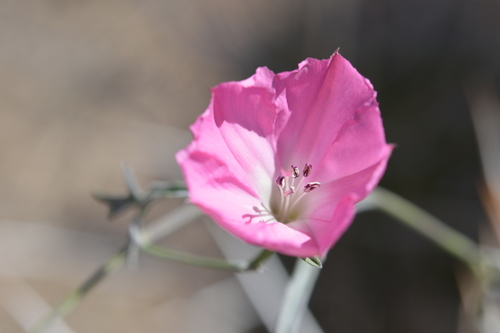
Ipomoea quamoclit L. is a herbaceous twining vine that grows 0.91–3.05 meters (3–10 feet) tall. Its leaves are 25–102 millimeters (1–4 inches) long, deeply lobed, nearly pinnate, and have 9 to 19 lobes per side of the leaf. The plant produces trumpet-shaped flowers with five points; these flowers measure 25–51 millimeters (1–2 inches) long, 25 millimeters (1 inch) across, and may be red, pink, or white. This species is native to the region ranging from northern South America north to Mexico. After Europeans first explored the Americas, it became widely distributed across the globe. It was initially popular as a medicinal plant, and later gained popularity as an ornamental plant. It has naturalized in many tropical areas, and is classified as an invasive weed in some places. Ipomoea quamoclit is widely cultivated as an ornamental throughout the tropics, and is also grown outside tropical regions as an annual plant, since it cannot survive temperate zone winters. It naturalizes on its own in some tropical areas. It flowers during summer and fall. Its seeds are sown in the rainy season. In the Northern Hemisphere's temperate regions, it blooms continuously from August to December; in the Southern Hemisphere's temperate regions, it blooms continuously from February to June. Seedlings must be kept consistently moist, and require full sun to grow well. This vine is an excellent plant for attracting hummingbirds, and grows vigorously. It can be extremely invasive in warmer climates. It does not need fertilizer, produces blooms without special care, and can be grown in many different settings. It can be grown in containers alongside other plants, thriving in both small and large containers as well as both small and large growing spaces. Ipomoea × multifida is a hybrid between Ipomoea quamoclit, also called cypress vine, and Ipomoea coccinea. The allotetraploid of this hybrid is Ipomoea × sloteri. Both hybrids are commonly known as cardinal climber.