About Ipomoea purpurea (L.) Roth
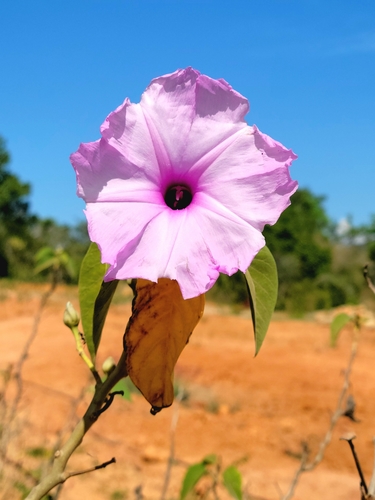
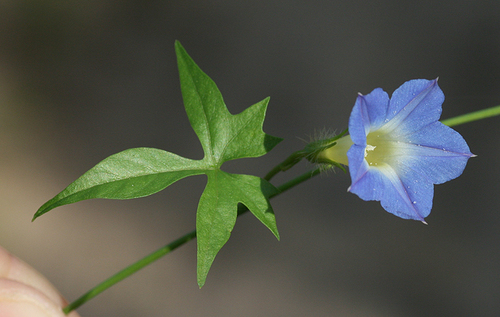
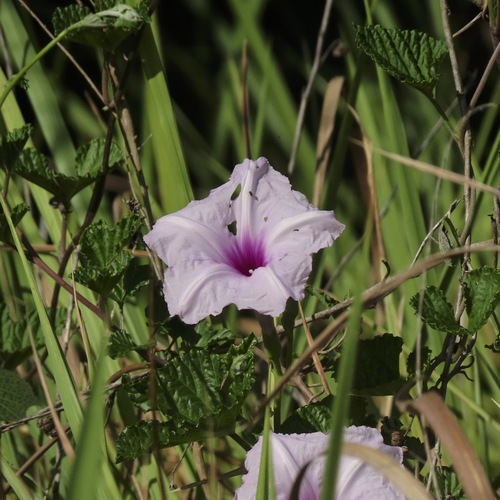
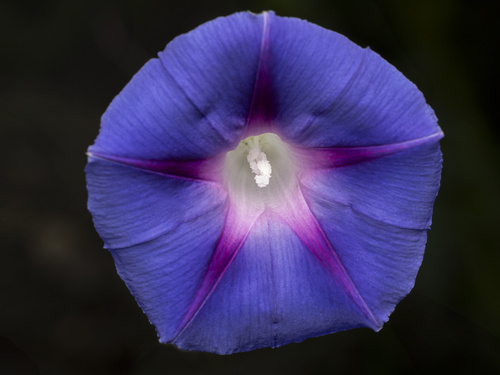
This species, Ipomoea purpurea (L.) Roth, is a morning glory that entwines around supporting structures, and reaches a growth height of 2–3 meters (6 feet 7 inches to 9 feet 10 inches). Its leaves are heart-shaped, and its stems are covered in brown hairs. The flowers are trumpet-shaped, most often blue to purple or white, and measure 3–6 centimeters (1.2–2.4 inches) in diameter. The species prefers moist, rich soil, but can grow in many different soil types. It is naturalized across all warm temperate and subtropical regions of the world. While Ipomoea purpurea is often classified as a noxious weed, it is also cultivated for its attractive purple and white flowers, and many cultivars have been developed. Common cultivars include I. purpurea 'Crimson Rambler', which bears red-violet blossoms with white throats; 'Grandpa Ott's', 'Kniola's Black Knight', and 'Star of Yelta', which produce blossoms in varying deep purple shades with white or pale pink throats; and 'Milky Way', which has a white corolla with mauve accents. Commercially sold morning glory seeds are commonly treated with methylmercury, a toxic cumulative neurotoxic poison. This treatment acts as a preservative, and some producers use it to discourage recreational use of the seeds. In the United States, there is no legal requirement to inform buyers that seeds have been treated with this toxic heavy metal compound. According to the book Substances of Abuse, besides methylmercury, seeds are often coated with an unwashable chemical formulated to cause unpleasant physical symptoms including nausea and abdominal pain, and this chemical is also toxic.