About Ipomoea obscura (L.) Ker Gawl.
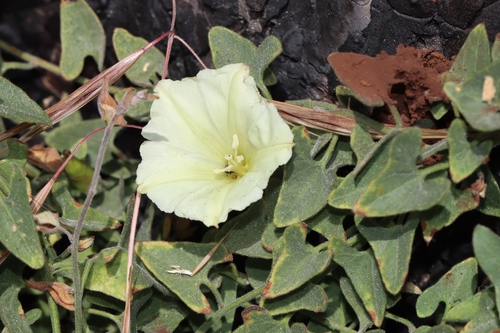
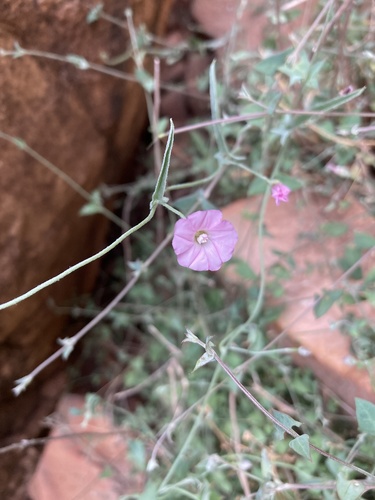
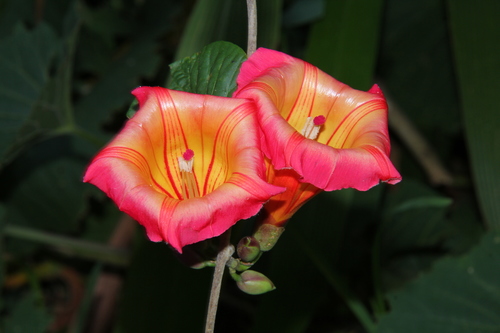
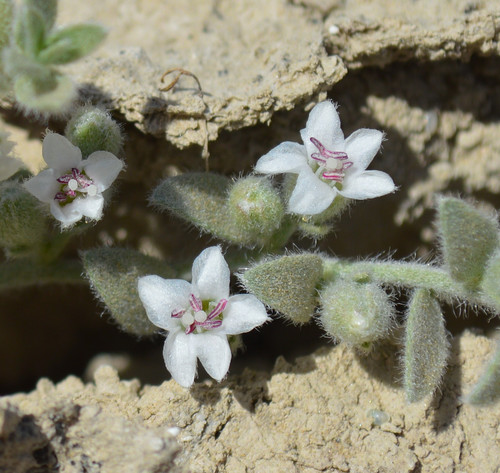
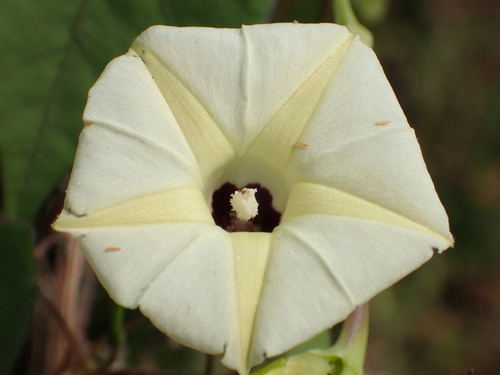
Ipomoea obscura, with the accepted scientific name Ipomoea obscura (L.) Ker Gawl., has petals that are white or pale yellow, marked with darker midpetaline bands and a purple center. Its seeds are either black or brown, and measure 4 to 5 millimeters across. When fully grown, it is a twining vine with stems that reach 2 to 3 meters in length. Ipomoea obscura is a perennial vine. Its natural habitats include disturbed areas, cultivated fields, natural grasslands, shrublands, coastal areas, savannas, forest edges, and open fields. It can grow at elevations ranging from sea level up to 1800 meters. In addition to being intentionally cultivated by humans, it also naturally disperses as an escape from cultivation. It has been introduced to new habitats through a number of different pathways, including garden waste disposal, habitat disturbance, and its use in medicine. Ipomoea obscura grows as a weed in fields growing certain crops, including tobacco and maize. In India, it infests commercial fields of sugar cane, cotton, maize, and soybeans. In Thailand, it infests commercial pineapple fields. Ipomoea obscura is native to tropical Africa, tropical Asia, and northern Australia. It is generally accepted as native to Fiji, though a 1949 report by Greenwood recorded it as an introduced species there. Through human introduction, the species can now also be found across multiple parts of Asia, Africa, North America, the Caribbean, and Oceania. Dried leaves of Ipomoea obscura produce an extract that acts as an antioxidant and an anti-inflammatory agent. This extract has also been shown to inhibit the growth and proliferation of tumor cells.