About Ipomoea corymbosa (L.) Roth
Scientific name: Ipomoea corymbosa (L.) Roth
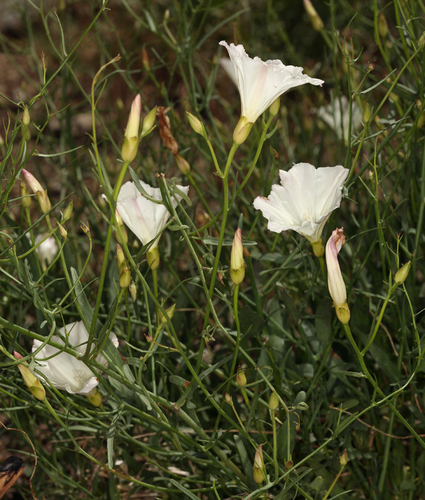
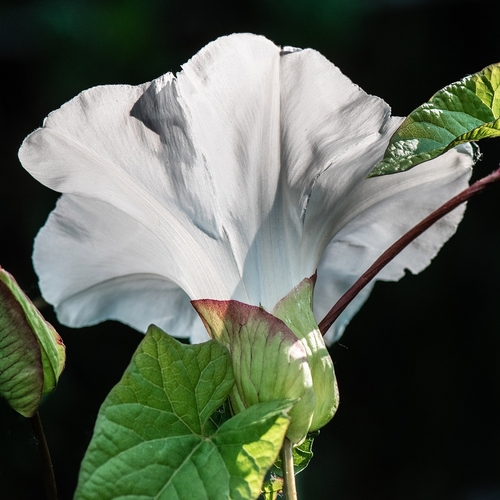
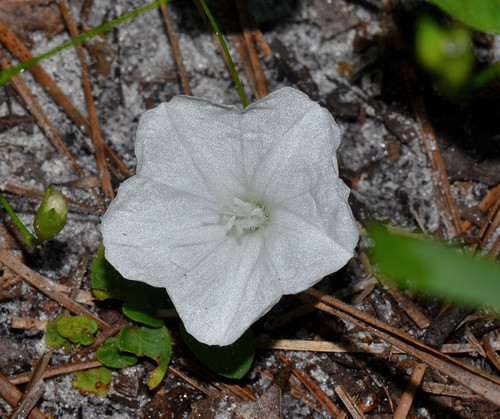
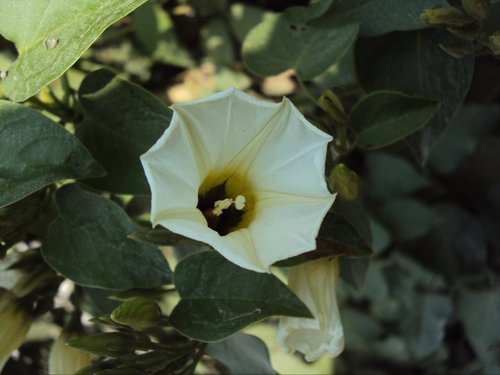
Description and common names: Native groups in north and central Mexico know this species by its Nahuatl name coaxihuitl, while southeastern native groups call it xtabentún in Mayan. It is a perennial woody climbing vine with white flowers, and is often grown as an ornamental plant. Its flowers secrete very large amounts of nectar; honey produced by bees from this nectar is clear and aromatic. It also grows in Cuba, where it typically blooms from early December to February, and is considered one of the main honey plants on the island. Mexican natives use the flour produced from its seeds, known as ololiuhqui (ololiúqui, meaning "round things"), for purposes other than recreation: as a tool for divination and communion with spirits. Widespread use of ololiuhqui among native tribes led colonial authorities to fear the preparation, ban it, and impose harsh punishments on people who used it.
Distribution: This species is an invasive species in the United States, Spain (Europe), and Australia, where it has become naturalized.