About Ipomoea carnea Jacq.
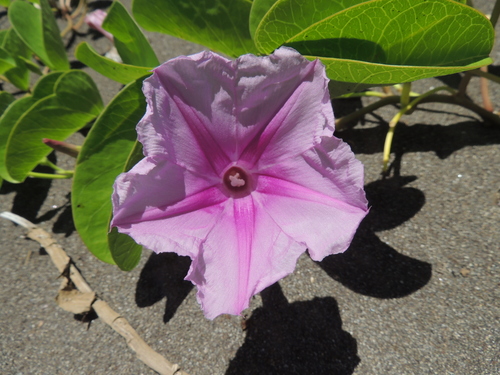
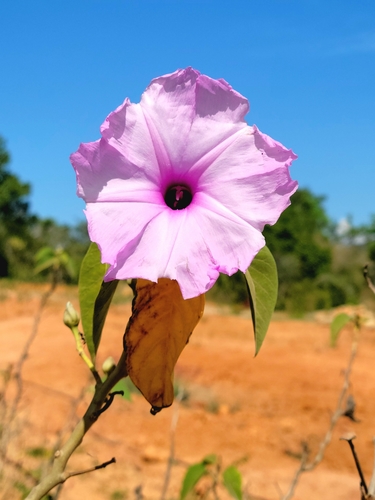
Ipomoea carnea, commonly called the pink morning glory, is a bush-forming species of morning glory. This flowering plant has rich green heart-shaped leaves that measure 6 to 9 inches (15 to 23 cm) long, and it can be grown easily from seeds. Its seeds are toxic and hazardous to cattle. The plant’s toxicity comes from swainsonine produced by its endophytes, as well as selenium bioaccumulation that occurs in leaves, and reaches its highest concentration in seeds. Ingesting either the seeds or leaves of Ipomoea carnea causes abnormal endocrine and gastrointestinal function, changes to the immune system, and irregularities in embryogenesis. The stem of I. carnea can be used to make paper, and the plant also holds medicinal value. It contains a component identical to marsilin, a compound that acts as a sedative and anticonvulsant. A glycosidic saponin with anticarcinogenic and oxytocic properties has also been purified from I. carnea. A cultivated selection of I. carnea called 'Inducer' is used as a rootstock to encourage flowering in sweetpotato cultivars that do not otherwise flower readily. I. carnea is also commonly called bush morning glory, but in temperate North America this name usually refers to the separate species Ipomoea leptophylla. In Brazil, I. carnea is also known as canudo-de-pito, which translates literally to "pipe-cane". Its hollow stems were traditionally used to make tubes for tobacco pipes, and this plant gave its name to Canudos, a religious community in the sertão region of Bahia, where the War of Canudos was fought between 1893 and 1897.