About Ipomoea cairica (L.) Sweet
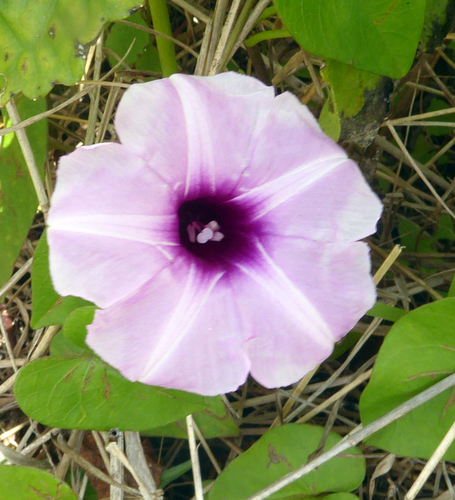
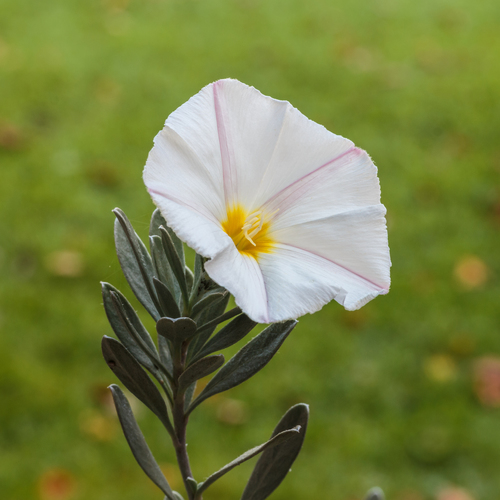
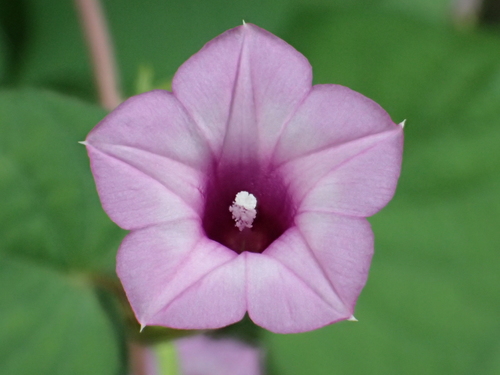
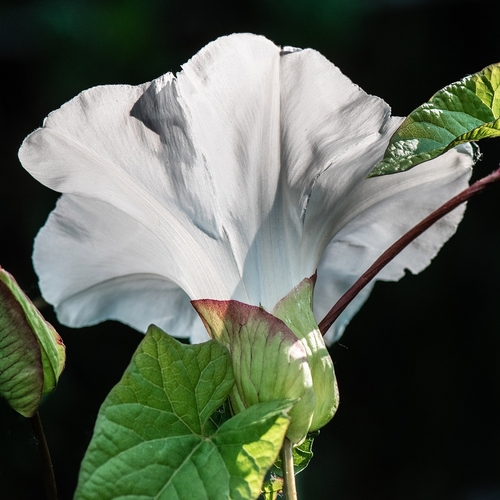
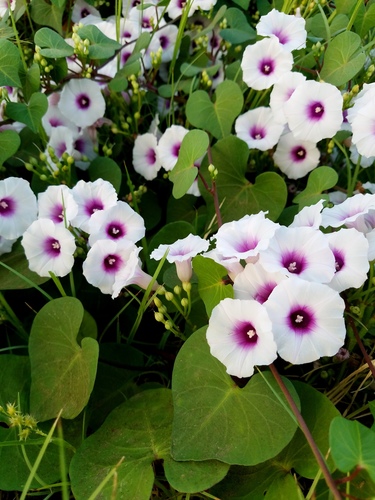
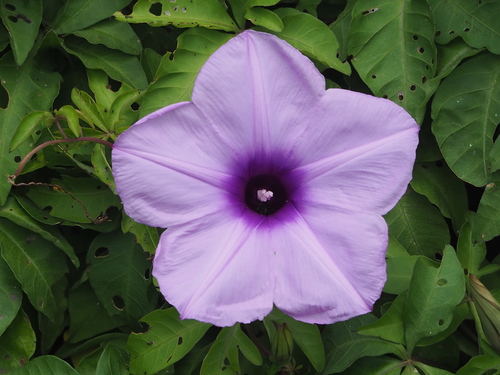
Ipomoea cairica (L.) Sweet is a hairless, slender climber with bulbous roots and a woody base. Its leaves are borne on stalks (petioles) 2 to 6 cm long. The leaf blade is ovate to circular in outline, 3 to 10 cm long and 6 to 9 cm wide, and divided into five to seven lanceolate, ovate, or elliptic segments; these segments have smooth edges, and are pointed at both the tip and base. Pseudo-lateral leaves are often formed. Inflorescences are lavender, occurring singly or arranged in cymes. Flower stalks measure 12 to 20 mm long. Sepals are 6 to 8 mm long, ovate, and end in a sharp point. The corolla is funnel-shaped, 4 to 6 cm long, and violet in color. The stamens and style do not extend beyond the corolla, and the ovary is hairless. Fruits are spherical capsules approximately 1 cm in diameter, containing one or two hairy seeds. This vine blooms occasionally year-round, but flowers much more profusely from spring to summer. Its exact native range is uncertain, though it is thought to be native to a wide area stretching from Cape Verde to the Arabian Peninsula, including northern Africa, tropical Africa, and the Mediterranean. It grows over walls, fences, or trees, with stems that can reach more than 10 metres (33 ft) in length. It has been recorded growing at altitudes ranging from 250 metres (820 ft) to 2,250 m (7,380 ft). Some plant nurseries sell this species as an ornamental plant, valued for its showy purple flowers and fast growth that quickly covers unsightly fences or walls. Broken stems can grow into independent new plants if broken off during attempted removal. Ingesting this plant causes respiratory symptoms. Ipomoea cairica 'alba', also called white Cairo morning glory, is a cultivar with white flowers. Most parts of the plant are edible: its roots are reported to be edible when cooked, and its young leaves are eaten. Zulu people use the plant medicinally, preparing a concoction from crushed leaves that is drunk to treat rashes and fever. In some areas, the plant is also considered to have antibiotic properties.