About Inosperma calamistratum (Fr.) Matheny & Esteve-Rav.
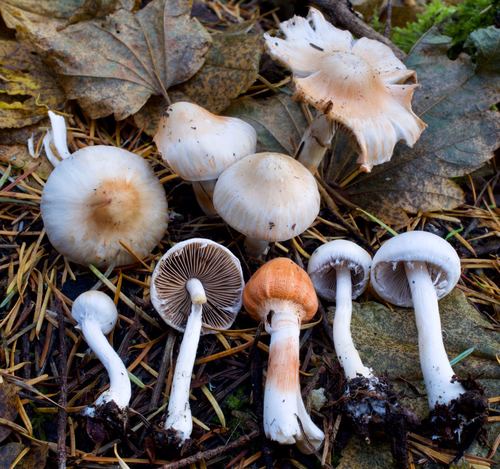
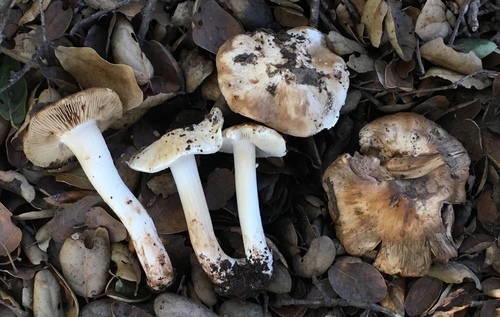
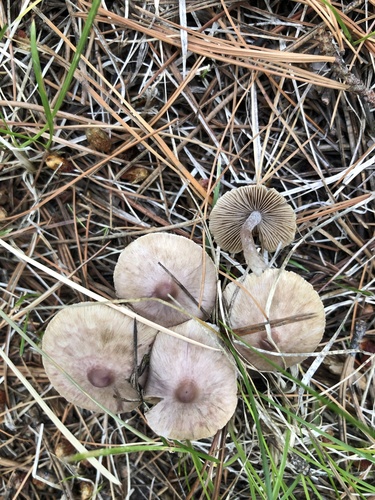
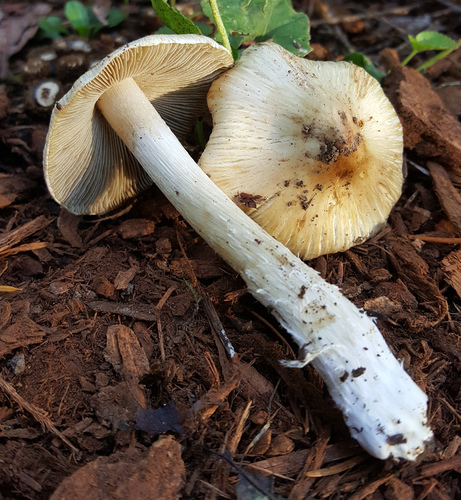
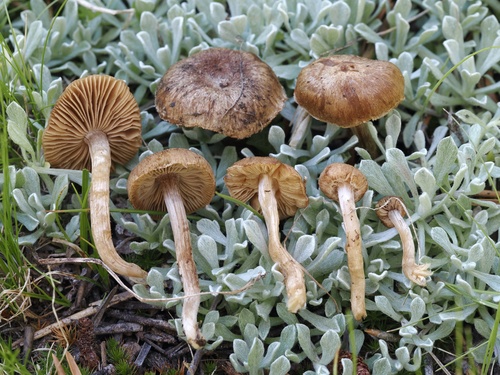
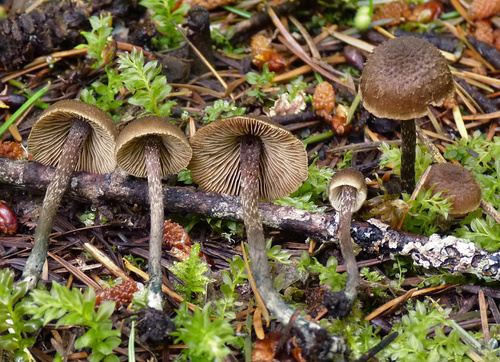
Inosperma calamistratum, scientifically named Inosperma calamistratum (Fr.) Matheny & Esteve-Rav., was known as Inocybe calamistrata until 2019. It is a species of fungus in the family Inocybaceae. This fungus has a tannish cap that grows up to 5 centimetres (2 inches) wide. Its stem can reach up to 15 cm (6 in) long, and may develop a reddish stain on the upper section, a blue-green stain on the lower section, or both. The beige gills are fairly closely spaced and produce a brown spore print. The fungus typically has a pungent scent. Two species that may be confused with it are Inocybe calospora, which does not produce any staining, and I. tahquamenonensis, which is purplish in colour. This species is found in Europe and North America. Fruiting occurs from July to September in eastern North America, and from August to November along the West Coast of North America. Orson K. Miller Jr. and Hope Miller list this species as poisonous. It was once suspected to be psychotropic due to the blue-green tinge at the base of its stipe; David Arora cited a study that claimed to have detected psilocybin in the fungus. Later analysis did not find psilocybin or similar alkaloids in the mushrooms.