About Inocybe lacera (Fr.) P.Kumm.
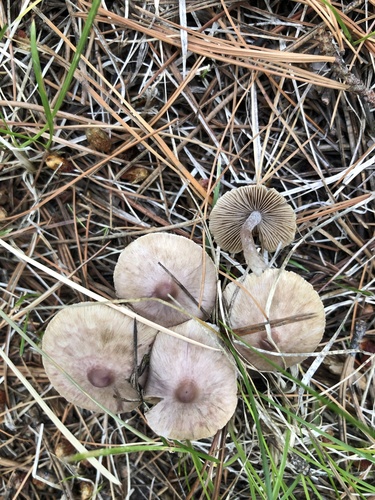
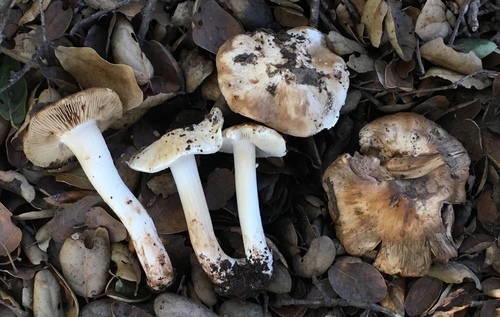
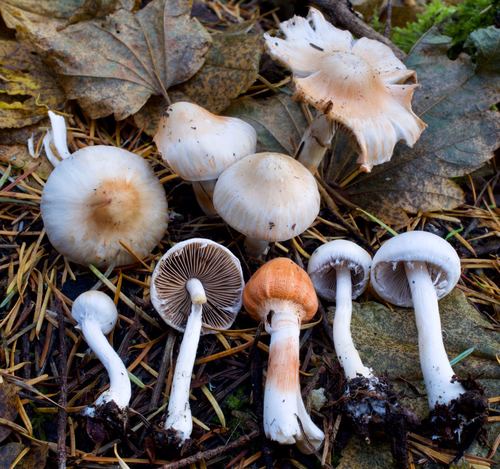
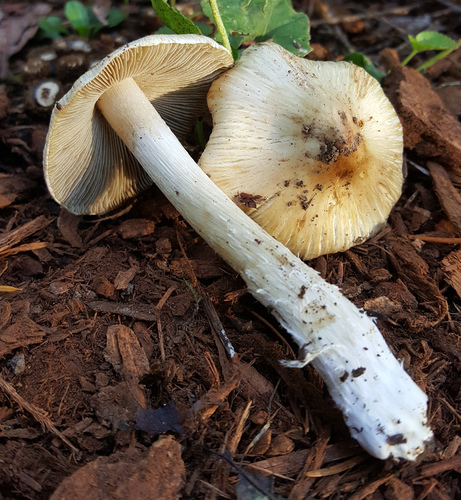
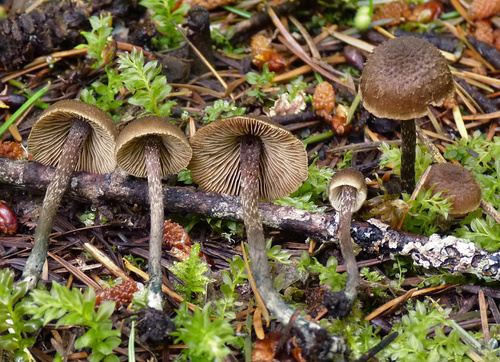
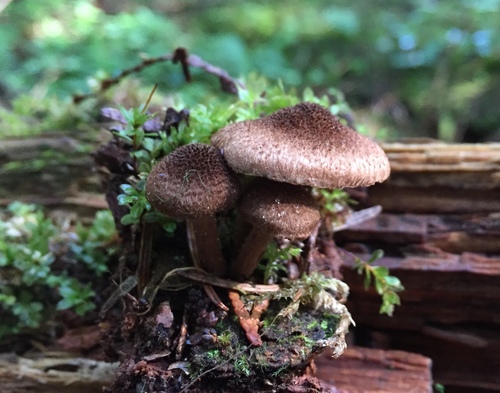
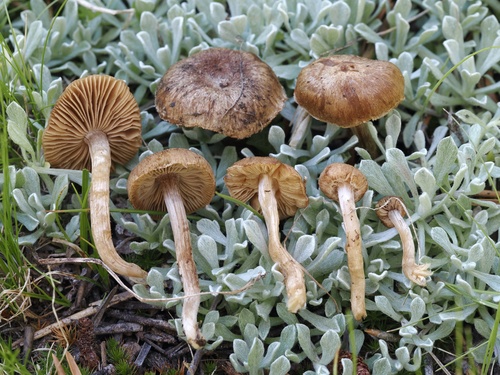
In appearance, Inocybe lacera is a typical little brown mushroom, though its specific features vary widely. It most often has a convex cap 1 to 3 centimetres (0.4 to 1.2 inches) across, with a small umbo. The cap margin curves inward and frequently splits. The cap is snuff-brown in color, with a fibrillose, scaly texture. The stipe (stem) is 2 to 3 cm (0.8 to 1.2 in) tall and 3 to 6 millimetres (0.12 to 0.24 in) thick. It is brown at its slightly bulbous base, lighter toward its apex, and also fibrillose in texture. The stem does not have a ring. The mushroom's flesh is white. Its adnexed gills are white in young specimens, and quickly change to clay-buff with white edges. Inocybe lacera fruits throughout autumn, growing on sandy soil, and is especially associated with pine, though it typically occurs in mixed woods. It forms mycorrhizal relationships with both conifers and hardwoods. Fruiting bodies can grow alone, in scattered groups, or in dense gregarious clusters. It is most often found along the edges of woodland paths; another common habitat is old, moss-covered fire sites. Additional habitats include heathland and coastal dunes. It occurs in Europe and North America. In some areas of Montana, it can also be found fruiting in spring under Populus tremuloides.