About Inimicus didactylus (Pallas, 1769)
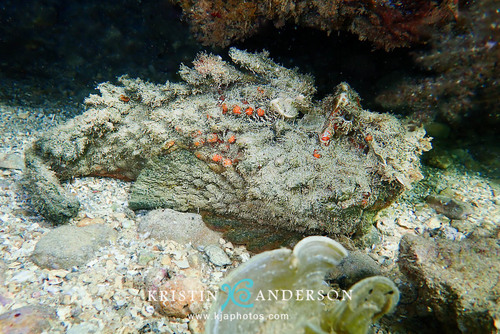
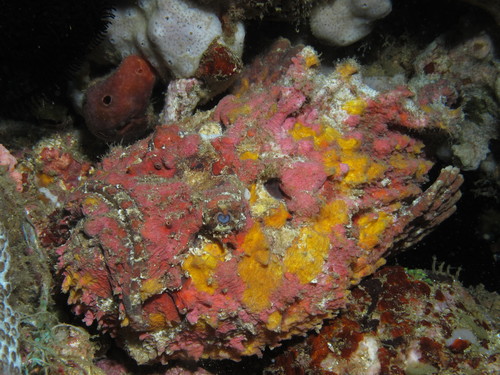
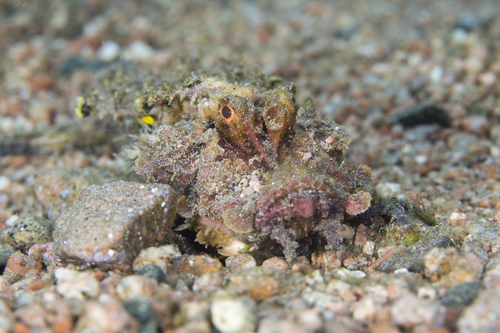
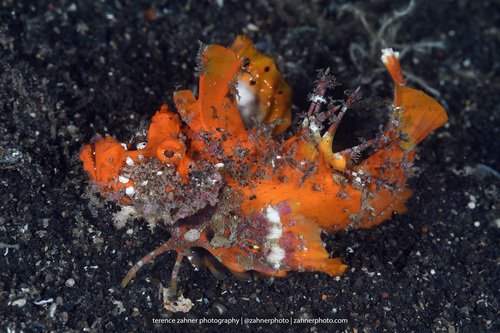
Adult Inimicus didactylus can reach a maximum body length of 26 centimeters. Their body is red or sandy yellow with light blotches, a coloration that closely matches the surrounding sandy or coral seabed they inhabit. This camouflage makes them extremely difficult to detect in their natural habitat. Their skin lacks scales except along the lateral line, and is covered in venomous spines and wart-like glands that give it a knobby texture. The head is flattened, depressed, and concave; the eyes, mouth, and nostrils project upwards and outwards from the dorsal side of the head. Scientists do not believe this species exhibits sexual dimorphism. For fin morphology: the dorsal fin consists of 15 to 17 spines and 7 to 9 soft rays. The caudal fin has 2 to 4 spines and 4 to 14 soft rays, with dark bands at its basal and subterminal positions. The pelvic fin has one spine and 3 to 5 soft rays. The pectoral fin contains 10 to 12 rays; the two most caudal rays on each pectoral fin are detached from the rest of the fin and angled ventrally. The fish use these two rays to prop up the front of their body and to "walk" along the substrate bottom. The ventral surface of the pectoral fins has broad black bands with smaller, lighter spots at both the basal and distal ends. In the closely related species I. filamentosus, these bands are weaker, while I. sinensis has yellow spots within these bands. This trait is a key distinguishing feature between these otherwise nearly identical species.