About Incisalia henrici (Grote & Robinson, 1867)
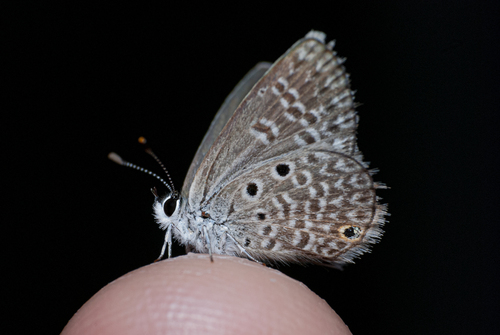
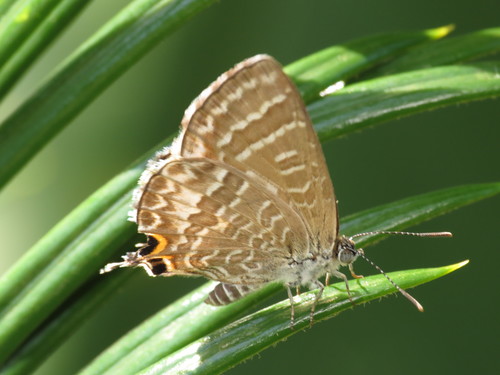
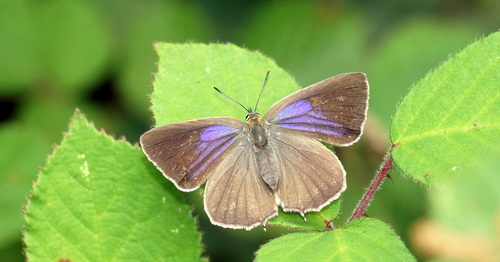
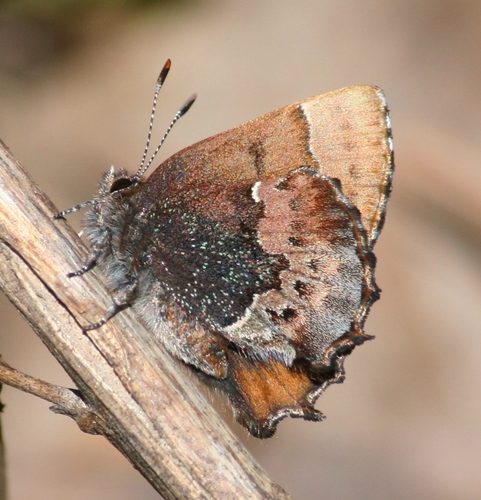
The upperside of Incisalia henrici (Henry's elfin) wings is dark brown. The underside of the wings is strongly two-toned, with a dark brown-black basal area. The postmedian line on the hindwing has white coloring at both ends. The outer edge of the hindwing is frosted, and the outer edge of the forewing is sometimes green-toned. The hindwing has short, stubby tails; in populations found in the southeast, these tails are longer. Males of this species do not have a stigma. The wingspan of Henry's elfin ranges from 20 to 25 mm (0.79 to 0.98 inches).
Henry's elfin occurs in a wide range of habitats, including barrens, coastal holly forests, open woodlands, and mesquite woodlands.
In its life cycle, males perch around human eye level to wait for females, though they will sometimes perch high in tree tops or very low to the ground. Females lay their eggs singly on host plant flower buds, or on host plant leaves near the buds. The eggs are pale green when laid, and turn whitish before hatching. The larva is quite variable in color, ranging from greenish yellow to red brown to maroon. It has subdorsal spots that may be white, yellow, green, or red green, and a lateral stripe that may be yellow or reddish. Some individuals also have a faint yellow or reddish middorsal stripe. The pupa is orange brown, mottled with dark brown-black. Pupae hibernate in leaf litter, and Henry's elfin produces one brood per year.