About Ilyanassa obsoleta (Say, 1822)
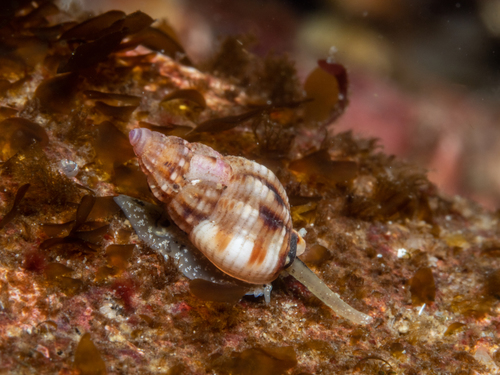
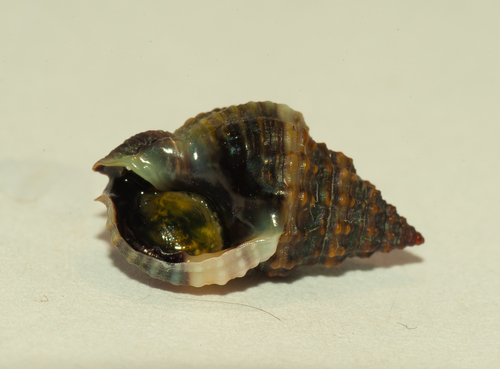
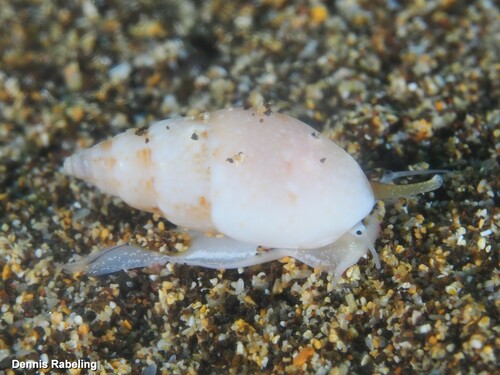
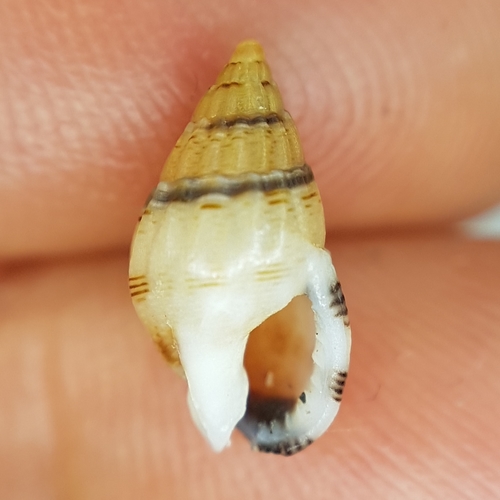
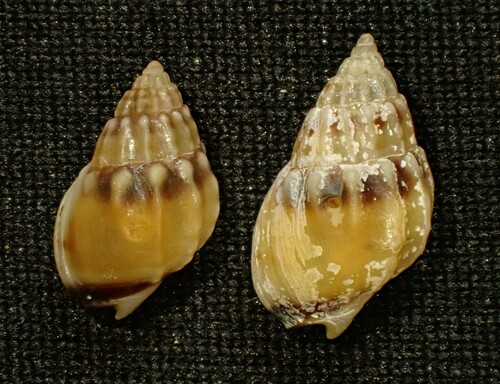
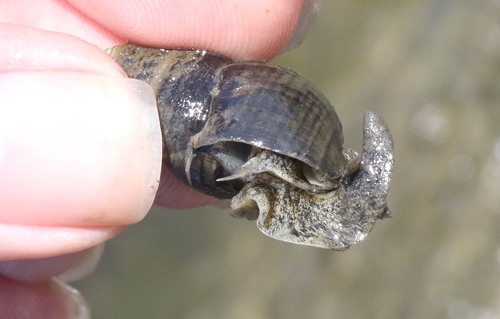
This species, formally known as Ilyanassa obsoleta (Say, 1822), has a small shell with a slightly rough outer surface, caused by intersecting weak spiral and axial ribs on the shell surface. The shell has an oval aperture with a small notch or siphonal canal at its anterior end. The aperture features a smooth inner lip with a partial shield, while the outer lip is thin and smooth. The shell’s underlying exterior is chalky white, but it is covered by a very dark brown, tightly adhering periostracum, except in regions of the shell where this periostracum has worn away. The shell’s apex is almost always eroded, and the shell is often heavily damaged by the acidic properties of the mud that the animal inhabits. The maximum recorded shell length of this species is just over one inch, approximately 28 millimeters. Ilyanassa obsoleta is indigenous to the western Atlantic Ocean, with a native range extending from Nova Scotia down to Georgia in the United States. Its nonindigenous range includes the West Coast of the United States. This snail is very abundant on mud flats located in intertidal and shallow subtidal zones, within sounds and inlets.