About Ilex rotunda Thunb.
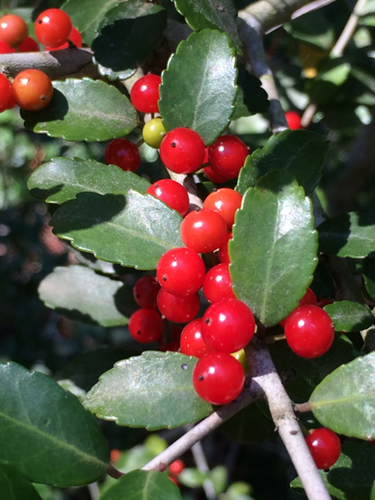
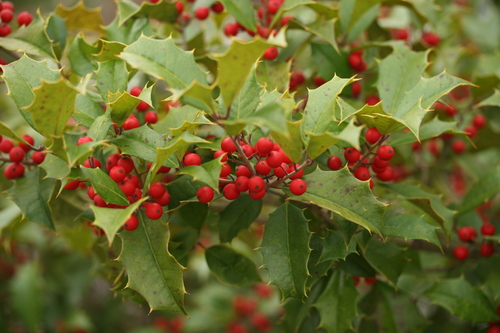
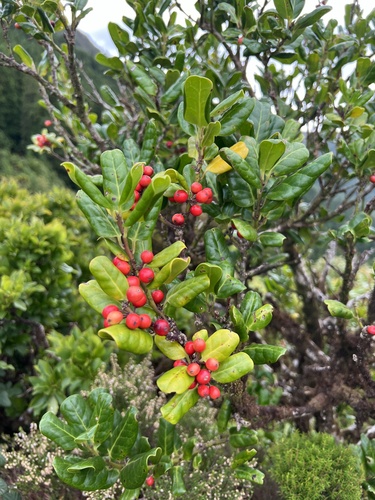
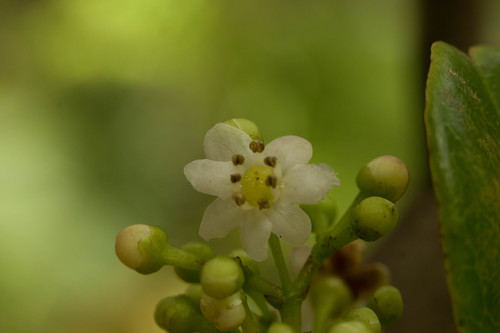
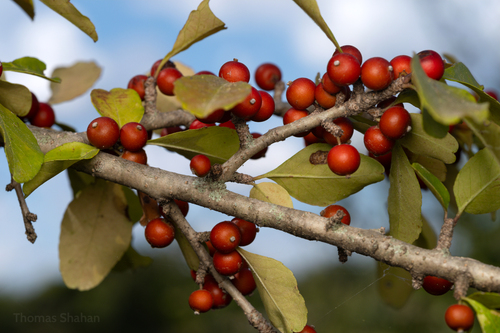
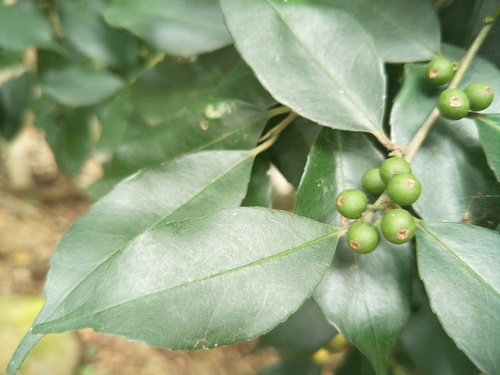
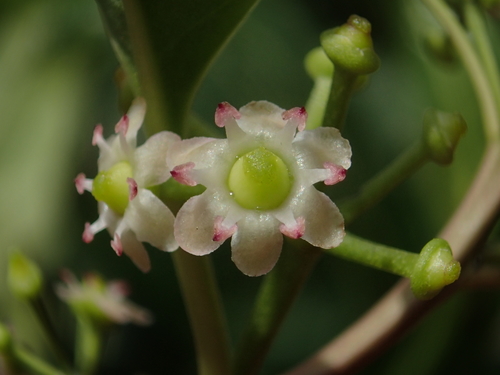
Ilex rotunda Thunb., commonly known as Kurogane holly, is an evergreen tree belonging to the holly family Aquifoliaceae. It is native to East Asia, occurring in China, Japan, Korea, Taiwan, and Vietnam. Its natural habitat is evergreen broadleaf forests, where it often grows in sunny locations such as forest edges and mountain slopes. This species has spineless leathery leaves and clusters of bright-red berries. Mature individuals reach 18 m in height, though 20 m tall specimens have also been reported. The tree blooms from May to June, and its seeds ripen from October to December. Kurogane holly plants are dioecious, and their fruits contain flavonols. This species was first formally described in 1784 by Carl Peter Thunberg, based on material from plants growing in Japan. In Japan, it is widely planted as a garden and street tree. It was first introduced to New World gardens through collections sent by Robert Fortune. In Japan, Kurogane holly is counted among the hibakujumoku, or surviving trees of the atomic bombings, and it is the official tree of several Japanese municipalities.