About Ilex perado Sol. ex Aiton
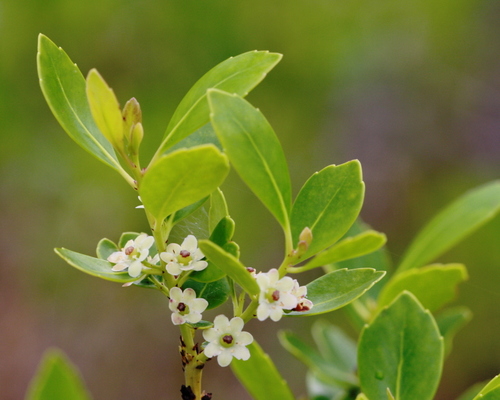
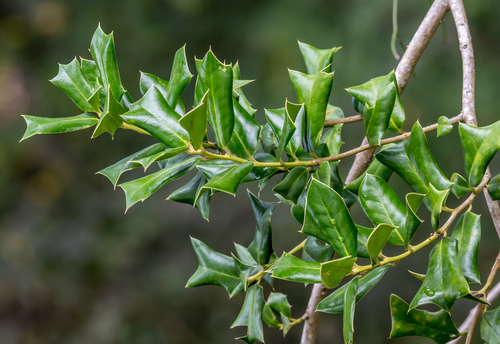
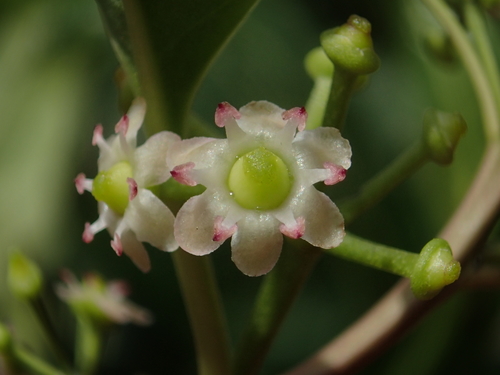
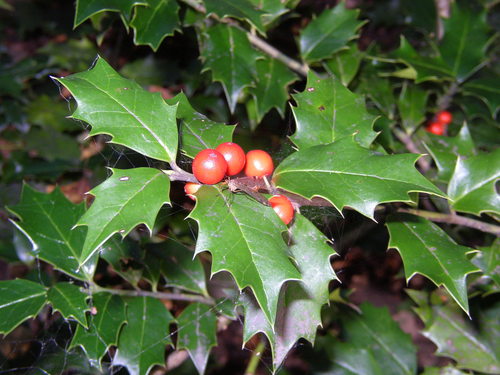
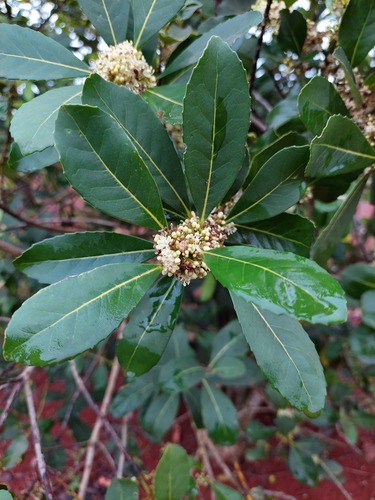
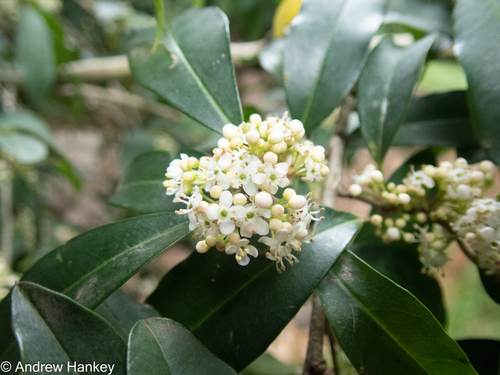
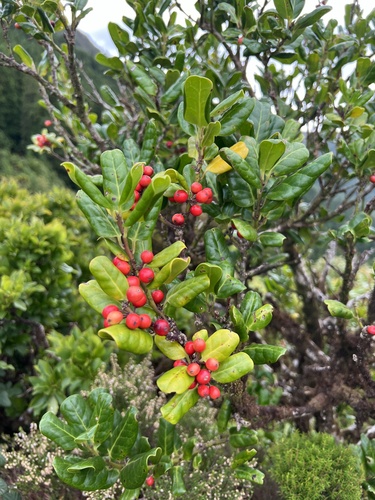
Ilex perado Sol. ex Aiton is a small evergreen dioecious tree. It typically reaches 7–10 m (23–33 ft) in height, and occasionally grows as tall as 15 metres (49 ft). This species produces white to pink flowers, and red toxic berries that are slightly larger than the berries of common holly. Its leaves are oblong and leathery, dark green on the upper surface and lighter in color on the lower surface. It has a smooth, grey trunk. Ilex perado is native to the Azores, where it occurs across all islands; the island of Madeira, where it is mostly found in the central and northern regions; and the Canary Islands, specifically in northern Tenerife, La Gomera, and La Palma. It grows on steep slopes and at the bottom of ravines, in areas with moist soil. It is a common component of laurisilva and high-altitude forests, and in Madeira it can also extend into non-laurisilva heath stands. Four subspecies of Ilex perado are currently recognized. I. perado subsp. perado is endemic to the Madeira archipelago; its population is stable, and is estimated to have far fewer than 10,000 adult individuals. I. perado subsp. azorica (Loes.) Tutin, with the synonym Ilex azorica Gand., is native to all Azorean islands. I. perado subsp. lopezlilloi (G. Kunkel) A. Hansen & Sunding is endemic to La Gomera. It is an extremely threatened subspecies, with only two known wild specimens, and the IUCN has assessed it as critically endangered. I. perado subsp. platyphylla (Webb & Berthel.) Tutin, with the synonym Ilex platyphylla Webb & Berthel., is native to La Palma, La Gomera, and Tenerife in the Canary Islands, and the IUCN has assessed it as vulnerable. Records of this species from the Iberian Peninsula, listed as Ilex perado subsp. iberica, are considered misidentifications, and actually refer to I. aquifolium. Many of the recognized subspecies are thought to potentially be distinct species, but further research is required to confirm this. Existing research on Ilex perado subsp. azorica has found that it is genetically distinct from subpopulations of the species found on the Canary Islands. Ilex perado has been cultivated in Britain since 1760, and grows well on the Isle of Wight. It is also grown in cultivation in Ireland, the Iberian Peninsula, and South America.