About Ilex mucronata (L.) M.Powell, Savol. & S.Andrews
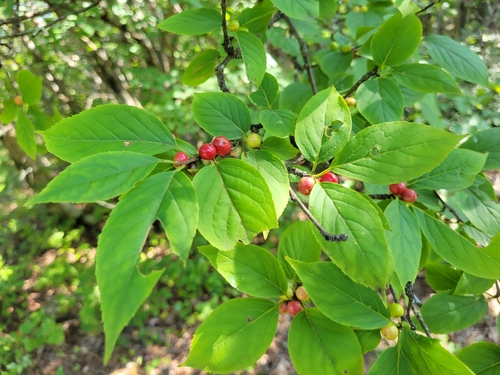
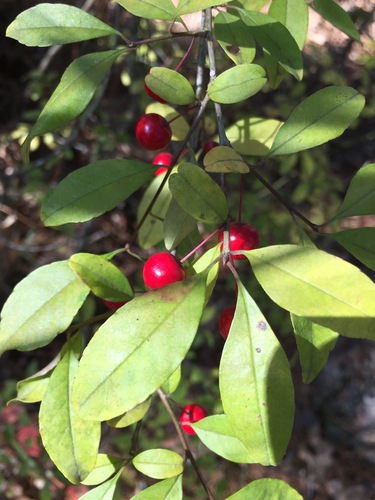
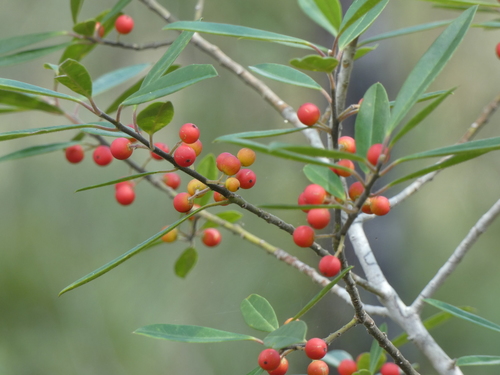
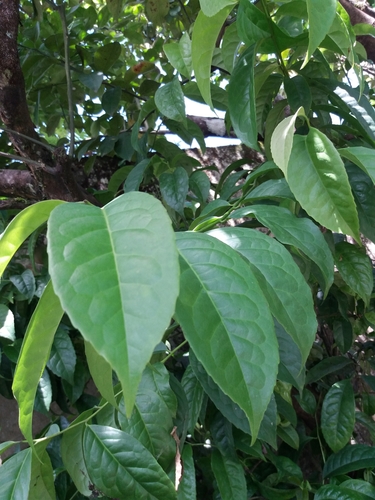
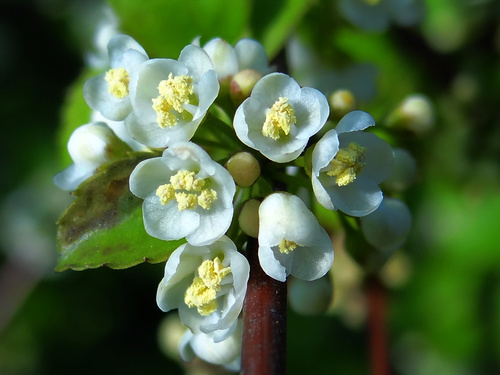
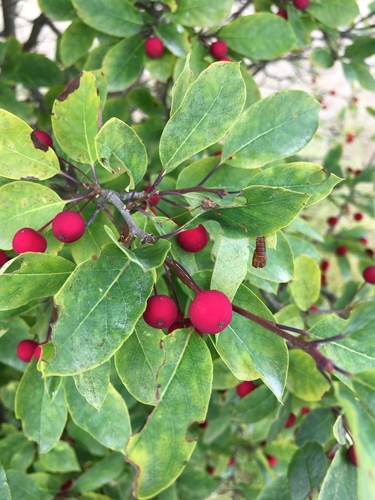
Ilex mucronata (L.) M.Powell, Savol. & S.Andrews is a deciduous shrub that typically grows to 3 metres (rarely 4 metres) tall, which equals 6 to 10 feet high according to Dr. Michael Dirr's Manual of Woody Landscape Plants. Its leaves are alternate and simple, shaped elliptic to oblong. They measure 1.5–7 cm long and 1–3 cm broad (equal to 1 to 2.5 inches long and three-quarters as wide), with an entire or finely serrated margin, an acute apex, and a 0.5–2 cm (1/4 to 1/2 inch long) petiole. The tiny flowers are around 1/5 inch in diameter, with four to five petals, and are inconspicuous, ranging in color from whitish to greenish-yellow. They are produced on slender peduncles 25 mm or longer. The species is usually dioecious, meaning male and female flowers grow on separate plants. The fruit is a red drupe 6–7 mm (1/4 to 1/3 inch) in diameter that contains three to five pits. This plant grows best in full sun, though it also grows well in partial shade. It most often grows in moist or well-draining wet acid soils, frequently alongside the similar species common winterberry, Ilex verticillata, but it can also be found on upland cliffs and slopes of hills and mountains. Its foliage develops a yellow color in autumn. It is recommended for use in naturalistic landscapes, and is recommended for USDA hardiness zones 4 to 6. The common name "mountain holly" is also sometimes used for the related species mountain winterberry (Ilex montana).