About Ilex mitis (L.) Radlk.
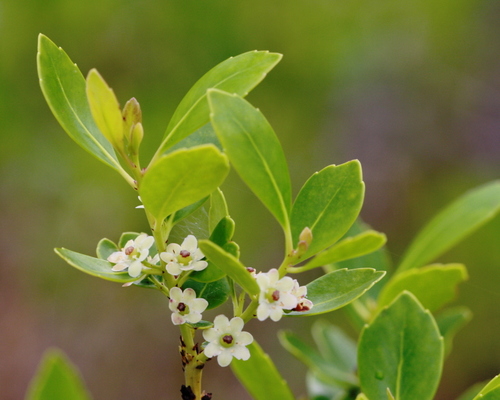
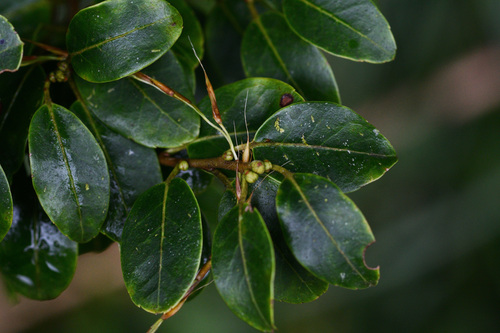
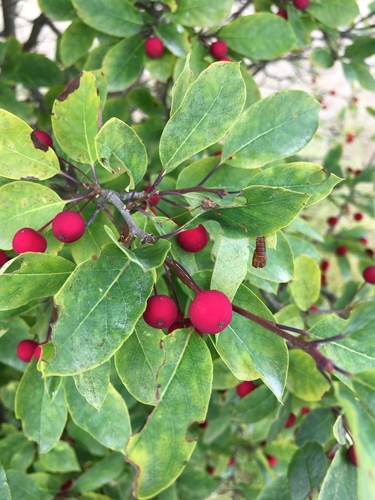
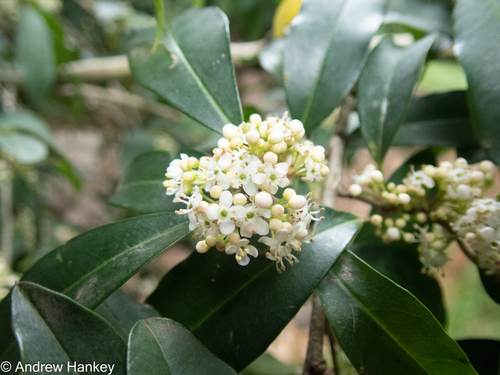
Ilex mitis (L.) Radlk., commonly known as Cape holly, African holly, waterboom or umDuma, is a tall, dense evergreen tree indigenous to Sub-Saharan Africa and Madagascar. It grows quickly with a tall, straight, dense form, making it an excellent hedge for garden use. It is the only holly (Ilex) species native to sub-Saharan Africa. It has a wide but discontinuous distribution across west, central, east, and southern Africa, with an Afromontane distribution pattern. In tropical Africa, it occurs mostly at higher elevations, growing up to 3,150 meters. In West Africa, it grows in high-elevation forests of the Guinea Highlands in Guinea, Liberia, and Sierra Leone, as well as the Cameroon Highlands of Nigeria and Cameroon. It also inhabits the Gulf of Guinea islands of Bioko, Sao Tomé, and Príncipe. It is found throughout the highlands of eastern Africa, including the Ethiopian Highlands and the highlands bordering the Great Rift Valley. It is also native to the central highlands of Angola and the highlands of Madagascar. In southern Africa, it lives in the Eastern Highlands of Zimbabwe and Mozambique. In South Africa, it grows naturally in all provinces, ranging from Cape Town in the south to the country’s border with Zimbabwe. Ilex mitis is usually found growing on river banks and in moist locations within Afromontane forest, and it can occur as low as sea level along the southern African southern coast. It occurs most often in moist montane forests and riparian forests. It can also be found in high-elevation thickets, and in open-canopied forests alongside Podocarpus latifolius and Syzygium guineense. In Ethiopia, it grows in association with Galiniera saxifraga at elevations between 1,950 and 2,340 meters. Young Ilex mitis trees grow best in full sun or light shade, while mature trees tolerate drought and frost. In southern Africa, Ilex mitis trees are pollinated by wasps and bees, and its seeds are likely dispersed by birds.