About Ilex guayusa Loes.
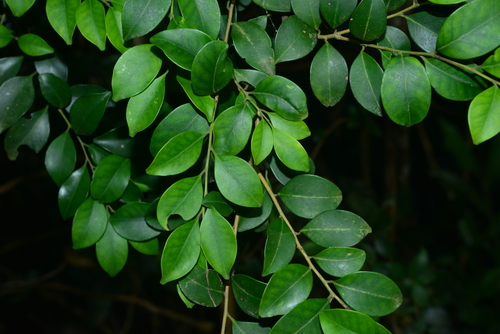
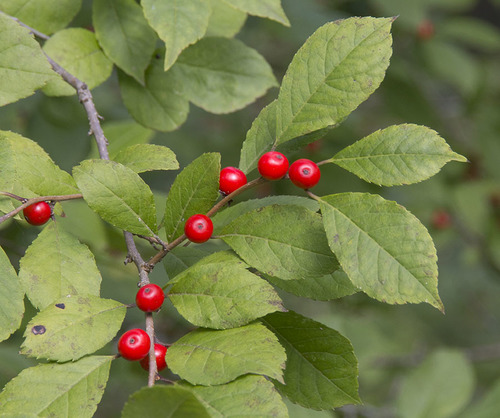
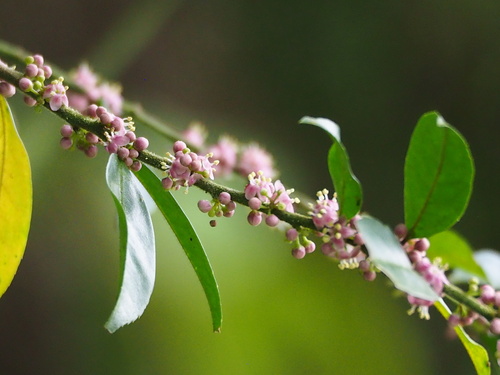
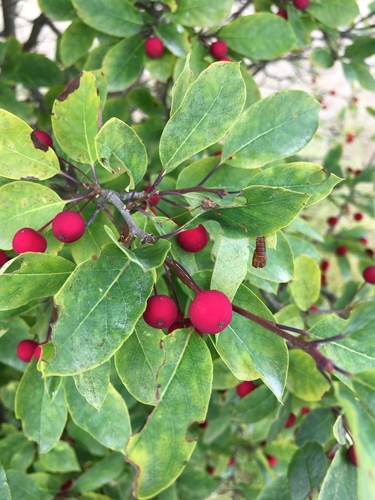
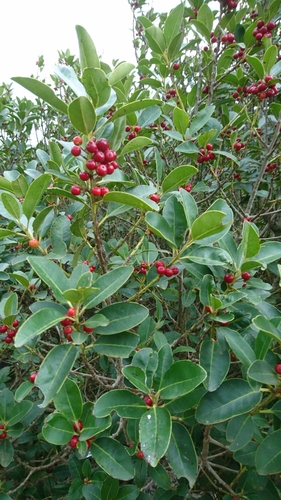
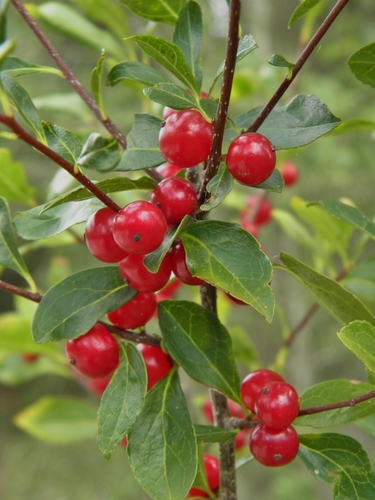
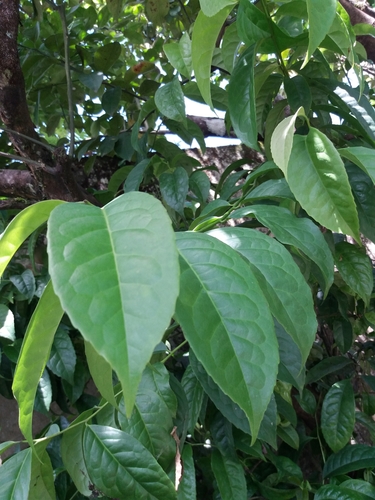
Ilex guayusa Loes. is an evergreen, dioecious tree that reaches 6–30 m (20–98 ft) in height. Its leaves are ovate, elliptic, oblong or lanceolate, measuring 7–22 cm (2.8–8.7 in) long and 2.5–7 cm (0.98–2.76 in) wide, with serrate or dentate margins. Its small white flowers are arranged in thyrses, and it produces spherical red fruit 6–7 mm (0.24–0.28 in) in diameter.
This species is native to the upper Amazonian regions of Ecuador, Peru, and southern Colombia, growing at elevations between 200–2,000 m (660–6,560 ft). A specimen was also collected in Bolivia in 1939. It occurs in evergreen or deciduous premontane forests, particularly forests dominated by Dictyocaryum palms. Botanists have only rarely collected guayusa in the wild, and it is known almost exclusively as a cultivated plant, especially in the Ecuadorian provinces of Napo and Pastaza.
Ilex guayusa grows both wild and cultivated in sandy-loamy soils with a pH of 4.34–5.01, low cation-exchange capacity, and high metal content. It prefers lowland and premontane neotropical jungle habitats where soil, precipitation, and humidity conditions suit its growth. While the species is typically monoecious and prone to floral polygamy, it produces little fertile material, so it relies mostly on asexual reproduction via basal shoots, sprouts, and suckers. In its early growth stages, Ilex guayusa grows as an understory species; it becomes a branched shrub when exposed to more light, and eventually matures into a full tree.
The leaves of Ilex guayusa are used to make an infusion, most commonly by Indigenous and local peoples of the Amazon basin, especially in Ecuador, Peru, and Colombia. After harvesting, leaves are dried to develop their flavor. In these three countries, guayusa is also used to make artisanal alcoholic drinks. The Kichwa people cultivate the plant in small horticultural plots called chakras, and use it to make a daily drink. Guayusa is also consumed at parties and local festivals as a social drink that encourages conviviality (called convivencia in Spanish), strengthening connection and closeness between families and friends. Kichwa people typically boil guayusa in a pot and serve the infusion in gourds. Drinking guayusa is often paired with sharing stories, interpreting dreams, and doing light work such as weaving nets, and the plant can also play a role in certain rituals. Guayusa is also used as a traditional medicine, usually combined with ginger, lime juice, or sugar cane liquor.
Jivaroan peoples of Ecuador and Peru prepare a guayusa leaf drink that is consumed in large quantities during pre-dawn ceremonies; participants vomit the excess to wash out the stomach and small intestine, to avoid absorbing too much caffeine. The Awajún people of northern Peru use guayusa in a similar way to Jivaroan groups. Quechua people drink guayusa infusion as part of a ritual to get prophetic dreams for successful hunting trips. Guayusa is also consumed by mestizo and white populations in Ecuador. In recent years, it has been sold internationally, and is drunk by some people in the Western world as a caffeinated alternative to coffee and traditional tea. Western media has promoted it as a stimulant with high antioxidant and polyphenol content.