About Idotea balthica (Pallas, 1772)
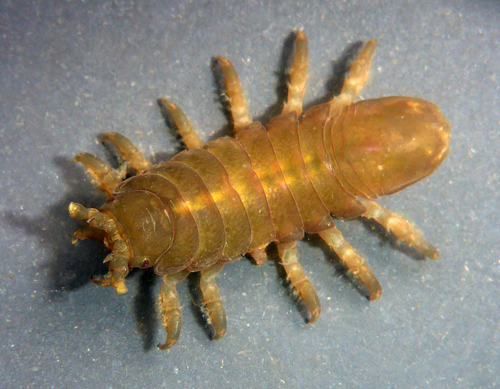
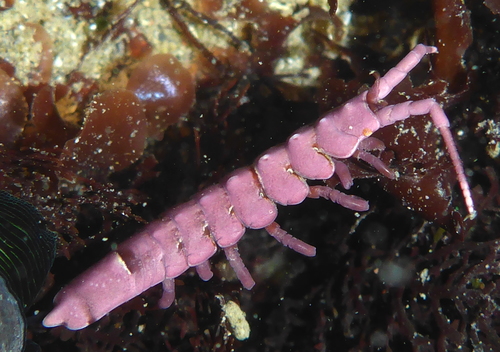
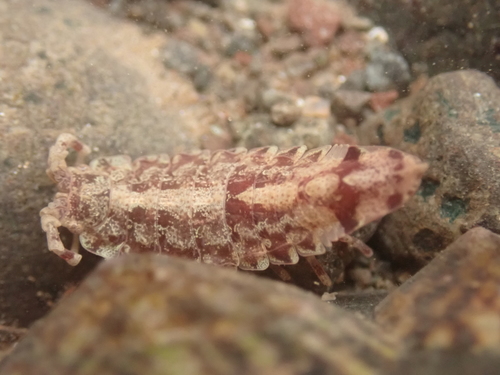
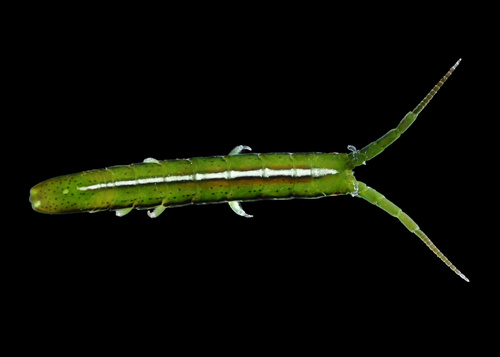
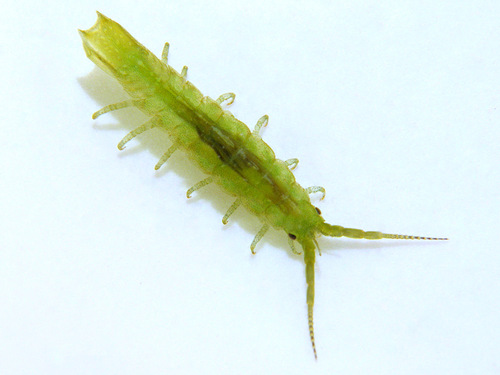
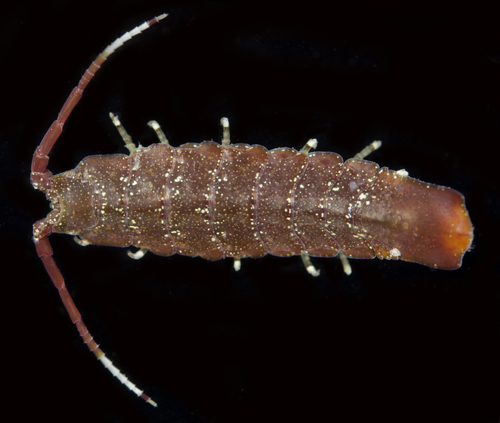
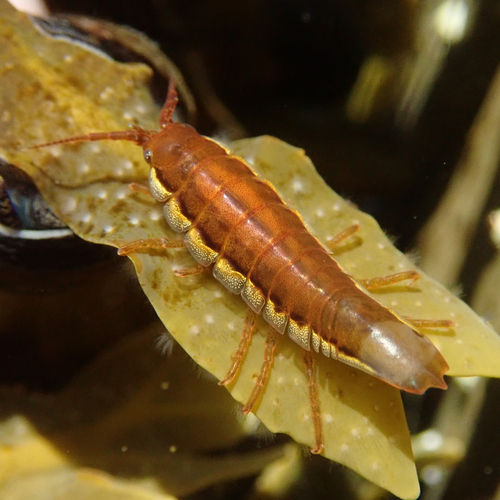
Idotea balthica (Pallas, 1772) is a species of marine isopod that lives on seaweed and seagrass in the subtidal zone of rocky shores and sandy lagoons. It has a broad geographical distribution, with recorded populations in the Belgian Exclusive Economic Zone, the British Isles, Cobscook Bay, Dutch Exclusive Economic Zone, European waters, Greek Exclusive Economic Zone, Gulf of Maine, Knokke, North West Atlantic, Red Sea, Voordelta, West Coast of Norway, Wimereux, and the Black Sea. This isopod selects its habitat based on a trade-off between reducing predator risk and maximizing food intake. Because males and females evaluate these benefits and costs differently, the two sexes differ in microhabitat selection. There are also temporal variations in microhabitat selection. During the day, both sexes are generally less active when foraging than they are at night, and prefer concealing habitats to lower their risk of being detected by predators. This preference for more concealing habitats and lower activity becomes stronger when predation risk is higher. At night, when cover is provided by darkness, isopods migrate more often between microhabitats to find food or mates. Microhabitat choice is also affected by the organism's life stage: adult microhabitat selection is more strongly influenced by predator avoidance than juvenile microhabitat selection is. Microhabitat selection does not depend on the organism's color morph, however. Instead, differing microhabitat preferences among different color morphs of this isopod lead to differing levels of predation, which in turn select for color polymorphism. Finally, habitat selection is shaped by interspecific competition: more dominant species often outcompete less dominant species in shared habitats, and restrict the microhabitat options available to the less dominant species. This effect is seen in a study of competition between Idotea balthica and Idotea emarginata in shared environments. Idotea balthica is forced to move between suboptimal habitats, while the more dominant Idotea emarginata can settle permanently in habitats with better resources.