About Ictiobus cyprinellus (Valenciennes, 1844)
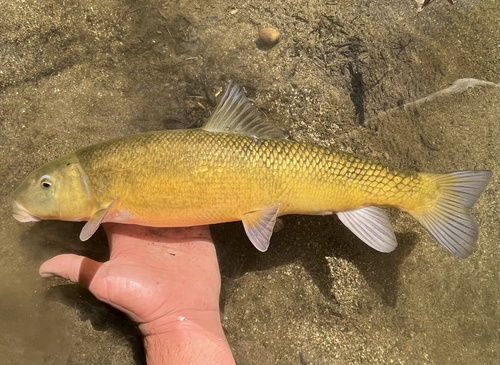
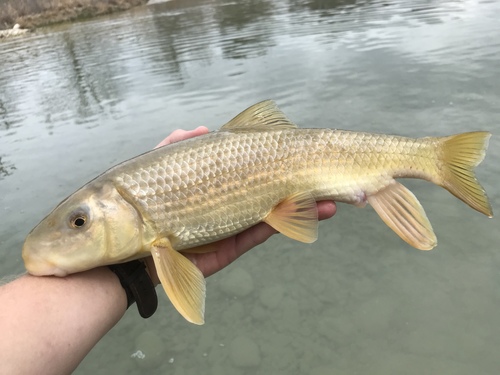
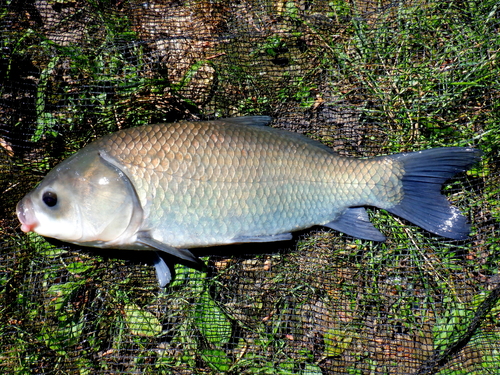
The bigmouth buffalo (Ictiobus cyprinellus, Valenciennes, 1844) is a declining fish native to North America. It is the largest North American member of the sucker family (Catostomidae), and is one of the longest-lived, latest-maturing freshwater fish species, capable of living up to 148 years and reproducing infrequently. Even at 100 years old, bigmouth buffalo show no age-related declines—instead, they improve in function compared to younger individuals, making this species a notable biological marvel. This species goes by many other common names: marblehead, redmouth buffalo, buffalofish, bernard buffalo, and roundhead. The bigmouth buffalo is not a carp, and no member of the sucker family is part of the carp group. While bigmouth buffalo and carp belong to the same order, they fall into separate suborders and are native to different continents. Bigmouth buffalo are typically brownish olive with dark fins, but individual color varies widely, including melanistic, golden, and xanthic color morphs. Unique black or orange pigment markings can develop with age, and rare individuals have white-edged fins. Like other catostomids, bigmouth buffalo have a long dorsal fin, but unlike all other living catostomid species, they have a terminal (forward-facing) mouth, which reflects their unique pelagic feeding ecology. It is the largest of the buffalofishes, reaching lengths over 4 ft (1.2 m) and weights up to 80 lb (36 kg). This species generally inhabits lakes and slow-moving sections of large rivers. Populations have declined across the northern portion of the bigmouth buffalo's range since the 1970s, including regions in Minnesota, North Dakota, and Canada. A 2019 study confirmed and validated the species' late maturity, centenarian longevity, and found that several populations in northwestern Minnesota are 85–90% composed of individuals over 80 years old, indicating recruitment failure has occurred since the 1930s. This new 2019 life history data challenged prior established assumptions about the species. A 2021 study from North Dakota also confirmed the bigmouth buffalo's slow pace of life: late maturity, decadal episodic recruitment, declining populations, and a large proportion of old-growth individuals. A 2022 study from Saskatchewan, Canada detailed additional key traits of bigmouth buffalo, including supercentenarian lifespan, water-level linked skip-spawning, the direct mechanisms behind failed recruitment, extreme episodic recruitment, and late maturity. All of these traits make the species extremely vulnerable to overfishing, habitat degradation, and invasive species. Bigmouth buffalo are declining in Canada, and have experienced steep decline in connected areas of the United States, a trend that matches the rise of unregulated wasteful modern bowfishing in the 21st century. Bigmouth buffalo life history traits, including the ability to survive for decades with no successful recruitment (episodic recruitment), are more extreme than those of other long-lived freshwater fish such as sturgeon and paddlefish. These long-lived fish are periodic strategists that require time to persist by surviving through periods until favorable environmental and biotic conditions occur to support reproduction booms and subsequent recruitment through the predation gauntlet. Unregulated, unmanaged, wasteful lethal fisheries are incompatible with the species' biology, but such fisheries have developed in 21st century United States, leading to population decline. In contrast, Canada has enforced protections for bigmouth buffalo for a long time. As an example of insufficient management in the United States, as of 2025 anglers with a standard fishing license in Minnesota may catch an unlimited number of bigmouth buffalo statewide, including within U.S. Fish and Wildlife Service National Wildlife Refuge lands. A 2024 study based in eastern Minnesota analyzed bigmouth buffalo populations and their spawning migration at Rice Lake National Wildlife Refuge over multiple years. Even though the local population migrates and spawns annually, no major pulse of successful reproduction has occurred since the late 1950s. As of 2024, the median age of bigmouth buffalo at this refuge is 79 years, and over 99.7% of individuals hatched before 1972, making this one of the oldest known populations of any animal on Earth. The native geographic range of bigmouth buffalo is limited to Canada and the United States. They are native to the Red River of the North and Mississippi River drainage basins, ranging from Manitoba, Canada and North Dakota, United States south to the Ohio River and through the Mississippi River system to Texas and Alabama. In Canada, they live in the Milk River (Alberta) and the Qu'Appelle River, which flows through Saskatchewan and Manitoba into Lake Winnipeg. In the United States, their native range extends from Montana, North Dakota, Minnesota, and Wisconsin in the north, south to eastern Texas, Oklahoma, and Louisiana. They occur primarily in the Hudson Bay and Mississippi River drainages. Most introductions of bigmouth buffalo outside their native range have been for commercial purposes. Reintroductions have occurred in some reservoirs along the Missouri River drainage in North Dakota and Montana. Introduced populations exist in some Arizona reservoirs, and bigmouth buffalo have also been introduced to the Los Angeles aqueduct system in California. Bigmouth buffalo are part of unique shallow-water ecosystem ecology. Larval bigmouth buffalo are pelagic and sometimes benthic feeders, consuming mostly copepods and cladocerans, along with phytoplankton and chironomids. Unlike its close relatives black buffalo and smallmouth buffalo, the bigmouth buffalo is a filter feeder that uses very fine gill rakers to strain plankton from the water. It sometimes feeds near the bottom, using short up-and-down movements to filter plankton that hover near or rest lightly on the substrate. Juvenile and adult bigmouth buffalo are mostly limnetic plankton feeders, and also eat cladocerans, copepods, algae, chironomids, ostracods, and other insect larvae and invertebrates depending on availability. The optimal spawning habitat for bigmouth buffalo is freshly flooded vegetated water. This species is highly resilient, able to tolerate high turbidity and low oxygen levels; it can live in water with turbidity over 100 ppm. For suitable habitat in spring and summer, 50–75% of the area should consist of pools, backwaters, and marsh, while 25–75% should be littoral area and protected embayments in summer. Bigmouth buffalo can survive in water temperatures ranging from 22.5 to 38.0 °C (72.5 to 100.4 °F). The optimal temperature range for egg incubation and hatching is 15–18 °C (59–64 °F), but eggs can develop at temperatures up to 26.7 °C (80.1 °F). Bigmouth buffalo prefer slow-moving water with velocity no higher than 30 cm/s. Bigmouth buffalo are group spawners that produce 250,000 eggs per kg of adult body weight; their eggs are very small, at approximately 1.5 mm in diameter. They spawn in spring, generally between April and June when water temperatures are between 13 and 26 °C (55 and 79 °F), but may skip spawning if appropriate water-level fluctuations do not occur. They are broadcast spawners that produce adhesive eggs, which are laid in vegetated waters. Females seek out submergent and emergent vegetation, the ideal habitat for egg hatching. Water levels rise substantially before spawning, and spawning timing and duration can vary greatly between years, even between consecutive years. For example, at Rice Lake National Wildlife Refuge in Aitkin County, Minnesota, spawning duration was 7 times longer in 2022 than in 2021 or 2023, and spawning timing varied by more than 16 days between 2021 and 2022. Bigmouth buffalo are extremely vulnerable to overexploitation during their spawning period, and likely require protections similar to those given to lake sturgeon or paddlefish. Salinity can negatively impact reproduction. Spawning can occur at salinities between 1.4 and 2.0 ppt, but eggs and yearlings cannot survive salinity over 9 ppt. The minimum dissolved oxygen level tolerated in spring and summer is 5 mg/L. Recruitment success depends on water-level conditions, drought, post-peak spring water-level recession rate, and predation. Many invertebrates, bluegill, yellow perch, and other species prey on bigmouth buffalo eggs and larvae, and top predators such as northern pike and other piscivorous fish likely further restrict the survival of bigmouth buffalo fry and fingerlings in most systems. During spawning, multiple males assist by moving the female to the water surface to help mix eggs and milt.