About Ichthyaetus ichthyaetus (Pallas, 1773)
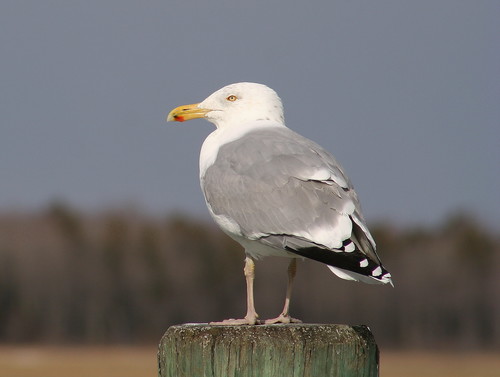
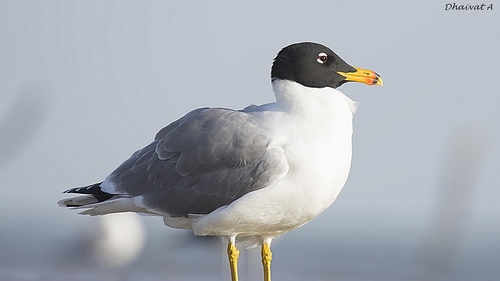
Ichthyaetus ichthyaetus, commonly known as Pallas's gull, is a very large gull species. It is the largest black-headed gull in the world, and the third largest gull species overall, ranking only behind the great black-backed gull and the glaucous gull. Adults measure 55–72 cm (22–28 in) in length, with a wingspan of 142 to 170 cm (56 to 67 in). Body weight ranges from 0.96–2.1 kg (2.1–4.6 lb); males have an average weight of 1.6 kg (3.5 lb), while females average 1.22 kg (2.7 lb). Standard measurements include a wing chord of 43.5 to 52 cm (17.1 to 20.5 in), a bill length of 4.7 to 7.3 cm (1.9 to 2.9 in), and a tarsus length of 6.5 to 8.4 cm (2.6 to 3.3 in). Summer breeding adults are easily identifiable: no other gull of this size has a solid black hood. Adults have grey wings and back, with prominent white "mirrors" at the tips of the wings. Their legs are yellow, and their bill is orange-yellow with a red tip. In all other plumage types, a dark mask running through the eye marks the remaining vestige of the full black hood. Young birds develop mostly grey upperparts quite quickly, but take four years to reach full maturity. The species' characteristic call is a deep aargh cry. This gull breeds in ground colonies on marshes and islands, ranging from southern Russia to Mongolia. It is a migratory species, wintering in the eastern Mediterranean, Arabia, and India. It lays between two and four eggs per clutch. It only occurs as a vagrant in western Europe; a 2024 review of records in Great Britain accepts only a single 1859 occurrence as a valid confirmed record. The species also appears as a vagrant across parts of the Indian Ocean south of its normal range, and along the northern and eastern coasts of Africa, where it visits irregularly every year. Its flight call is deep and somewhat nasal, and resembles the call of the lesser black-backed gull. While Pallas's gulls are noisy when gathered in breeding colonies, they are mostly silent during the breeding period itself. The species is predatory, feeding on fish, crustaceans, insects, and even small mammals. Ichthyaetus ichthyaetus is one of the species covered by the Agreement on the Conservation of African-Eurasian Migratory Waterbirds (AEWA).